01
FDM extrusion
Deposits thermoplastic along toolpaths for shape and assembly concepts. Consider layer texture, orientation and thermal distortion.
Complex geometries, appearance models and iterative designs for shape and functional validation.
Consider: material properties, orientation and finishing
Builds a part layer by layer
Deposits thermoplastic along toolpaths for shape and assembly concepts. Consider layer texture, orientation and thermal distortion.
Cures resin to reproduce details. Confirm cleaning, curing, support marks and resin suitability for the environment.
Builds polymer parts in a supporting powder bed. Internal cavities need powder-removal and cleaning access.
Forms polymer parts using powder and fusing agents. Confirm material, surface texture and post-processing requirements.
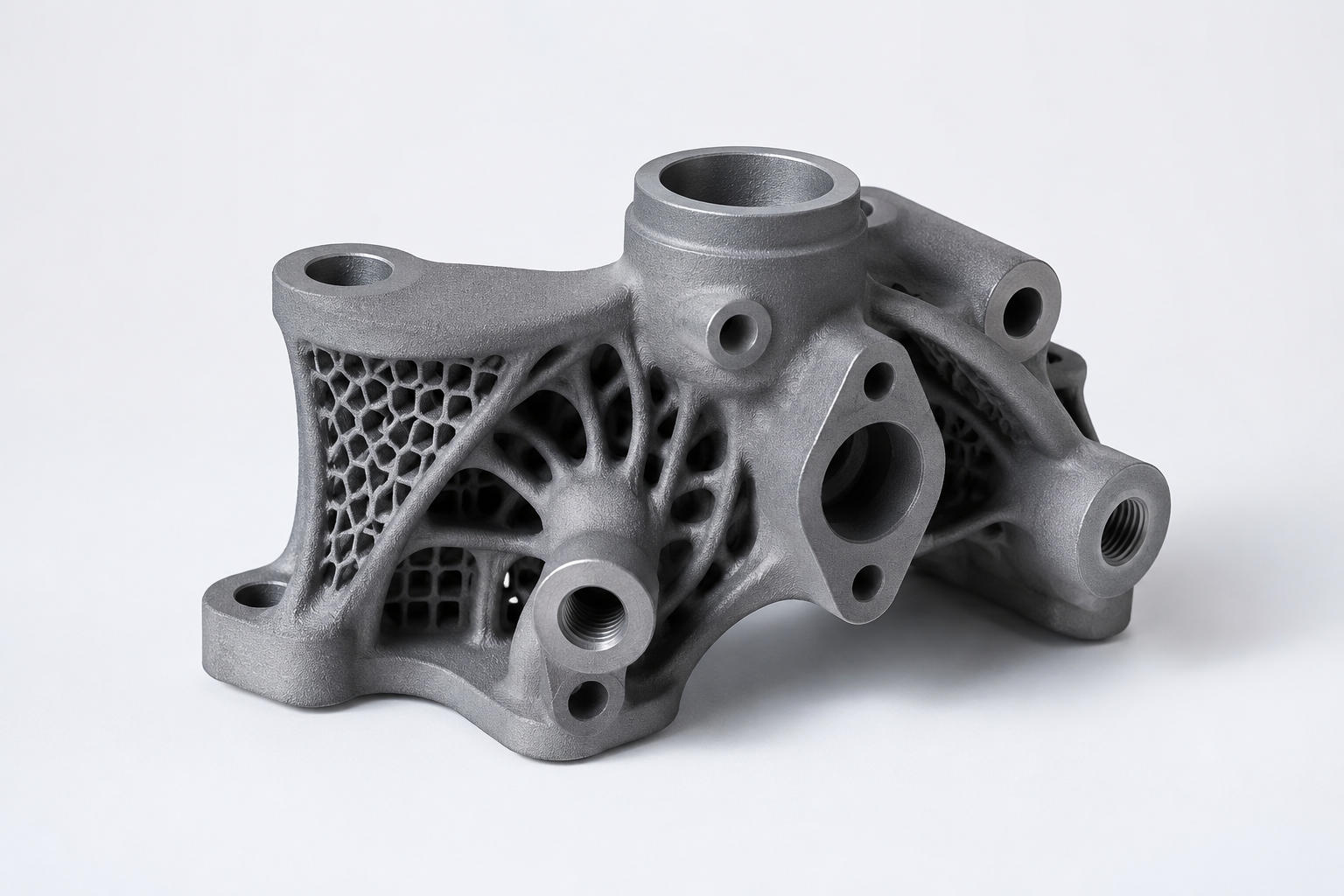
Evaluate complex metal structures with supports, residual stress, heat treatment and secondary machining of critical surfaces included.
Build volume, orientation, supports, finishing and batching
Match material to the printing process: FDM thermoplastics, SLA photopolymers, SLS/MJF polymer powders and metal powders. Similar names do not establish equivalent properties.
Browse materialsEvaluate support removal, depowdering, washing/curing, blasting, dyeing or painting by technology. Metal parts may need heat treatment and machining; as-printed surfaces are not automatically final acceptance standards.
Explore surface finishingStart with the operating environment, then balance strength, weight, temperature, appearance and assembly. Confirm grade, availability and treatment with engineering.
Submit drawings for reviewConsider: material properties, orientation and finishing
Layer properties, surface texture and accuracy depend on the specific technology. Enclosed cavities need support, powder or resin removal strategies; critical faces may need machining.
Confirm drawing revisions, file names and change records to avoid mixing old and new designs.
Identify mating faces, datums, holes and tolerances instead of applying the tightest tolerance everywhere.
Specify cosmetic faces, colors or reference samples, including masking and protection.
Agree inspection scope, reports, packaging and staged delivery before ordering.
There is no universal quantity crossover or guaranteed tolerance for a process. Feasibility, pricing and lead time depend on drawing review and the confirmed quote.
Complex geometries, appearance models and iterative designs for shape and functional validation.
Organize production and inspection around the confirmed drawing revision and requirements.
Upload 3D models and necessary 2D drawings. Specify quantity, material, tolerance, finish and target delivery.
Review manufacturability, critical dimensions and inspection requirements. Discuss complex needs with engineering.
Manufacture to the confirmed revision and check parts against the agreed inspection requirements.
Use feedback to refine the design or reorder. Confirm changes to revisions, quantities and delivery dates.
You can start a conversation with incomplete information. Manufacturing commitments must be confirmed before production.
Not sure about material, process or finish? Share drawings and operating conditions to give the engineering review a clear starting point.
Manufacturing process guide3D models and necessary 2D drawings; Material grade and quantity; Critical dimensions, tolerances and finish; Use case, inspection needs and target delivery. You can start a conversation with incomplete information. Manufacturing commitments must be confirmed before production.
Match material to the printing process: FDM thermoplastics, SLA photopolymers, SLS/MJF polymer powders and metal powders. Similar names do not establish equivalent properties. Evaluate support removal, depowdering, washing/curing, blasting, dyeing or painting by technology. Metal parts may need heat treatment and machining; as-printed surfaces are not automatically final acceptance standards.
Layer properties, surface texture and accuracy depend on the specific technology. Enclosed cavities need support, powder or resin removal strategies; critical faces may need machining.
Build volume, orientation, supports, finishing and batching. There is no universal quantity crossover or guaranteed tolerance for a process. Feasibility, pricing and lead time depend on drawing review and the confirmed quote.
Bring your design and requirements. Make manufacturing part of your next product decision.