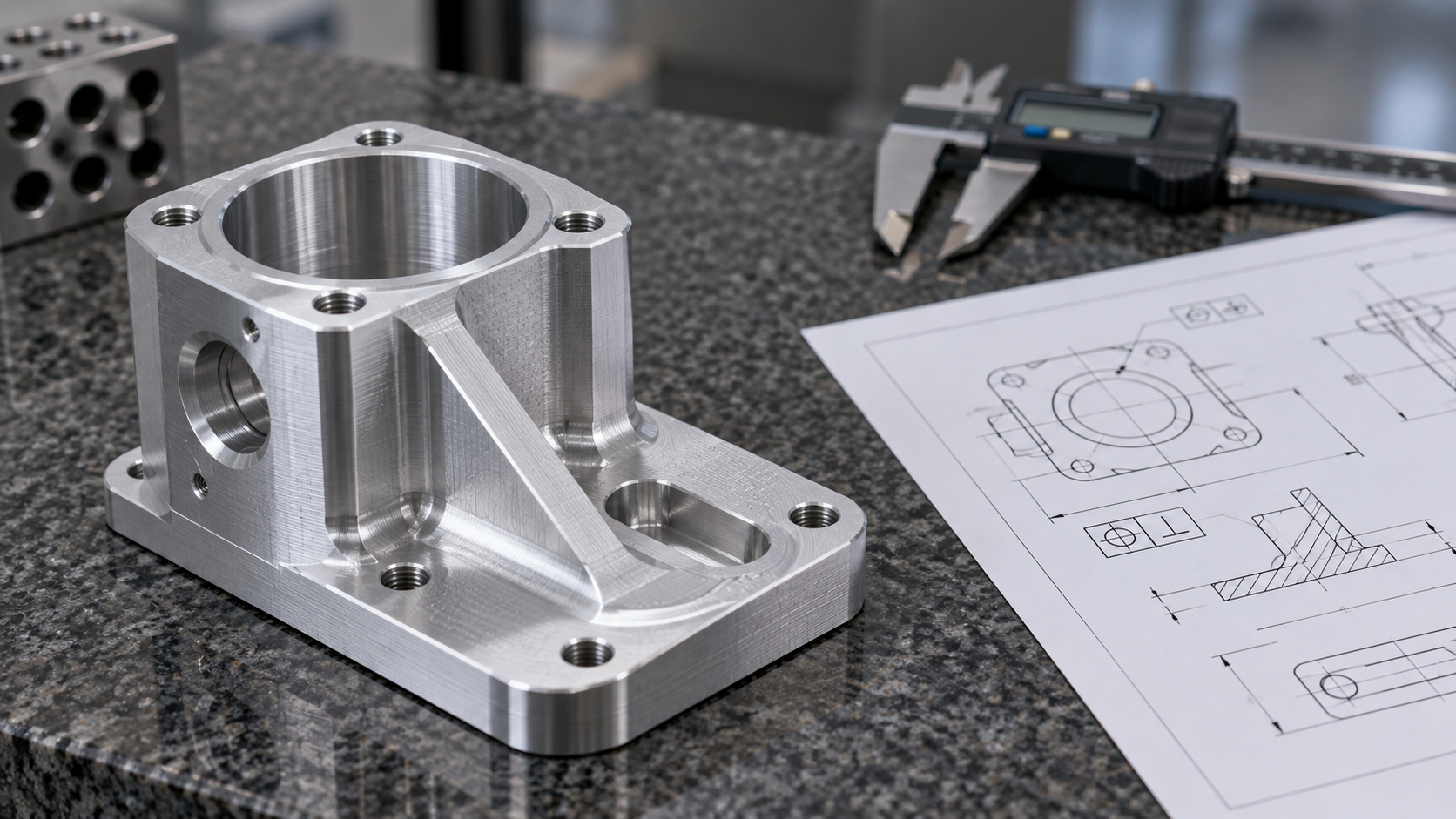
Don't rush to find the "best" one—first define your part
Many buyers and engineers open a search box and type "which domestic precision parts machining factory is good," but what they actually lack is not a list of factories, but a part requirements specification they can use for comparison. For the same part, whether it uses CNC machining, 3D printing, or sheet metal welding, the corresponding factory type, quotation logic, and even the language of communication are different. Taking vague requirements to ask ten factories often yields ten quotes with inconsistent standards, making it even harder to judge.
So the first step is not screening factories, but "translating" the part into parameters a factory can understand. The checklist below doesn't need to be complicated, but each item directly affects how you later evaluate the other party.
- Process path: Is this part subtractive (CNC milling/turning), additive (3D printing), sheet metal (stamping, bending, welding), or does it require tooling (injection molding, prototype duplication)? If you're still unsure, first clarify whether it is a structural part, an appearance part, or a functional validation part.
- Material: Metal or plastic, and whether the specific grade has been decided. If the material is not decided, the factory's process recommendations have room to add value; if the material is decided, see whether the other party regularly works with this type of material.
- Precision focus: Don't vaguely say "high precision"; instead point out which dimensions, which mating surface, and which geometric relationship truly affect assembly or function.
- Batch size: One piece, a few pieces, dozens of pieces, or moving toward mass production. Batch size determines whether the process needs to switch, and also determines how mold or tooling costs are amortized in the quote.
- Delivery sensitivity: Must it hit a certain milestone, or can it be scheduled according to the factory's pace? When delivery is tight, process selection and the factory's production scheduling capability will both be re-examined.
Write these items clearly, then compare them against the factory's capabilities, and you'll find that the question "which one is good" naturally becomes "which one matches my part." This is also the common premise of the five criteria below—discussing whether a factory is good or bad apart from a specific part is basically meaningless.
Criterion 1: Does process coverage match your part's path?
Many buyers habitually send the same drawing to three or five factories at once when requesting quotes, and then compare prices. But if these factories' process routes are fundamentally different, the quotes themselves are not comparable. Precision parts machining is not a single process, but a set of paths: CNC machining is suitable for precision cutting of metals and plastics, 3D printing is suitable for rapid prototyping and small-batch trial production, sheet metal fabrication handles stamped, bent, and welded sheet structures, prototype duplication uses vacuum casting for small-batch appearance parts, and injection molding targets batch plastic parts. Which stage your part is in determines which path is more reasonable.
From prototype to mass production, the process will switch
A typical product development rhythm is: first make a few pieces to validate the structure, possibly using 3D printing or CNC; after the structure is frozen, do a small-batch trial assembly, possibly shifting to prototype duplication or small-batch CNC; after confirming the market, then open molds for injection molding or batch sheet metal. The problem is that if each stage switches to a factory that only does a single process, the drawing, datums, material assumptions, and post-processing requirements all have to be explained again. Communication cost is not just time; it also includes the risk of information being distorted in retelling—what the previous factory understood as a "critical surface" may be treated as an ordinary surface by the next one.
Therefore, when evaluating a factory, you can first ask: From prototype to small batch to mass production, which transitions can you cover? A factory that can cover CNC, 3D printing, sheet metal, prototype duplication, and injection molding may not run every machine itself, but at least it can explain the process handoffs internally and reduce back-and-forth messaging on your side. You can first look at a manufacturing capabilities overview, compare it with your part's path, and judge which stages need to be handled by the same factory and which can be separated.
Single-process factories also have their place
This is not to say single-process factories are bad. If your part remains stable in one process for a long time, such as making the same type of CNC aluminum parts year-round, then a factory focused on that process with mature fixturing and tool management often has advantages in consistency and cost. The key is to think clearly about the "stage": multi-process coverage solves the communication and validation problems during transition periods, while deep focus on a single process solves the efficiency problem of stable batches. The two are not substitutes, but correspond to the development stage you are currently in.
A practical way to judge is to list the process changes that may occur in the next six months to a year: Will it change from printed parts to injection-molded parts? Will the sheet metal enclosure change to die casting or injection molding? If the answer is "yes," then when choosing a factory, putting process coverage capability into the evaluation checklist is usually less troublesome than only looking at the unit price.
Criterion 2: What is written in the quote matters more than how much the quote is
Send the same drawing to three factories, and the quotes that come back may differ by a factor of two. Many buyers' first reaction is "is the expensive one trying to rip me off," but what is more worth looking at first is what is actually written in the quotation. A quote that only says "CNC machining, unit price XX yuan" and a quote that specifies material specifications, process path, post-processing, inspection method, and quantity tiers are essentially not the same thing—the former is a number, while the latter is an executable manufacturing assumption.
A low quote often does not mean the factory is highly efficient, but that it has temporarily omitted certain costs. The omitted parts do not disappear; they only come back later in the form of change orders, additional charges, rework, or delivery delays. So when evaluating a factory, the information density of the quotation reflects whether the factory is reliable more than the unit price itself.
What fields should a structured quote include?
- Material specifications: Which grade, and in what form (such as plate, bar stock, forging), rather than vaguely writing "aluminum" or "steel." Different materials have different machinability, post-processing, and costs.
- Process assumptions: Whether CNC milling or turning is used, whether 3D printing validation is needed, whether sheet metal parts include bending and welding, and whether it is prototype duplication or direct injection molding. The process path determines the precision ceiling and cost structure.
- Post-processing: Whether deburring, anodizing, sandblasting, heat treatment, surface coating, etc. are included or billed separately.
- Inspection method: Whether inspection is based on the drawing's critical dimensions and whether inspection records are provided, or only visual appearance inspection is done.
- Quantity tiers: How the unit price changes for one piece, small batch, and batch production, and whether mold or tooling costs are listed separately.
- Quote validity period and assumptions: Drawing version, delivery prerequisites, and whether shipping and taxes are included.
These fields may seem trivial, but together they answer one question: Under what premises does this price hold? If the premises are clearly written, subsequent changes have a basis; if the premises are vague, any adjustment can turn into a dispute.
Why vague quotes easily become disputes
A typical line in a vague quote is "let's do it at this price first, and we'll talk about the details after it's done." The problem is that in precision parts machining, the "details" are often the bulk of the cost: one critical tolerance, one thin wall, or one deep cavity can invalidate the original process assumption. When it is discovered mid-machining that fixturing, tooling, or additional inspection is needed, and the factory then proposes a change, the buyer feels tricked and the factory feels the drawing was not clear—neither side is wrong; the mistake is that the assumptions were not laid out during the quotation stage.
The more hidden risk is opaque quantity tiers. Some quotes are very cheap for a single piece, but the bulk price barely drops, which suggests the factory may not have optimized the process for volume; conversely, if the single-piece price is very high and the bulk price plunges, you need to ask clearly whether the mold or tooling costs have already been amortized into it. Only by writing out the tiers can procurement judge whether this price structure is reasonable.
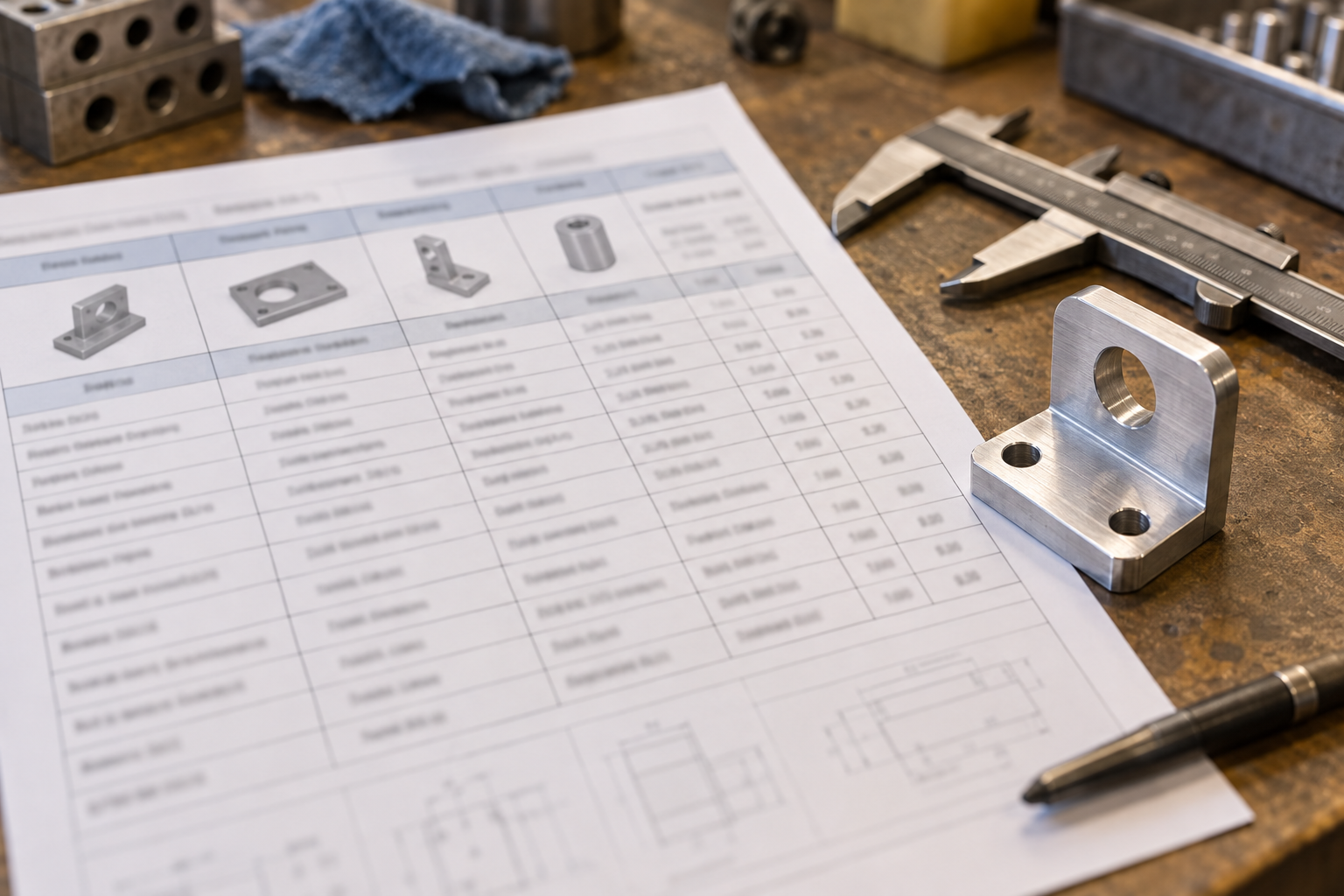
So when comparing quotes, it is advisable to first align the three quote sheets by the same set of fields, and then compare prices. If a factory's quote sheet itself is missing fields, you can directly follow up and ask: What specification is the material calculated by? Is post-processing included? How is inspection done? Factories willing to answer these questions clearly are usually also easier to communicate with during mass production. Running an actual drawing through a structured quoting process reveals differences better than repeatedly comparing prices—you can submit drawings through AI chat quoting or the classic quote entry, and have the factory write out its assumptions.
Criterion Three: First Article Verification and Inspection Logic
After the quote is discussed and the drawing is sent over, the factory says, "No problem, we can make it." Whether this statement is worth trusting usually only becomes clear at the first article stage. First article verification is not a formality; it is the most direct window for judging whether a factory has truly read the drawing and understood the intent of the tolerances. The root cause of many batch rejections is actually already planted at the moment the first article is confirmed.
What exactly is being confirmed in first article confirmation
First article confirmation includes at least three layers: fixturing method, datum selection, and measured results of critical dimensions. A factory that reads the drawing carefully will proactively confirm with you at the first article stage: whether the datum surfaces marked on the drawing are consistent with their fixturing datums; which dimensions are functional dimensions and which are only reference dimensions; and which features will be machined again in subsequent operations. If the factory only replies, "We machine to the drawing," but cannot explain how the datum is set or how critical dimensions are measured, this often means they treat the drawing only as a shape reference rather than as a carrier of tolerance intent.
Inspection records are more useful than verbal assurances
After the first article is completed, whether the factory is willing to provide an inspection record is the dividing line between "can measure" and "willing to measure." This record does not need to be complicated, but it should correspond to the critical dimensions on the drawing, stating what measuring instruments were used, which positions were measured, and what range the results fell within. For parts with fit requirements, the factory should also explain the environment and fixturing state during inspection—because many dimensions are not consistent in the free state and in the fixtured state. Factories willing to clarify this before mass production are usually also more capable of maintaining stability during mass production.
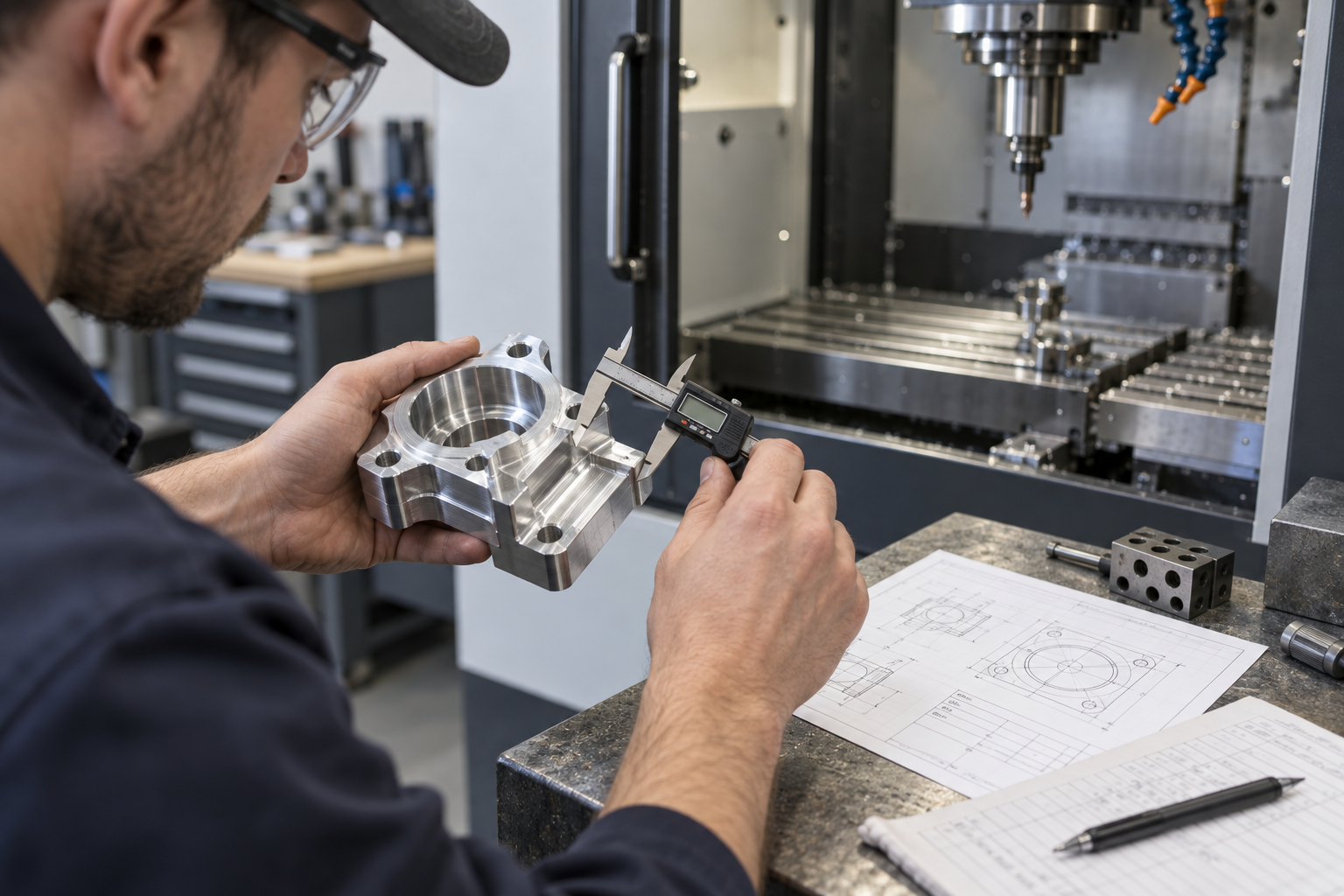
It should be noted that a qualified first article does not equal a qualified batch. The value of first article verification lies in confirming that the process route and fixturing logic are valid, not in endorsing the entire batch. The truly reliable approach is to treat first article confirmation as a process review: whether the fixturing is repeatable, whether the tool will wear during the batch, and whether the program needs fine-tuning for the batch. Exposing these problems at the first article stage costs the least; discovering them after the batch is finished costs much more. If you want first article confirmation and subsequent mass production to connect more smoothly, you can learn about typical processes on the CNC machining capabilities page, or directly submit drawings through the quote entry, and let the engineering team provide inspection and first article recommendations already at the quoting stage.
Criterion Four: Communication Efficiency and Engineering Feedback
You send the drawing over, wait two days, and get back, "We can make it, price to follow." This kind of reply is basically no reply. A factory with real engineering capability should include specific things in its first round of feedback: whether the tool extension length is sufficient for a certain deep cavity, whether a certain thin wall will deflect during fixturing, and whether the datum marked on the drawing is consistent with the actual machining datum.
Communication efficiency does not mean replying quickly; it means replying based on the drawing. Formulaic statements like "we have complete equipment and rich experience" are not helpful for judgment; valuable feedback is "the fillet at this position is recommended to be enlarged a bit, otherwise the tool cannot get in" or "if the position tolerance of this hole is inspected according to the drawing, the datum must first be confirmed." Such remarks show that the other party really read the drawing, rather than forwarding the file to a quote clerk.
DFM feedback that should appear at the quoting stage
The earlier DFM (design for manufacturing) feedback appears, the less rework there will be later. Signals worth noting include: proactively pointing out difficult-to-machine features, asking about the functional intent of critical dimensions, proposing alternative suggestions for materials or post-processing, and explaining which features will affect fixturing or inspection. If a quote has no engineering opinions from beginning to end, either the part is indeed simple, or the other party did not look carefully at all.
Conversely, if a factory is willing to raise questions at the quoting stage, it also means it is willing to bear the communication cost. This willingness often predicts the response speed during mass production better than an equipment list—because what really consumes time in mass production is usually not machining itself, but dimensional disputes, change confirmations, and exception handling.
How to quickly test the other party's communication quality
A practical approach: when requesting a quote, deliberately leave one point that needs confirmation, such as marking a critical fit dimension but not specifying the inspection datum, and see whether the other party proactively asks. Those who ask are usually also willing to align later; those who quote directly without asking will most likely also require you to chase confirmations during mass production. Communication efficiency ultimately reflects the depth of engineering involvement, not the response speed of customer service.
Criterion Five: Batch Consistency Depends on Process Control, Not Samples
Many procurement teams, when evaluating a factory, are used to first having the other party make a few samples. If the samples are beautifully made, they assume the batch will be fine too. But in actual production, the gap between samples and batches often lies in the "process," not the "craftsmanship." At the sample stage, one can take time to do fine work, and the operator can repeatedly trial-cut and manually compensate; at the batch stage, what is needed is repeatability—the same program, the same fixturing, the same incoming material batch, with the 1st piece and the 100th piece staying consistent within the drawing requirements.
So when evaluating a factory, do not only ask, "Can you make samples?" Ask, "How will you make the batch?" Specifically, you can look at several aspects: fixturing repeatability—whether dedicated fixtures or soft jaws are used for positioning, and whether the datum remains stable after changing parts; tool and program management—whether tool life is recorded and program versions are controlled, to avoid parameter changes midway causing dimensional drift; incoming material consistency—whether the same batch of material comes from the same heat number or the same supplier batch, since differences in material condition directly affect cutting performance and final dimensions.
Another easily overlooked point is the rhythm of in-process inspection. In mass production, does the factory inspect the first article and then run all the way to the end, or does it sample at fixed intervals and adjust when a trend is found? The former relies on luck; the latter is process control. You can directly ask: During the batch, if dimensions are found to be drifting in one direction, how do you handle it? Do you stop the machine and adjust the program, or continue to the end and then sort? The answer to this question explains the factory's management level better than any brochure.
For parts transitioning from prototype to small batch or mass production, the process itself may also switch—for example, from CNC machining to validate the structure and then to injection molding, or from sheet metal bending parts to stamping. During the switch, whether the factory is willing to reconfirm the datum, fixturing, and inspection method, rather than directly reusing prototype parameters, directly determines whether the batch parts can be stable. If you are planning this kind of transition, you can first learn about the common logic of process handoff on the rapid prototyping or injection molding capabilities pages, and then discuss the batch plan for specific parts with the engineering team.
Frequently Asked Questions (FAQ)
The following questions come from the judgment points most commonly encountered by procurement and engineering when screening precision part machining factories. The answers discuss only logic and methods, and do not promise specific tolerances, certifications, or lead times.
Can you quote first without a complete drawing?
Yes, but the reliability of the quote depends on the amount of information. Usually, at least the part function, material preference, critical mating surfaces, batch size, and post-processing requirements need to be provided. If there is only a 3D model without tolerance annotations, the factory can only estimate based on general precision, and the price may be adjusted after the drawing is refined later. A more reliable approach is to first complete the critical dimensions and datums, and then have the factory issue a structured quote.
Is it worth looking for a professional factory for small batches?
Yes, but it depends on the stage. At the prototype or small-batch stage, the factory's value lies in process advice and rapid iteration, not just unit price. If the part will later move to mass production, choosing early a factory that can cover paths such as CNC, 3D printing, handboard duplication, and injection molding can reduce repeated communication and datum rebuilding caused by changing factories.
How can I judge whether a factory is suitable for my material?
First see whether the factory is willing to discuss material substitution and process matching at the quoting stage, rather than only asking, "What material will be used?" The machining logic for metals and plastics differs greatly, and the same material performs differently under different processes. You can ask the factory to explain the processing concerns for that material, such as deformation, tool wear, or post-processing methods, and then judge whether its experience fits your part.
Several quotes differ greatly; how should I compare them?
Don't just compare the total price—first compare what's written in the quote: whether the process assumptions, material specifications, quantity tiers, post-processing, and inspection methods are consistent. Large differences often come from different assumptions, such as whether first article inspection is included or whether estimates are based on different fixturing plans. Only after aligning the assumptions does comparing prices become a meaningful comparison.
What is typically checked during first article approval?
The key is whether the factory inspects the critical dimensions per the drawing, whether it provides inspection records, and whether it confirms fixturing and datums before mass production. The point of the first article is not just "dimensions pass" but verifying that the factory truly understands the intent of the drawing. If datum or fixturing issues are found at the first article stage, they are usually more controllable than if they surface after mass production.
Standard Five: Batch consistency relies on process control, not samples
- Tool and fixture management: Whether tool life is recorded and whether dedicated fixtures are used to ensure fixturing repeatability directly determines whether batch dimensions remain stable.
- Frozen programs and parameters: After first article approval, programs and cutting parameters should be locked, and any on-site adjustments should be recorded and confirmed.
- Inspection frequency and records: At what frequency critical dimensions are inspected during the batch and whether records are traceable is the key to distinguishing "can measure" from "in control."
- Abnormality handling mechanism: Whether out-of-tolerance parts are quarantined, whether the customer is notified, and whether root causes are analyzed says more about a factory's reliability than rework afterward.
Common Questions
Without a factory whitelist, how do I start screening?
First write a clear part requirements statement (process route, material, precision, batch size, lead time), then check factory capabilities against these five standards one by one. Rather than collecting a list, use the same requirements to ask three to five factories and compare the quality of their responses.
If a quote is noticeably low, is there definitely a problem?
Not necessarily, but it's worth probing. Focus on whether the quote specifies material specifications, process assumptions, post-processing, and quantity tiers. A low price with low information density often means some costs have been temporarily omitted and may come back later in the form of change orders or rework.
If the first article passes, can problems still occur in mass production?
Yes. The first article verifies whether the process route and fixturing logic hold up; it does not mean the batch is stable. You need to further confirm tool life management, whether programs are frozen, batch inspection frequency, and the abnormality handling mechanism.
How do I choose between a single-process factory and a multi-process factory?
It depends on your product stage. If the part remains stable in one process for the long term, a focused factory often has advantages in consistency and cost; if over the next six months to a year you will go through process switches from prototype to small batch to mass production, multi-process coverage can reduce communication and validation costs.
How can I quickly judge a factory's engineering capability?
Look at whether the first round of feedback is based on the drawing. Valuable replies will point out difficult-to-machine features, ask about the intent of critical dimensions, and offer suggestions on materials or post-processing; boilerplate like "well-equipped and experienced" is of limited help for judgment.
Key takeaways
- There is no unified answer to "which one is good." First clarify the part's process, material, and batch size, then match the factory's capabilities.
- Process coverage determines whether a factory can handle the stage transitions from prototype to small batch to mass production.
- Quotation transparency reflects subsequent risk more than whether the quote is high or low: whether process assumptions, materials, and post-processing are clearly written out.
- First article validation and inspection records are a key window for judging whether a factory truly understands the drawing.
- Batch consistency depends on process control of tooling, programs, and inspection, not on doing a single sample well.