Manufacturing and Machining
What Is Precision Manufacturing? Detailed Explanation of Common Machining Processes, Materials, and Accuracy Requirements
9/1/2026, 16:5723 views
Precision manufacturing is an important part of modern mechanical manufacturing and is widely used in automotive, aerospace, electronics, medical, automation equipment, and other fields. This article systematically introduces the basic concepts of precision manufacturing, common machining processes, material selection, accuracy indicators, main factors affecting machining quality, typical processes, cost composition, and selection recommendations, with answers to common questions included.
Core Definition of Precision Manufacturing
- Dimensional accuracy: the degree to which the actual size approaches the nominal size, usually expressed as a tolerance zone.
- Geometric accuracy: roundness, cylindricity, flatness, straightness, etc., reflecting the geometric error of the part itself.
- Positional accuracy: coaxiality, parallelism, perpendicularity, position, etc., reflecting the relative relationship between features.
- Surface quality: surface roughness, surface defects, and residual stress, affecting friction, sealing, and fatigue life.
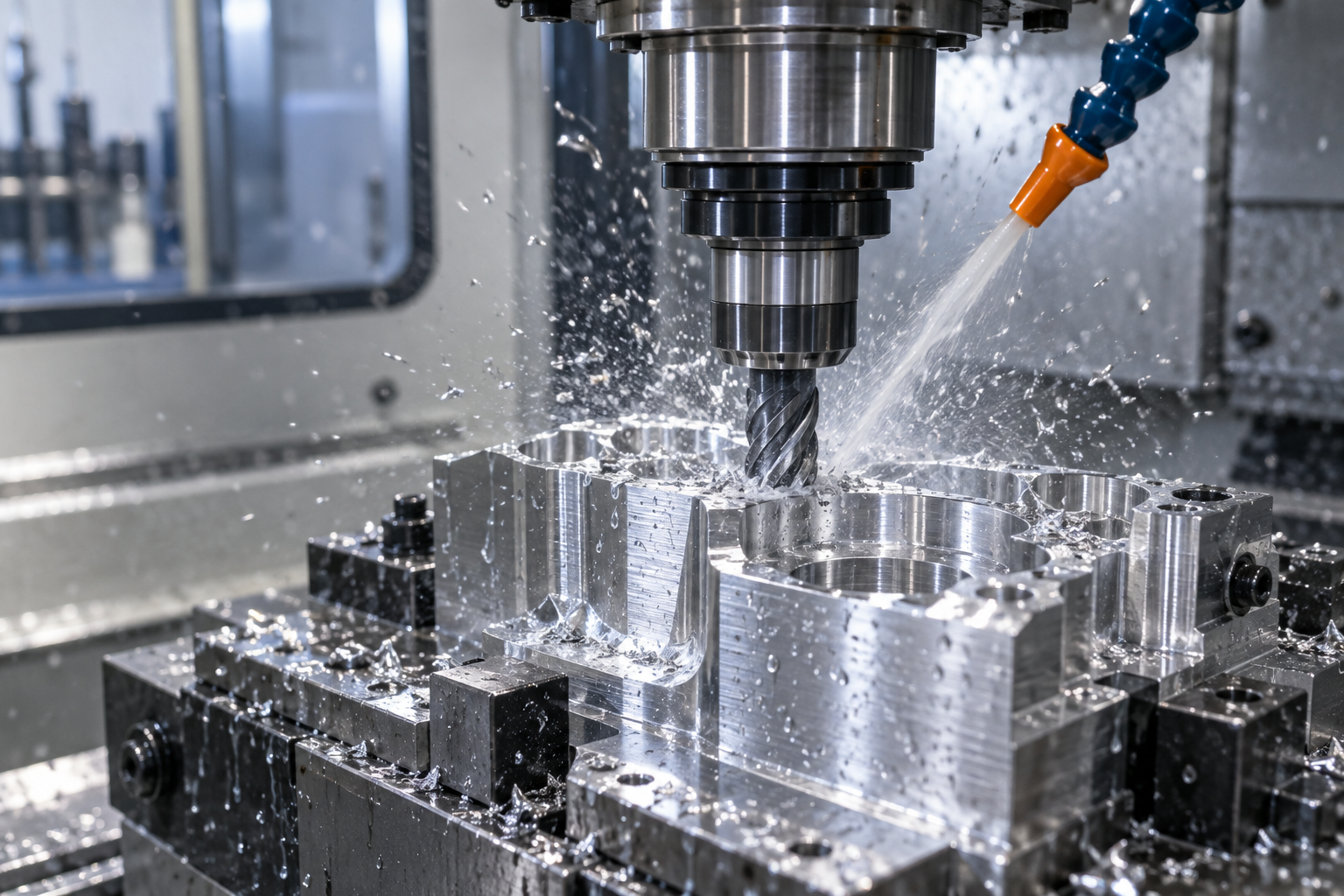
Common Precision Machining Processes
- CNC Milling and Turning
- Grinding and Finishing
- EDM and Wire Cutting
Commonly Used Precision Machining Materials
| Material Category | Typical Materials | Common Applications |
|---|---|---|
| Carbon Steel and Alloy Steel | 45 steel, 40Cr, 20CrMnTi | Shafts, gears, structural parts |
| Stainless Steel | 304, 316L, 17-4PH | Medical, food, chemical equipment |
| Aluminum Alloy | 6061, 7075, 2024 | Aerospace structural parts, automation fixtures |
| Copper Alloy | Brass, beryllium copper | Electrodes, conductive and thermally conductive parts |
| Engineering Plastics | POM, PEEK, PTFE | Insulating parts, wear-resistant parts, sealing parts |
| Hard materials | Hardened steel, cemented carbide, ceramics | Molds, cutting tools, wear-resistant parts |
Precision requirements and common indicators
- Dimensional tolerance: set according to functional requirements; overly tight tolerances will significantly increase machining and inspection costs.
- Geometric tolerance: used to control fit, assembly, and motion precision, and must be used in conjunction with a datum system.
- Surface roughness: affects friction, sealing, coating adhesion, and fatigue strength.
- Material and heat treatment state: hardness and internal stress directly affect machining deformation and final precision.
Main factors affecting machining precision
- Machine tool precision and rigidity: errors in the spindle, guideways, and feed system are directly transmitted to the part.
- Cutting tools and wear: tool geometry, material, and wear state affect dimensional consistency and surface quality.
- Workholding method: locating datum, clamping force, and fixture rigidity can cause deformation and positioning errors.
- Machining parameters: cutting speed, feed, and depth of cut affect cutting force, vibration, and thermal deformation.
- Temperature and thermal deformation: ambient temperature, cutting heat, and machine tool thermal drift can change actual dimensions.
- Inspection and compensation: gauge accuracy, measurement methods, and compensation strategies determine whether errors can be detected and corrected in time.
Typical precision machining process
- Requirements and drawing review: confirm function, critical dimensions, tolerances, material, and surface treatment requirements.
- Process planning: determine machining sequence, datums, workholding scheme, and inspection plan.
- Material preparation and pretreatment: cutting, stress relief, or heat treatment to reduce subsequent deformation.
- Rough machining and semi-finish machining: remove allowance and leave uniform allowance for finishing.
- Finishing: use grinding, fine milling, or special machining to achieve final precision and surface quality.
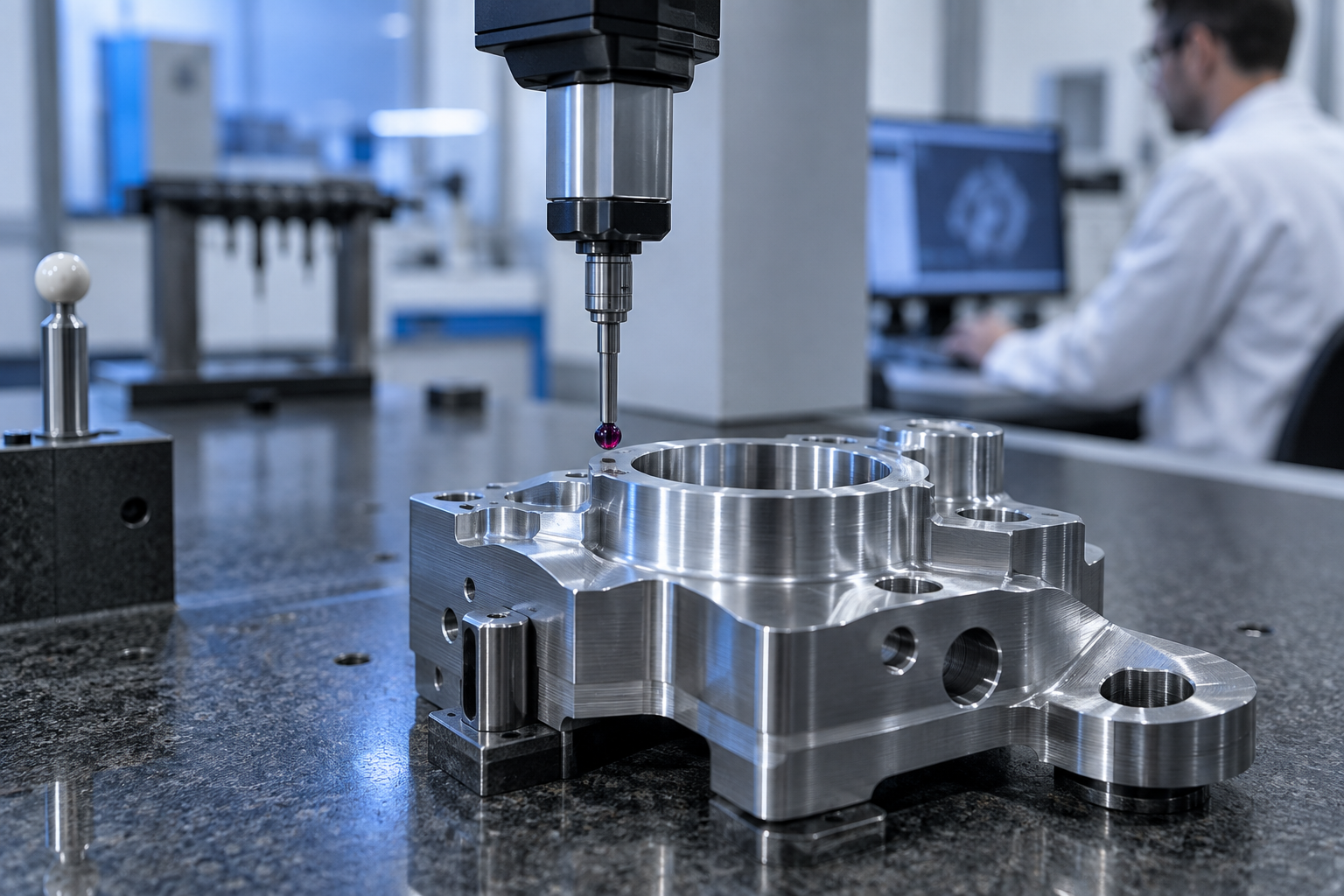
- Inspection and verification: use CMMs, vision measuring machines, or dedicated gauges to verify critical dimensions and geometric tolerances.
- Surface treatment and packaging: perform anodizing, plating, passivation, etc. as needed, and ensure rust prevention and protection.
Cost composition and cost reduction approaches
How to choose a precision manufacturing machining solution
- Clarify critical functional dimensions and fit relationships, and distinguish critical tolerances from general tolerances.
- Select an appropriate process combination based on part structure, material, and batch size, rather than a single process.
- Evaluate the supplier's equipment capability, inspection methods, and quality system, not just the quotation.
- Achieve a balance among precision, quality, efficiency, and cost, and avoid over-design.
Common questions FAQ
What is the main difference between precision manufacturing machining and ordinary machining?
The main difference lies in precision control capability, inspection methods, and process stability. Precision machining usually requires higher-rigidity machine tools, stricter workholding schemes, finer cutting parameters, and inspection verification such as CMMs to ensure batch consistency.
Does precision machining necessarily require grinding or special machining?
Not necessarily. Whether grinding, EDM, or wire cutting is used depends on material hardness, structural complexity, and precision requirements. Many parts can meet requirements through fine milling and fine turning with reasonable parameters, while special machining is more often used for hard materials or complex cavities.
Is tighter tolerance always better?
No. Tolerances should be set according to functional requirements. Overly tight tolerances significantly increase machining difficulty, inspection costs, and scrap rates, leading to higher costs with limited functional benefit. A reasonable approach is to distinguish between critical tolerances and general tolerances.
What are the main factors affecting the quotation for precision parts?
They mainly include material type and quantity, part complexity, tolerance and surface requirements, batch size, fixturing and tooling needs, inspection requirements, and surface treatment processes. The higher the precision requirements and the smaller the batch, the higher the unit price is usually.
How can dimensional consistency in precision machining be improved?
Consistency can be improved by unifying datums, reducing the number of setups, controlling cutting heat and vibration, regularly calibrating machine tools and cutting tools, adopting in-process or first-article inspection, and establishing parameter standardization and process capability monitoring.
- Dimensional accuracy: the degree to which the actual size approaches the nominal size, usually expressed as a tolerance zone.
- Form accuracy: roundness, cylindricity, flatness, straightness, etc., reflecting the geometric error of the part itself.
- Position accuracy: coaxiality, parallelism, perpendicularity, position, etc., reflecting the relative relationship between features.
- Surface quality: surface roughness, surface defects, and residual stress, affecting fit, sealing, and fatigue life.
Key takeaways
- The core of precision manufacturing is stable control of dimensional, geometric, positional accuracy, and surface quality.
- Common processes include CNC milling, CNC turning, grinding, EDM, and wire cutting.
- Material selection must balance strength, corrosion resistance, machinability, and cost.
- Machine tools, cutting tools, fixturing, parameters, temperature, and inspection jointly determine the final machining accuracy.
- A reasonable solution should achieve a balance among accuracy, quality, efficiency, and cost.