Material Selection
Practical Handbook for Machining Material Selection
9/12/2026, 09:208 views
Covers application scenarios, cost structures, post-processing combinations, and common pitfalls for commonly used materials such as aluminum alloys, stainless steel, and engineering plastics, with a pre-prototyping self-check list attached.
A practical decision framework for material selection
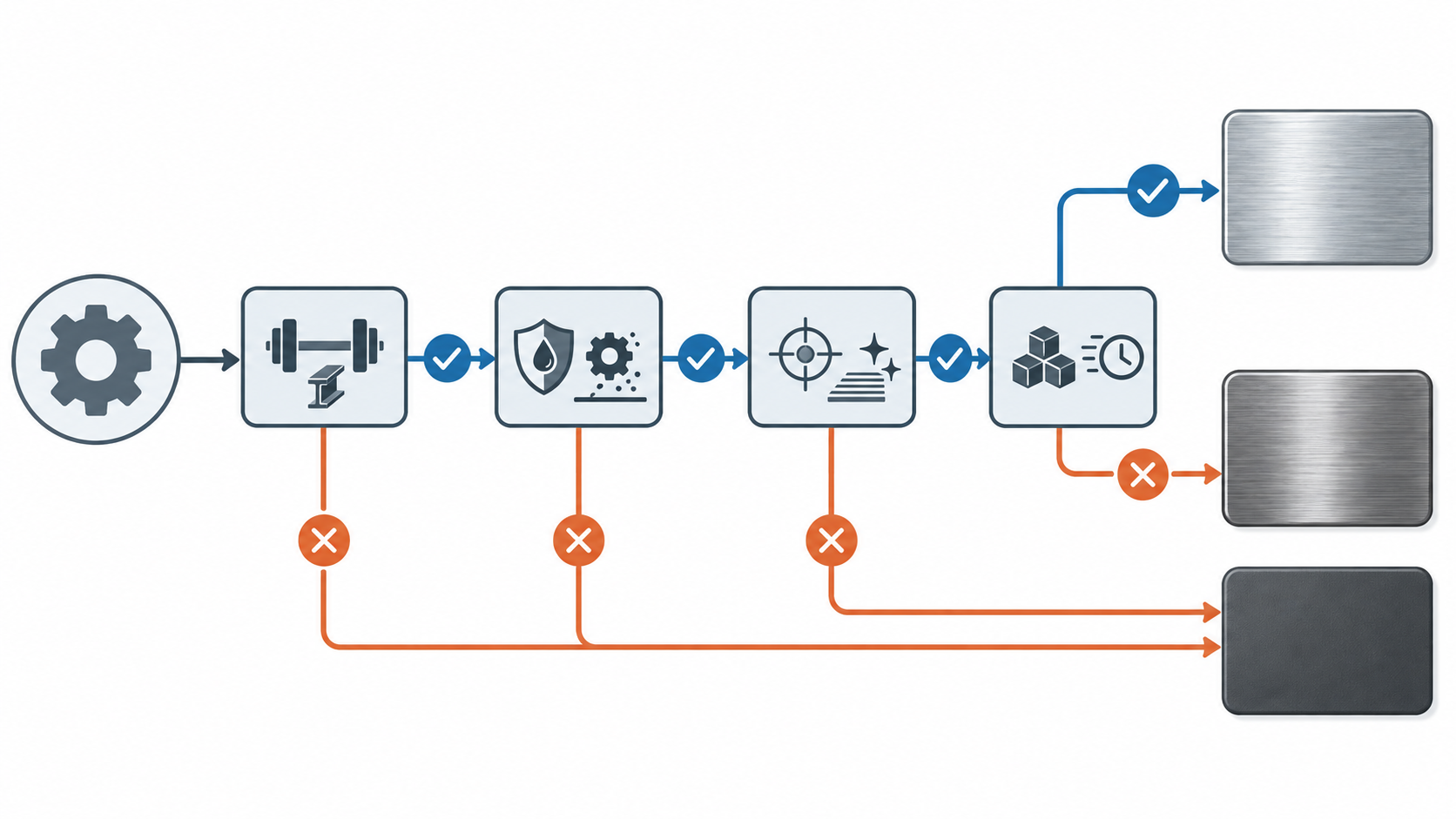
- Function first: define hard requirements such as strength, rigidity, wear resistance, corrosion resistance, insulation, or thermal conductivity first, and avoid sacrificing key performance to save money.
- Precision and surface: high fit precision, thin walls, deep cavities, or mirror-finish requirements will significantly affect material selection and the post-processing path.
- Batch size and lead time: material availability, tool wear, and fixturing methods differ greatly between single-piece prototyping and mass production.
- Cost accounting: do not look only at the material unit price; include machining hours, tool consumption, scrap rate, and post-processing as well.
The logic of combining materials and post-processing
Frequently Asked Questions (FAQ)
How should 6061 and 7075 aluminum alloys be chosen?
6061 offers a better balance of overall machinability, corrosion resistance, and cost, making it suitable for most structural parts, fixtures, and enclosures; 7075 has higher strength and is suitable for parts under high loads that require lightweighting, but its machinability and corrosion resistance are relatively weaker, and its cost is higher. If there is no clear strength bottleneck, prioritize 6061.
In what situations are plastic parts more suitable than metal parts?
When a part requires insulation, self-lubrication, resistance to chemical media, lightweighting, or lower batch cost, engineering plastics are often better. POM is suitable for wear-resistant sliding parts, PEEK is suitable for high-temperature and high-strength working conditions, and ABS/PC are suitable for appearance parts. However, the rigidity, heat resistance, and dimensional stability of plastics are usually inferior to metals, so trade-offs must be made according to the working conditions.
How does material selection affect machining cost?
The material unit price is only part of the cost. Materials with high hardness and high toughness accelerate tool wear and reduce cutting efficiency, while thin walls or complex structures also increase fixturing and scrap risks. During selection, material cost, machining hours, tool consumption, and post-processing costs should be evaluated together.
Will post-processing change the critical dimensions of a part?
Yes. Surface treatments such as anodizing, electroplating, and spraying usually increase or change surface dimensions, and precision mating surfaces need allowance reserved or local masking. It is recommended to specify critical tolerances and surface requirements clearly on the drawing and arrange the treatment sequence in advance in the process route.
Where exactly does material cost go
- Material unit price: the blank cost of aluminum alloys and engineering plastics is usually lower than that of stainless steel and titanium alloys, but thin-walled or large parts require more allowance, so actual material usage will be higher than the net weight.
- Machining hours: materials with high hardness and high toughness require conservative cutting parameters, lengthening both roughing and finishing time, which is the main source of quotation differences.
- Tools and losses: difficult-to-machine materials wear tools faster, and in small batches the tool cost allocated per piece is more noticeable.
- Post-processing and logistics: processes such as anodizing, passivation, sandblasting, and heat treatment add extra cycle time and costs, and cross-factory collaboration also brings transportation and waiting time.
- Scrap and rework: once problems such as thin-wall deformation, poor chip evacuation in deep cavities, or mirror-surface scratches occur, rework costs often exceed the price difference of the material itself.
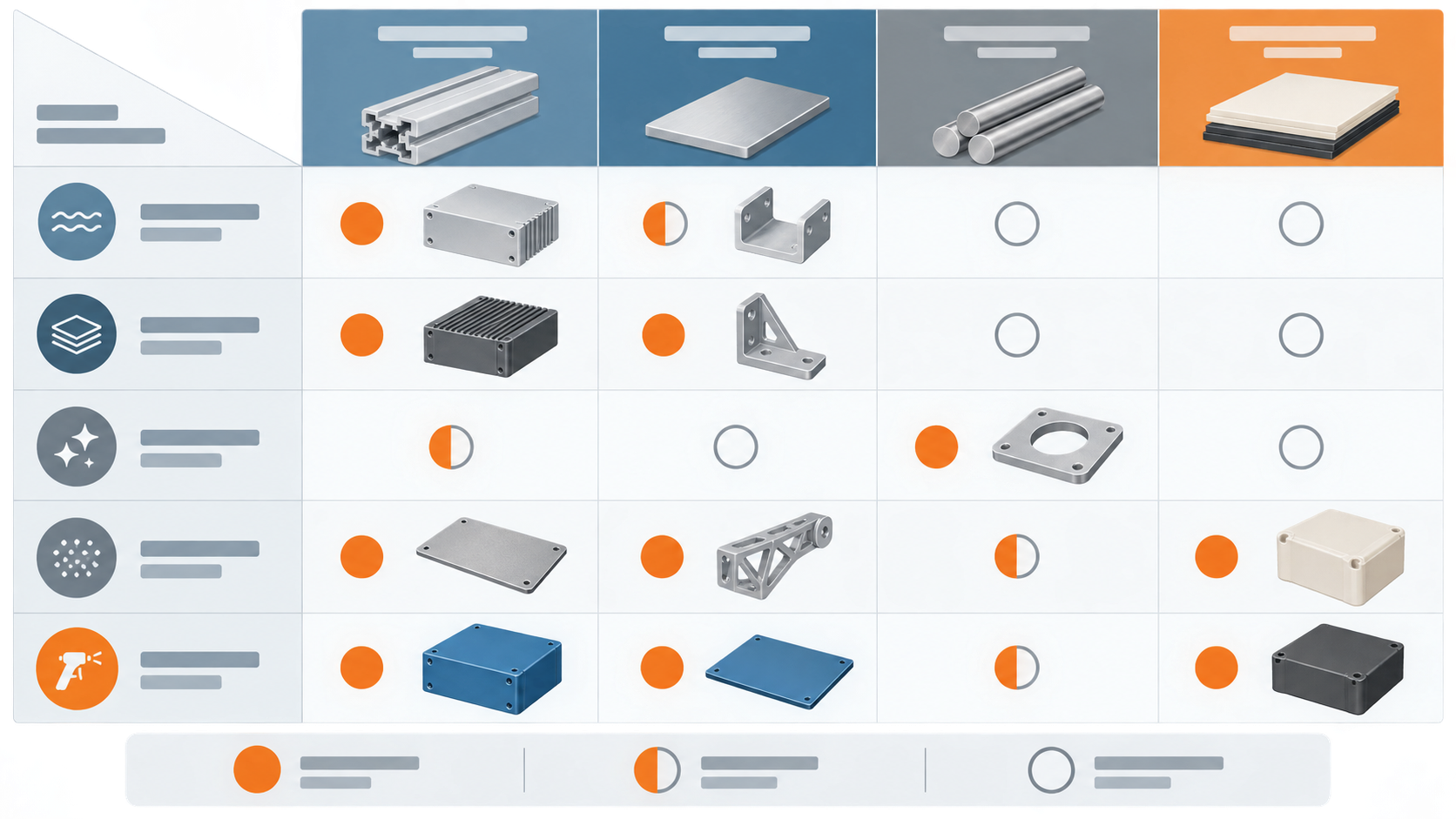
Common combinations of materials and post-processing
- 6061 aluminum alloy + anodizing: balances lightweighting, corrosion resistance, and appearance, suitable for parts such as enclosures, brackets, and panels.
- 7075 aluminum alloy + hard anodizing or spraying: higher strength, suitable for load-bearing structural parts, but corrosion resistance is relatively weaker, so surface treatment is more worth investing in.
- Stainless steel + passivation or sandblasting: suitable for humid, clean, or food-contact scenarios; passivation helps restore the passive film damaged by cutting.
- Engineering plastics + deburring or annealing: plastic parts usually do not receive metal-style surface treatment; the focus is on controlling burrs, internal stress, and dimensional stability.
- Parts requiring electrical conductivity or heat dissipation: avoid insulating coatings and prioritize metal substrates with conductive treatment.
The most common pitfalls in material selection
- Selecting material only by strength: ignoring toughness, corrosion resistance, and machinability, resulting in parts that are made but cannot be assembled or have a short service life.
- Treating the grade as the only standard: the same grade in different conditions (such as different heat treatment or supply conditions) can differ significantly in performance, so the condition requirements should be clearly stated on the drawing.
- Underestimating the difficulty of thin walls and deep cavities: these structures demand high material rigidity and cutting stability, so deformation risk must be considered when selecting materials.
- Reversed post-processing sequence: finishing before heat treatment may cause dimensional out-of-tolerance due to deformation, so the process sequence needs to be fixed during the process review stage.
- Ignoring availability: niche materials or special specifications may have long lead times, so supply availability must be confirmed during the prototyping stage.
Checklist for self-review before prototyping
- Are the key functional indicators clearly defined (strength, corrosion resistance, insulation, thermal conductivity, wear resistance, etc.)?
- Does the drawing specify the material grade and temper, rather than just "aluminum alloy" or "stainless steel"?
- Are there features sensitive to material and process, such as thin walls, deep cavities, or mirror finishes?
- Are the post-processing requirements compatible with the material, and is the process sequence reasonable?
- Will batch size and lead time affect material availability and processing methods?
Visual reference for material selection
Key takeaways
- How to choose between 6061 and 7075
- When are plastic parts better
- How to combine materials and post-processing
- Material cost is not just unit price; labor hours and losses are more critical
- Material selection self-check items to confirm before prototyping