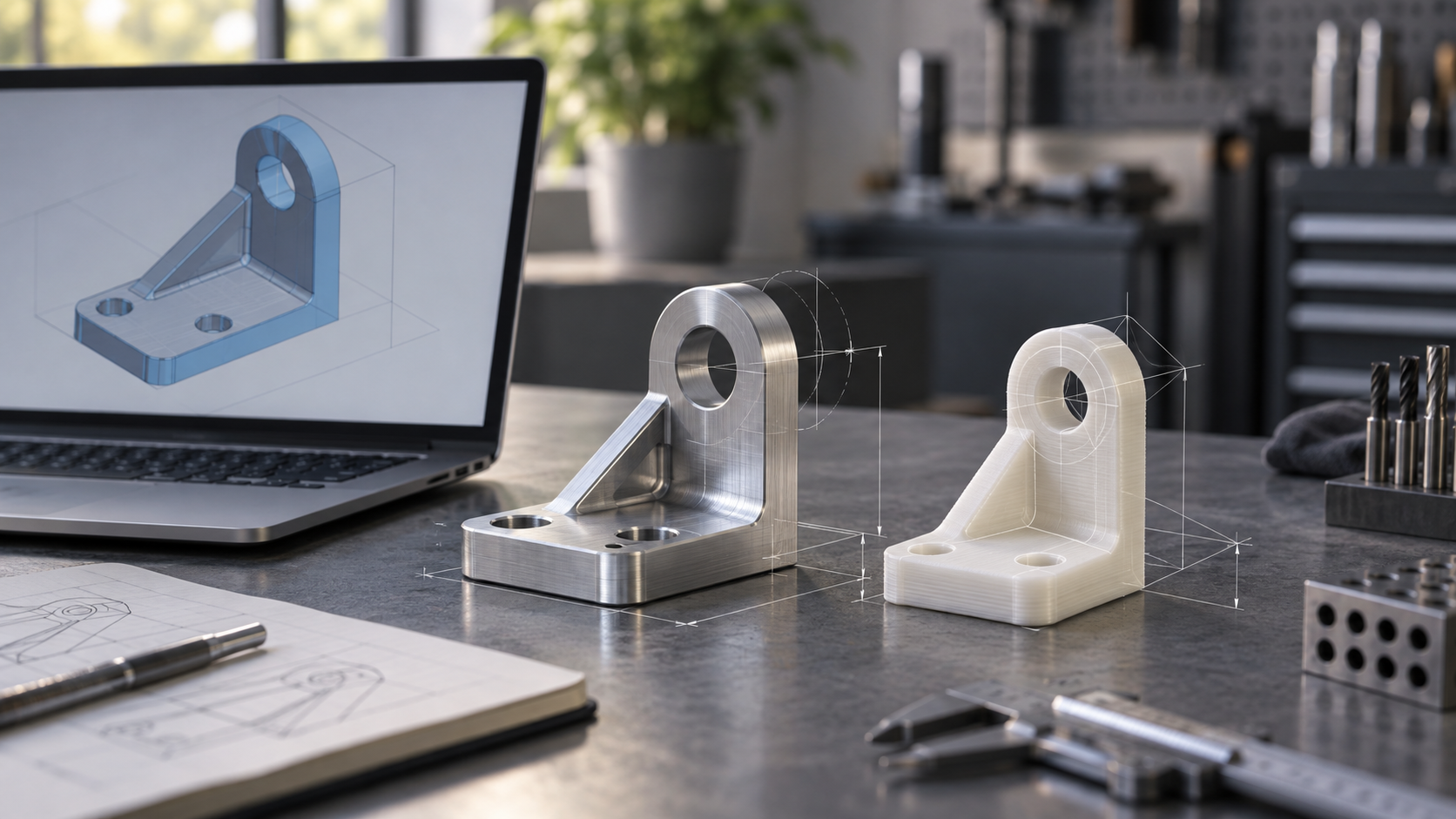
After Uploading Drawings, Which Step Really Determines Success or Failure
The buyer drags a STEP file into the upload box, and a few seconds later a price and lead time pop up on the screen. The process looks finished, but the real engineering judgment has only just begun. What online platforms compress is the time for inquiry and waiting, not the amount of judgment in manufacturing itself. A common scenario: the drawing marks critical mating dimensions but does not specify datums or agree on an inspection method; the quoting system prices according to default criteria, the factory machines according to its own understanding, and only after the goods arrive is it discovered that the assembly relationships do not match.
What usually determines success or failure is not machine tool precision, but three upstream nodes: whether DFM review was actually done, whether the process route matches the batch size, and whether the inspection agreement was clearly written before ordering. If any one of these three is skipped, the later rework cost will multiply.
The value of going online lies in compressing the quoting for standard parts from days to minutes, allowing engineering resources to focus on what truly requires judgment. So a more practical approach is: complete the drawing information, clearly state critical dimensions and acceptance standards, and then let the system quote. Fast quoting does not equal fast judgment; leaving judgment to the people who should make it is the real source of efficiency in online manufacturing.
What Online Quotes Are Actually Quoting: Criteria Matter More Than Unit Price
For the same drawing, Platform A quotes 180 and Platform B quotes 260. Many people's first reaction is, "B is ripping me off." But if you lay both quotes side by side, the difference is often not in profit margin, but in the quoting criteria: one calculates material by blank weight, the other by finished net weight; one defaults to standard tolerances, the other includes extra inspection labor for critical dimensions; one excludes surface treatment, the other includes anodizing. Unit price is only the result; the criteria are the cause.
An online quote usually consists of several parts: material cost (grade, specification, loss), process labor (number of setups, toolpaths, tool changes), surface treatment and post-processing, inspection requirements, and volume tiers. If any part is simplified or omitted, the price will "look cheap."
A Checklist Worth Verifying Item by Item Before Ordering
- Whether the material grade is fixed: Writing only "aluminum" or "stainless steel" is equivalent to handing the choice to the factory, and the final part may not be the one you thought.
- Whether tolerances are included: If critical dimensions are marked on the drawing, does the quote reflect the corresponding machining and inspection costs?
- Whether surface treatment is included: Sandblasting, anodizing, plating, and coating—are they within the unit price or billed separately?
- Whether inspection requirements are clear: Full inspection, sampling inspection, or only appearance confirmation directly affects labor hours.
- Volume tiers: The unit price curve for 1 piece, 10 pieces, and 100 pieces reflects the degree to which setup and programming costs are amortized.
Only after aligning these items does price comparison make sense. Otherwise, you are not comparing the capabilities of two factories, but two estimates with different criteria. If you need to quickly obtain a quote with clear criteria, you can start from the online quote entry and clarify material, tolerances, and surface treatment all at once.
How to Choose a Process Route: The Transition Logic from Prototype to Mass Production
The same drawing, made with different processes, can be completely different in cost, appearance, and assembly performance. Choosing a process is not about choosing the "most advanced" one, but the one that matches the current batch size, structural features, and validation stage. The order of judgment is usually: first look at batch size, then structure, and finally material and appearance requirements.
Layering by Batch Size: Validation, Transition, Mass Production
For one piece to a few dozen pieces, the focus is "getting a physical object to validate the design." Both 3D printing and CNC machining can handle this; the former is faster and offers greater shape freedom, while the latter is closer to the final part in dimensional stability and surface feel. For dozens to hundreds of pieces, if the structure is frozen but the mold budget has not yet been approved, rapid prototyping combined with vacuum casting (silicone mold duplication) is a common transitional method, using silicone molds to produce small batches with material performance close to injection-molded parts. At the stage of mass-produced plastic parts, injection molding only then shows its advantage in unit cost, but the premise is that the structure, draft angles, and gate locations have already been reviewed.
Diverting by Structure: Enclosures, Brackets, and Precision Parts
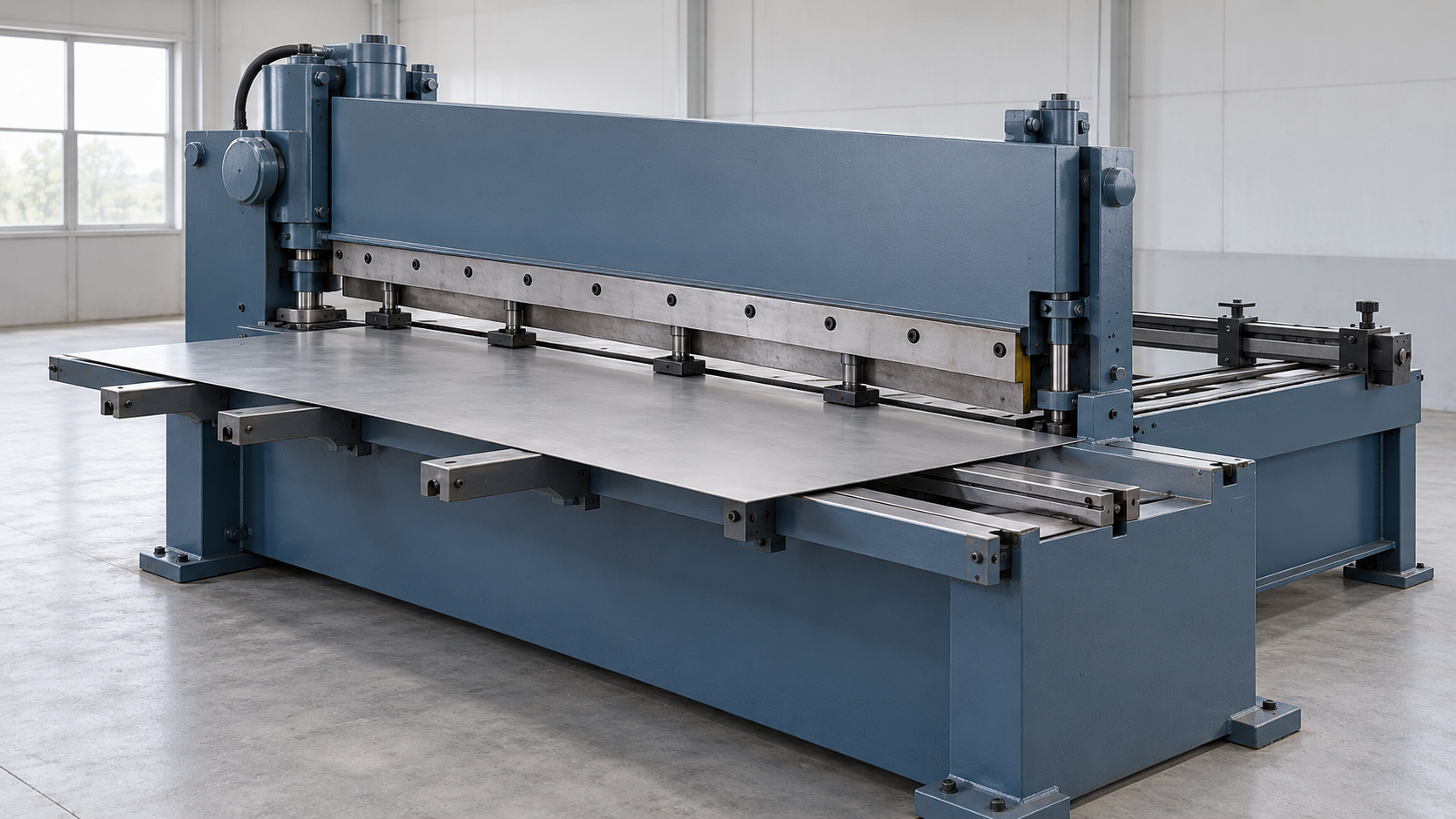
For structures mainly made of thin sheet, such as plates, bent parts, and chassis racks, sheet metal fabrication is more direct, and the combination of stamping, bending, and welding can cover enclosure and bracket needs. Metal and plastic parts that require mating surfaces, positional accuracy of hole patterns, or threaded connections are usually handed to CNC. A product often contains both types of parts at the same time; choosing processes separately and then agreeing on assembly datums is more cost-effective than forcing one process to make all parts.
| Process | Typical Applicable Scenarios | Timing for Switching |
|---|---|---|
| 3D Printing | Rapid prototyping, small-batch trial production, complex shape validation | When the structure is frozen and higher dimensional stability or surface feel is needed |
| CNC Machining | Metal and plastic precision parts, mating surfaces, and hole systems | When volumes rise and per-part labor time is too high, evaluate other processes |
| Sheet metal fabrication | Thin-sheet structures such as enclosures, brackets, and frames | Re-evaluate when one-piece forming or higher appearance requirements are needed |
| Urethane casting | Small-batch transition, close to injection-molded material performance | Switch to injection molding when the mold budget is in place and volume is sufficient to amortize mold costs |
| Injection molding | Volume plastic parts | Do not cut molds prematurely when the design is not frozen or volume is too small |
There is no universal number for when to switch; it depends on the balance among mold cost, per-part price, and time to market. The prudent approach is: iterate with rapid processes before the design is frozen, then evaluate mass-production processes after freezing, avoiding investment in molds during the validation stage.
DFM review: the step most easily skipped in the online process
Online quoting is fast because the system only reads geometry and volume. But whether a part can be produced reliably depends on constraints beyond geometry: whether the tool can reach inside, whether the plastic can be ejected, whether sheet metal bending will hit the tooling. These judgments are hard to fully automate and usually require engineering involvement. Skip the DFM review, and the problems don't disappear—they just get pushed from the quoting stage to the machining stage, at a higher cost.
Machined parts: first check whether the tool can reach
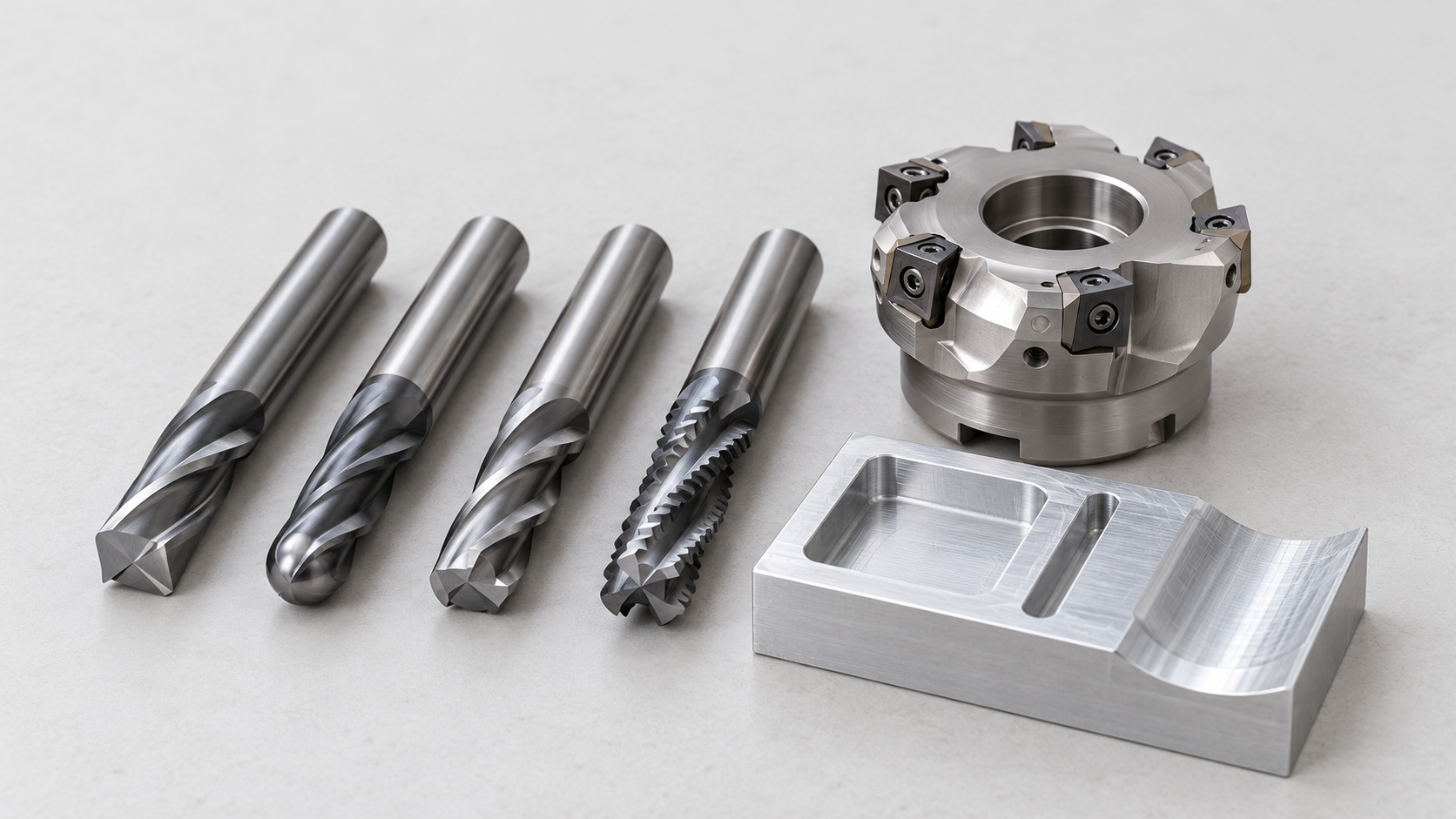
The most typical DFM issue in CNC machining is tool accessibility. Deep cavities, narrow slots, internal right angles, and bottom corner cleanup all limit tool diameter and reach length. The longer the tool overhang, the worse the rigidity, and the harder it is to guarantee surface quality and dimensional stability. During review, the focus is usually on: the ratio of cavity depth to opening width, whether slot width is smaller than common tool diameters, whether internal corners allow a corner-cleanup radius, and whether threaded-hole pilot holes and chamfers conflict with the toolpath. Walls that are too thin can also deform under clamping and cutting forces—issues that can't be seen at the quoting stage but surface once the part is on the machine.
Sheet metal and injection molding: their respective hard constraints
For sheet metal parts, check the relationship between bend radius and sheet thickness, whether there are holes or cutouts near the bend line, and whether the distance from holes to the bend edge is sufficient—otherwise the bend will pull the material out of shape. For injection-molded parts, check draft angle, wall thickness uniformity, the thickness ratio of ribs to the main wall, and whether the gate location leaves visible marks. These rules are not absolute numbers but empirical judgments that vary with material and structure, and they need to be discussed in the context of the specific part.
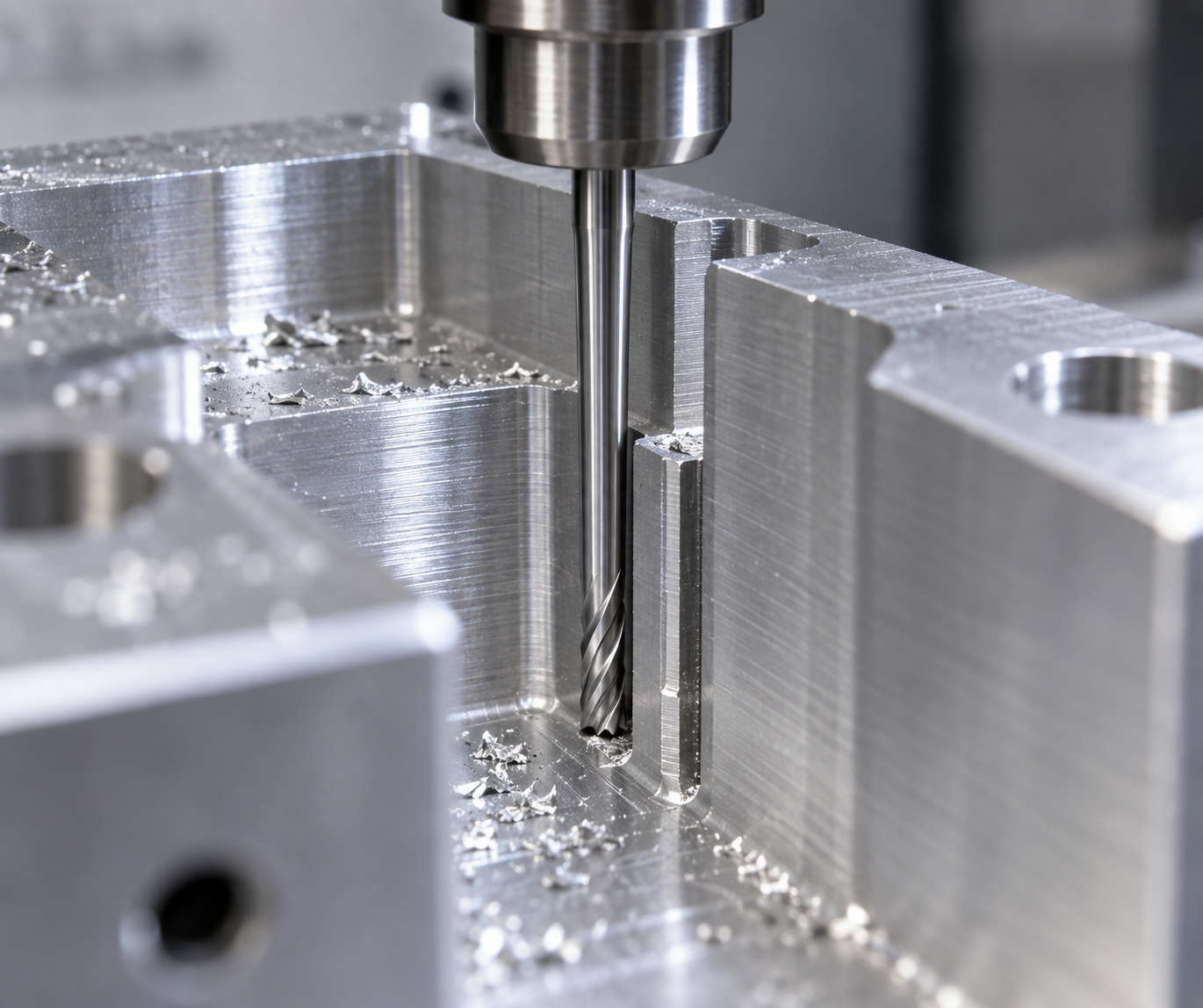
The pragmatic approach is: after uploading the drawing, clearly mark the key mating surfaces, assembly relationships, and load-bearing areas so engineering can focus during review. If the design itself carries obvious risks, rather than waiting for rework after machining, it's better to adjust the geometry or split the part during the review stage. The time spent on this step is usually far cheaper than rework.
First article confirmation and inspection: agree on acceptance criteria before ordering
The step most easily overlooked in online ordering is defining "qualified" clearly. If the drawing only says "machine per 3D model," the supplier and the buyer may understand the same sentence completely differently: do chamfers, burrs, tool marks, and the fit of mating surfaces that aren't annotated in the model count as problems? Arguing after the goods arrive means the costs of rework, remaking, and delays can only be split between both parties—and such disputes almost always stem from not agreeing on acceptance criteria before ordering.
The purpose of first article inspection (FAI) is to "materialize" the standard before mass investment. It is not just a dimensional report; it translates the abstract requirements on the drawing into a concrete part, so both parties agree on datums, key dimensions, and appearance standards. For small batches or single pieces, the first article is often the delivered part itself, which makes confirming before production even more important rather than remedying afterward.
Inspection logic: define datums first, then discuss dimensions
The first step in inspection is not measuring dimensions but confirming datums. For the same hole position, measuring from different faces as the datum can yield results in different ranges. The drawing should clearly specify the datum face, datum axis, or assembly relationship, especially for multi-part mating structures. Key dimensions usually refer to those affecting assembly, function, or appearance; the rest can be handled per general requirements. Deciding which dimensions to list as key requires the buyer's judgment based on actual use, not leaving it to the machinist to decide for you.
Appearance standards must also be clarified in advance. CNC machining leaves tool marks, 3D printing leaves layer lines, and sheet metal bending leaves springback marks—these are inherent process characteristics, not defects. If the appearance surface has specific requirements, specify which face is visible and what treatment is allowed (such as sanding, bead blasting, anodizing), rather than vaguely writing "smooth surface." The cost of vague specifications is often shifted to later sorting, rework, or even scrapping.
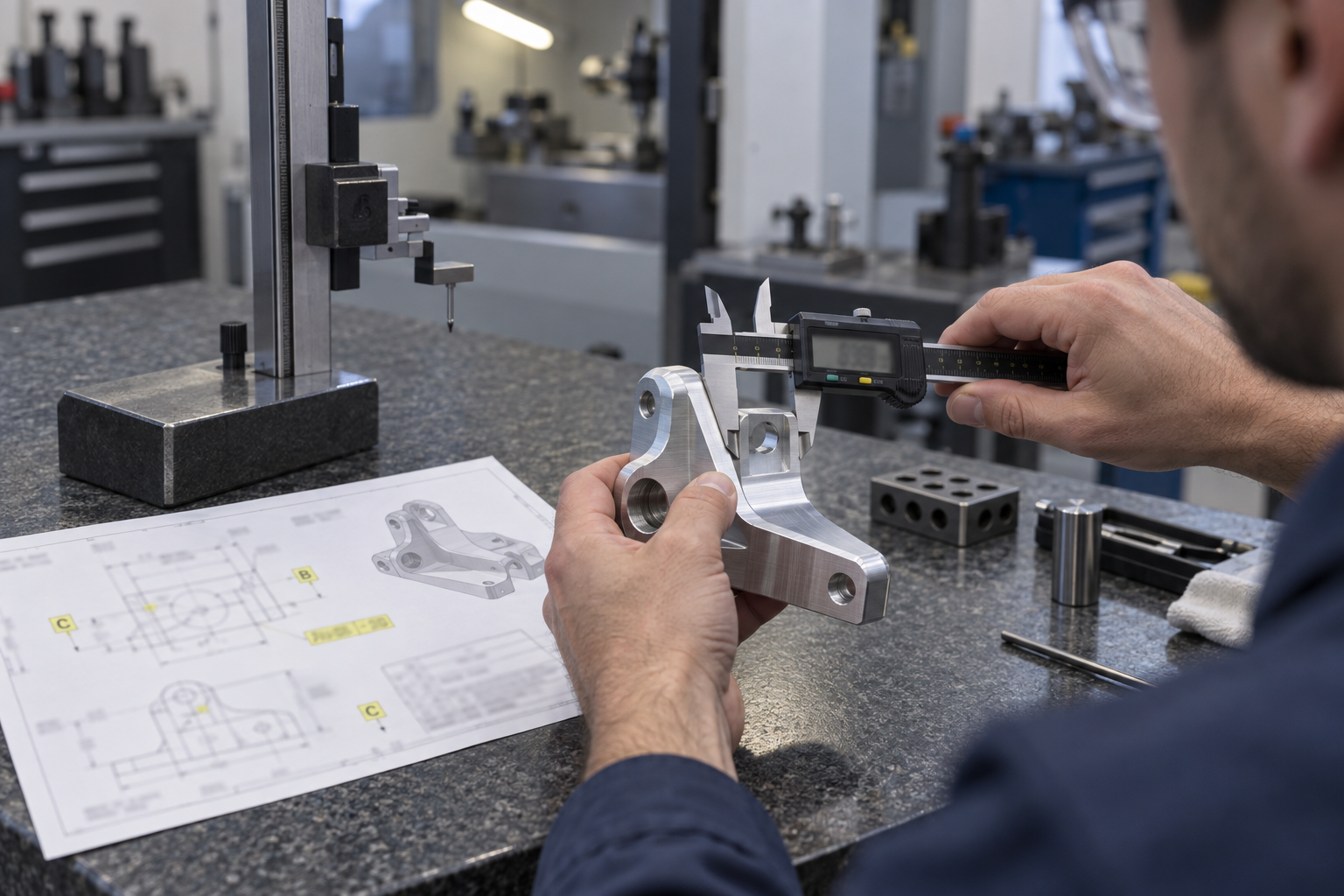
To agree on inspection requirements in the online process, the most practical approach is to state three things in the order notes or drawing annotations: which dimensions are key, what the datums are, and where the appearance surfaces are. If the structure is complex or involves an assembly tolerance chain, it's advisable to switch to manual communication and confirm the inspection plan together. To evaluate the inspection and machining plan for a specific part, you can submit drawings via AI chat quoting, so engineering can align acceptance criteria already at the quoting stage.
Which steps are suitable for online completion, and which must go back to engineering communication
Understanding the online process as an automated assembly line is the pitfall many buyers fall into most easily. More accurately: the online system is good at handling tasks with complete information and little room for judgment, and once the room for judgment grows, decision-making must be handed back to engineering staff. This dividing line determines whether you should click "Submit Order" or "Contact Engineering."
Cases suitable for an online closed loop
- Complete drawing information: the 3D model and 2D annotations are consistent, and material, surface treatment, and quantity are all clearly stated.
- Conventional structures: plates, shafts, brackets, enclosures, etc., with no deep cavities or narrow slots beyond conventional tool accessibility.
- Mature processes: standard paths such as CNC machining, 3D printing, and sheet metal bending, with limited parameter space.
- Clear acceptance criteria: key dimensions, datums, and appearance requirements are already written into the drawing or inspection instructions.
Cases where switching to manual communication is recommended
- Assembly tolerance chain: multiple parts have mating relationships, and a qualified individual part does not equal a qualified assembly.
- Non-standard structures or special materials: machinability, alternatives, or process feasibility need to be confirmed.
- Complex surface treatment and post-processing: involves multiple process steps, masking requirements, or appearance grade determination.
- Batch and cost sensitivity: requires evaluating the timing of process switching, rather than quoting based on a single-piece logic.
The judgment criterion is actually very simple: if a problem has more than two reasonable approaches, and choosing the wrong one will lead to rework or assembly failure, it should not be decided by the online form alone. Spending ten-plus minutes communicating about this type of problem in advance is usually much cheaper than rework afterward. You can first browse the manufacturing capabilities overview to confirm the process boundaries, then use contact us to clarify your questions all at once.
Frequently Asked Questions (FAQ)
The questions below come up almost every time an inquiry is made. The answers try to give the judgment logic, rather than a number that looks precise but actually depends on the specific drawing.
How accurate is the price from the online quote?
For parts with clear structure and complete material and tolerance specifications, the online quote is usually close to the final settlement price. Deviations mainly come from three types of situations: key tolerances or surface treatment not marked on the drawing, deep cavities and narrow slots that require engineering judgment, and batch changes that lead to re-estimation of labor hours. It is recommended to treat the online quote as a decision-making reference, and at the same time check which processes and inspection items are included in the quote scope.
What format is required for uploading drawings?
For 3D models, STEP or IGES is preferred; for 2D drawings, provide PDF. Providing both at the same time is the most reliable—the model defines the geometry, and the drawing defines tolerances, datums, and appearance requirements. When only a 2D drawing is available, complex curved-surface parts are prone to misunderstandings, so it is recommended to confirm with engineering before placing an order.
For small batches, should I choose CNC, 3D printing, or vacuum casting?
Look at three things: material, precision requirements, and quantity. Metal parts and plastic parts that require high dimensional consistency usually go through CNC machining; structural verification and rapid prototyping are suitable for 3D printing; plastic parts in the range of dozens of units with an appearance close to injection molding can consider vacuum casting. When the quantity continues to rise and the material is suitable for injection molding, then evaluate tooling. For specific trade-offs, it is recommended to communicate with engineering based on the drawing.
Why do lead times vary?
Lead time is determined jointly by material preparation, process route length, surface treatment, and inspection steps. For the same drawing, changing the material, adding surface treatment, or raising inspection requirements will all change the production scheduling rhythm. The time given by the online system is usually an estimate under normal circumstances. When special materials or complex post-processing are involved, the time confirmed by engineering shall prevail.
What should I do if I find dimensional deviations after receiving the goods?
First confirm whether the measurement method and datum are consistent with the drawing—many disputes come from different measurement conventions. If it is confirmed to be a machining deviation, keep the parts, inspection report, and drawing version, and contact the person in charge as soon as possible, explaining the location of the deviation and the extent of its impact on assembly. The earlier you provide feedback, the easier it is to determine whether to repair, redo, or adjust subsequent batches.
Key takeaways
- What online platforms truly compress is the waiting time for quoting and scheduling, not engineering judgment itself; DFM review is still the key node determining yield.
- Process selection depends on batch size, structural complexity, and material: CNC and 3D printing are commonly used in the prototyping stage, vacuum casting can be used for the transition to small batches, and mass production then shifts to injection molding or sheet metal.
- Differences in online quotes often come from different criteria—whether material grades, surface treatment, tolerance callouts, and inspection requirements are included is more worth checking than the unit price itself.
- The more complete the drawing information (datums, critical dimensions, assembly relationships), the smoother the online process; vague callouts shift cost to later rework and communication.
- The logic for first article confirmation and inspection should be agreed upon before placing an order, rather than discovering after receiving goods that the acceptance standards are inconsistent.