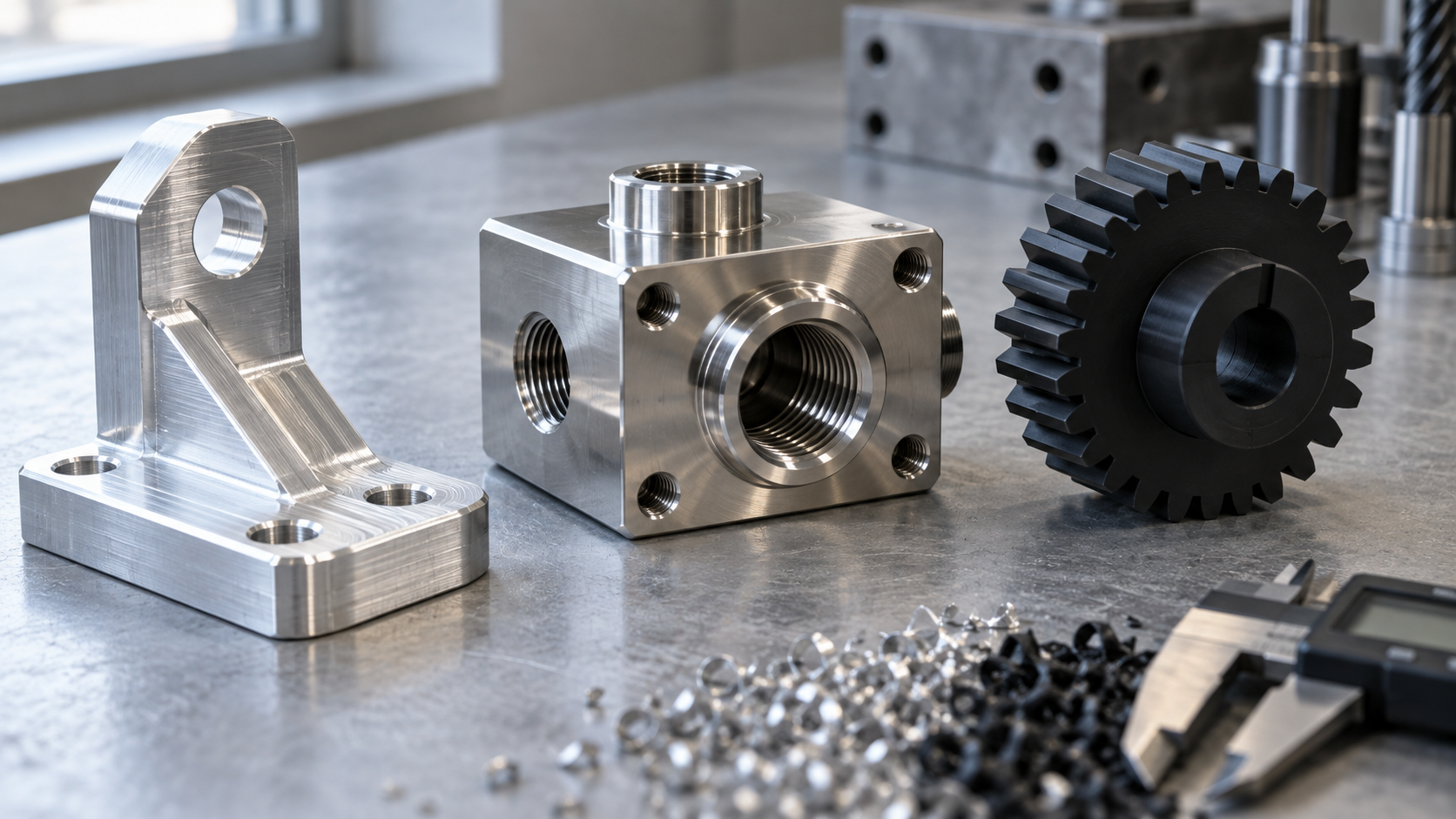
How to choose materials for CNC processes: ask about function first, then grade
When a drawing is spread out, or an old part is placed on the table, many people's first reaction is: use 6061 or 304? This question is asked too early. For how to choose materials for CNC processes, the real starting point is not the grade, but where this part is installed and what job it needs to do. The grade is the answer, not the question.
In other words, material selection should follow function, not the grades you are familiar with. Structural brackets care about strength and fatigue; fluid manifolds care about corrosion resistance and whether the sealing surface can fit properly; connectors care about conductivity and plating compatibility; fixtures care about dimensional stability. For the same part, changing its usage location may result in a completely different material.
So before opening a materials handbook, fill out the checklist below first. It does not need to be very precise, but each item will screen out a batch of candidates later:
- Load and stiffness: Is it a load-bearing part or only for support? Will it be subjected to repeated forces?
- Weight: Is there a hard requirement for weight reduction, or is heavier more stable?
- Temperature: What is the long-term operating temperature, and are there short-term peaks?
- Corrosion and media: What liquids, gases, or cleaning agents will it contact?
- Wear: Is there relative motion, sliding fit, or frequent disassembly and assembly?
- Electrical and thermal conductivity: Is heat dissipation, grounding, or insulation required?
- Cleanliness: Will it be used in a clean environment or an ordinary workshop? Can burrs and oil contamination be present?
- Chemical resistance: Will it come into contact with solvents, acids, bases, or disinfectants?
Once this checklist is filled out, you will find that the candidate materials are often only three to five, rather than dozens. All subsequent judgments—metal or plastic, stainless steel or aluminum alloy, whether PEEK is needed—revolve around this checklist. No material is optimal in every dimension; there is only the one that is more suitable under your specific combination of conditions.
This article follows a decision sequence: first classify by environment, then examine metals and plastics separately in detail, then return to machinability, post-processing, and inspection—conditions that are easily overlooked but can overturn preliminary choices—and finally close with a quick-reference table. The goal is to enable you to clearly explain "why this material" before quoting and review, rather than just naming a grade.
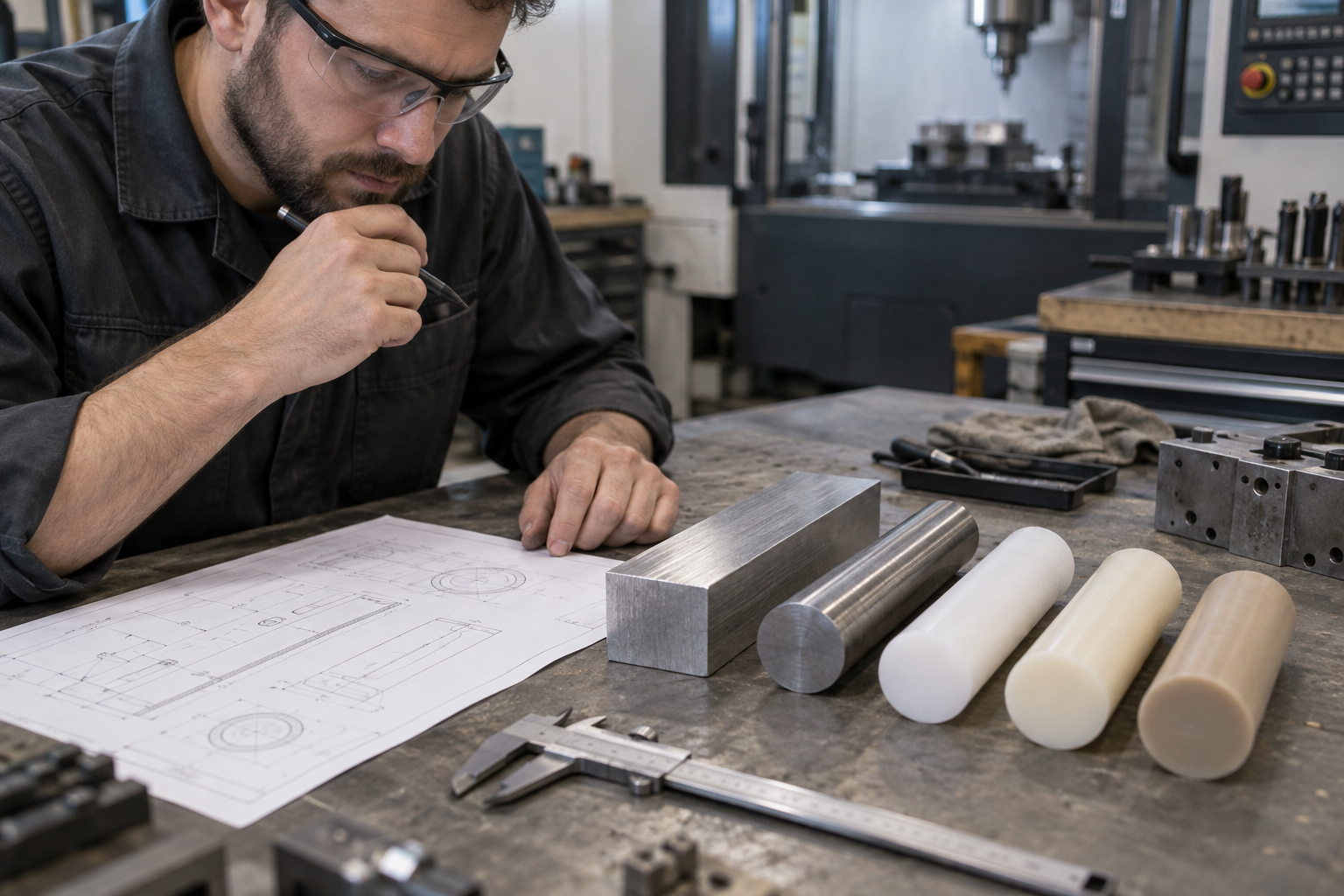
If your part's functional requirements are already fairly clear, you can go directly to the later sections on environmental classification and metals and plastics. If you still need to confirm machining feasibility, you can refer to the materials and process scope listed in CNC machining capabilities to see which features need to be confirmed with the supplier in advance. Material selection, in the end, is about finding a workable balance among function, environment, and manufacturing.
Filter materials by environment: how to classify corrosion, temperature, humidity, and UV
When discussing how to select materials for CNC processes, many people's first reaction is to look through grade tables: 6061, 304, POM... But what can truly eliminate most candidates in one stroke is actually the environment. The same structural bracket, installed in a constant-temperature dry cabinet versus immersed in chloride-containing coolant, has completely different answers. So do not rush to decide on a grade; first answer three questions: Where is this part installed, what media does it contact, and how often is it maintained?
Quantifying these three questions gives you an environmental checklist: whether the contacting medium is water, oil, acid/base, or salt spray; the long-term operating temperature and whether there are short-term peaks; whether humidity is persistently high and whether there is condensation; whether it is outdoors and exposed to long-term direct UV; whether it needs repeated wiping or disinfection. Once this checklist is filled out, the range of material choices can usually be narrowed to two or three categories.
Corrosion and cleaning: for harsh applications, consider 316 stainless steel or PEEK first
Corrosion is one of the most commonly underestimated factors. When judging, distinguish between "occasional exposure to moisture" and "long-term exposure to corrosive media"; the material requirements differ by one level. For severe corrosion, or applications requiring repeated cleaning, disinfection, and rinsing, common industry practice is to prioritize 316 stainless steel, or PEEK among engineering plastics. 316 is usually more often mentioned than 304 for performance in chloride-containing environments, while PEEK excels in chemical resistance and temperature resistance, at the cost of higher price and the need to pay attention to chip evacuation and heat during machining.
If it is only a general indoor, dry environment with occasional wiping, 6061 aluminum or ABS is often sufficient, and there is no need to pay machining costs for corrosion resistance you do not need. Here is a common rework point: 304 was selected, but the part needs to contact chloride-containing media, and pitting was only discovered after some time in use—this kind of problem is much cheaper to raise during the quotation stage than to fix by changing material afterward.
Temperature: distinguish long-term operating temperature from short-term peaks
Temperature should be viewed in two tiers: long-term operating temperature determines whether the material will soften, creep, or accelerate aging; short-term peaks determine whether it will instantly deform or fail. Many plastics experience a significant drop in dimensional stability and stiffness as they approach their heat deflection temperature; even without melting, fits may still have problems.
Metal parts near heat sources must also consider thermal expansion. Aluminum has a larger coefficient of thermal expansion than steel. When a part has tight-tolerance fits and there is a temperature difference, the expansion difference between materials may consume the fit clearance. In this case, material selection should be considered together with service temperature, not just dimensions at room temperature.
Humidity and UV: two sources of plastic aging and dimensional drift
In long-term high-humidity environments, hygroscopic plastics such as nylon absorb water and swell, causing dimensions to drift accordingly; for high-precision mating parts, if the dimensional change after moisture absorption is not factored in, they may jam on site. UV accelerates the surface aging of most plastics. Plastic parts exposed to long-term direct sunlight outdoors usually either need to be changed to metal or accepted as requiring periodic replacement.
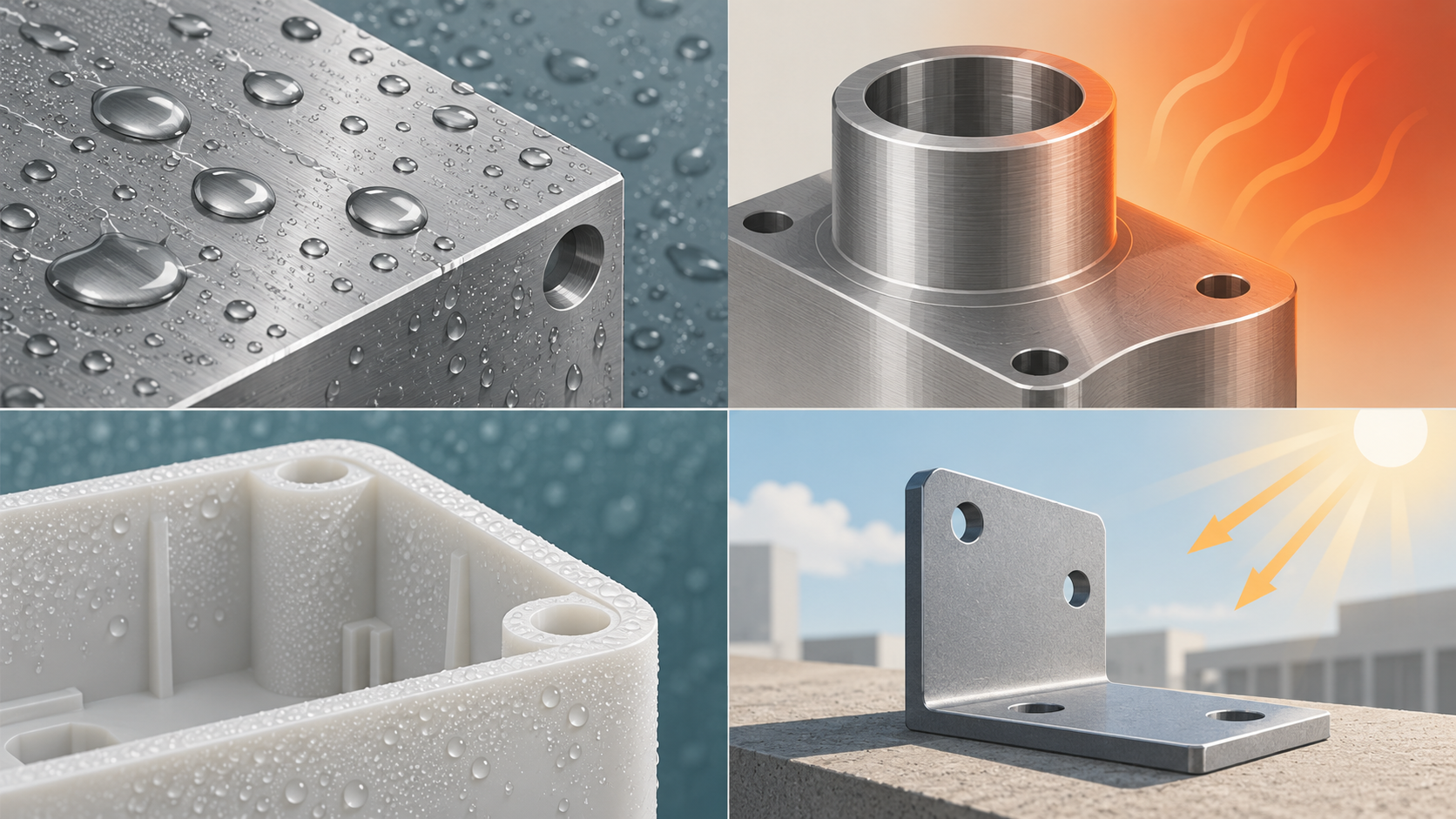
It is worth noting that the temperature resistance, corrosion resistance, and UV resistance data on material promotional pages are mostly limit values under specific conditions or accelerated test results, and often differ from actual operating conditions. When making a judgment, the more reliable approach is to ask the supplier using the actual medium, actual temperature, and actual maintenance cycle, rather than directly applying the numbers on the data sheet. Once the environmental hurdle is cleared, moving on to the detailed grades of metals and plastics will be much more efficient.
How to choose metals: the applicability and risks of aluminum, stainless steel, titanium, copper alloys, and nickel alloys
Metals are the mainstay of CNC machining. For the same drawing, changing the metal will change cost, lead time, surface quality, and failure risk. When choosing a metal, do not start by memorizing grades; first look at what the part must withstand: load, stiffness, weight, temperature, corrosion, electrical and thermal conductivity, cleanliness. Below, common metals are discussed category by category in terms of applicable scenarios and machining risks, with one sentence for each category on "when choosing it is practical."
Aluminum: 6061 and 7075, good machinability, but limited strength and wear resistance
6061 aluminum is one of the most commonly used grades in CNC, often seen in prototypes, enclosures, fixtures, and structural brackets. It has good machinability, chips break cleanly, tool wear is low, and surface treatments such as anodizing are well established. The trade-off is average hardness and wear resistance, so caution is needed for long-term load-bearing or high-frequency friction applications. 7075 aluminum has significantly higher strength and is suitable for high-stress structural parts, but internal stress release after machining can easily cause distortion, especially in thin-walled and long overhanging parts; at the same time, its corrosion resistance is inferior to 6061 and needs to be supplemented by anodizing or coatings. If the design has large thin-walled areas and large flatness requirements, evaluate the stress-relief process and fixturing method before choosing 7075.
When choosing aluminum is practical: the part needs to be light, dissipate heat, and have an anodized appearance, with moderate loads and not in a strongly corrosive environment, 6061 is often the starting point; if higher strength is needed and weight is sensitive, 7075 can be considered, but write flatness and stress relief into the drawing.
Stainless steel: 304 and 316, corrosion-resistant, cleanable, passivation-compatible
304 and 316 are the mainstays of CNC stainless steel. 304 is used for general corrosion resistance and food- and medical-adjacent scenarios; 316, because it contains molybdenum, is more often considered in chloride-containing environments, marine atmospheres, and situations with repeated cleaning and disinfection. The advantages of stainless steel are corrosion resistance, cleanability, and compatibility with passivation processes; the disadvantages are a strong tendency to work harden, high cutting forces, rapid tool wear, more conservative feed and cooling, and thin-walled parts are also prone to distortion from cutting heat and clamping force. Deep cavities, slender holes, and fine threads are harder to machine in stainless steel than in aluminum, and cost and scrap risk are usually higher.
When choosing stainless steel is practical: the part is in long-term contact with moisture, chemicals, or salt spray, or needs frequent cleaning and disinfection, and higher machining costs are acceptable. In generally dry indoor environments, aluminum or plastic is often sufficient, and stainless steel should not be the default.
Titanium, copper alloys, nickel alloys: good performance, but machining risk and cost must be calculated in advance
Titanium (such as Grade 5 / Ti-6Al-4V) has high specific strength and good corrosion resistance, and is often used in aerospace, medical, and high-end structural parts. The machining difficulties are concentrated in cutting heat: titanium has poor thermal conductivity, heat concentrates at the cutting edge, tool wear is fast, and special tools, sufficient cooling, and conservative parameters are required; thin-walled parts are also prone to chatter. When choosing titanium is practical: weight reduction and corrosion resistance are needed, higher material and machining costs are acceptable, and the structure can avoid excessively thin walls and deep narrow slots.
Copper alloys have good thermal and electrical conductivity and are commonly used in electrodes, heat dissipation parts, and electrical connectors. However, the material is soft and ductile, so improper clamping can easily cause clamping marks and deformation, and drilling and milling tend to produce burrs and rolled edges, so deburring operations must be planned in advance. When choosing copper alloys is practical: electrical conductivity, thermal conductivity, or wear resistance (such as bronze and brass) is the core function, and the part shape is suitable for clamping soft materials.
Nickel alloys (such as the Inconel series) are high-temperature resistant and corrosion resistant, and are used in harsh conditions. They have high cutting forces, severe work hardening, and extremely fast tool wear, usually requiring special tools, low speed and high feed, and more frequent tool changes, and both cost and lead time will rise significantly. When choosing nickel alloys is practical: there is no cheaper alternative material for the high-temperature or strongly corrosive environment, and higher machining costs and longer process validation are acceptable.

There is no single answer to metal selection; the key is to match each material's trade-offs to the part's function. The next section looks at engineering plastics: when plastic is more suitable than metal, and what scenarios ABS, POM, nylon, PC, and PEEK are each suited to.
How to choose plastics: typical scenarios for ABS, POM, nylon, PC, and PEEK
After metals, plastics are the other major category in CNC parts. Many people assume you can just pick any plastic, but in reality the differences between engineering plastics are even greater than those between several aluminum alloys: some hold dimensions as steadily as molded parts, some swell the moment they touch moisture, and some grab the tool and string out the instant they're cut. When material selection for CNC processes reaches the plastics stage, the order of judgment hasn't changed—first look at what the part needs to do, then settle on a specific grade.
ABS: The worry-free choice for appearance parts and general structural parts
ABS is often the least fussy of the plastics for CNC: easy to cut, not prone to cracking, surface can be sanded and painted, and the cost is low. For equipment housings, panels, non-load-bearing brackets, and assembly fixtures—parts that don't demand high strength but still need decent appearance—ABS is usually sufficient.
Its shortcomings should be known in advance: strength, stiffness, and heat resistance are all average, and it will creep under long-term load or near heat sources; weather resistance is also ordinary, and long-term outdoor exposure tends to age it. So ABS suits indoor, room-temperature, general structural parts with limited loads—which is exactly the plastic counterpart to the judgment in the research that "in general environments, 6061 aluminum or ABS is often sufficient."
POM: A regular for gears, sliders, and precision mating parts
POM (polyoxymethylene, often called acetal in the industry) has good rigidity, a low coefficient of friction, and wear resistance; its water absorption is much lower than nylon's, and its dimensional stability is good too. For gears, sliders, bushings, cams, and mating parts that need long-term repeated motion, it's usually the first thing that comes to mind. CNC machining POM produces crisp chips and easily achieves a smooth surface finish, making it one of the easy-to-machine types.
Two points to note: first, POM will gradually decompose under long-term high-temperature use, so actual working temperatures must be verified near heat sources; second, its "self-lubrication" is only relative to metals, and wear amounts still need to be evaluated under heavy loads or high-speed conditions. Treating it as a "precision motion-part plastic" fits its strengths better than treating it as a "structural load-bearing part."
Nylon: Tough and wear-resistant, but moisture absorption changes dimensions
Nylon (PA) has good toughness, impact resistance, and wear resistance, plus a certain degree of self-lubrication, and is common in clips, guards, wear pads, and structural parts under load but not requiring high precision. Its trouble lies in moisture absorption: nylon absorbs water from the environment, and after absorbing water its dimensions swell while strength and stiffness change accordingly. With the same drawing, parts machined in a dry season versus a humid region may no longer fit the same way after sitting for a while.
So the judgment is straightforward: if a part has tight-tolerance fits, precision hole positions, or long-term dimensional stability requirements, evaluate the humidity effect before using nylon, and if necessary switch to a material with lower water absorption, or leave allowance in dimensional tolerances based on the post-absorption state. If you only need toughness and wear resistance, nylon is still a cost-effective choice.
PC: The first choice for impact resistance and transparent parts, but watch internal stress
PC (polycarbonate) ranks among the top engineering plastics for impact resistance and is also transparent, so it's often chosen for protective covers, viewing windows, and housings that need to resist impacts. But PC has high internal stress, and after machining, if it contacts certain solvents or oils, or is forcibly compressed during assembly, stress cracking can occur—fine cracks appear on the surface, often only exposed after a period of use.
The response isn't to avoid PC, but to control the process and assembly: avoid overheating and excessive cutting forces during cutting, stress-relief annealing can be an option, avoid forced press-fitting with interference during assembly, and confirm compatibility of contact surfaces with the greases and cleaners used. Transparent parts especially need to be specified in advance, because scratches and stress marks are magnified in the transparent state.
PEEK: A material for harsh conditions with high temperature and chemical resistance
PEEK is a high-performance engineering plastic: high-temperature resistant, resistant to many chemical media, with good mechanical properties, and in some cases it can replace metal for lightweight or insulating parts. It's used in scenarios with temperature and media requirements such as semiconductors, medical, chemical, and aerospace, and is the plastic-side counterpart to the research's "harsh corrosive environments may consider 316 stainless steel or PEEK."
The cost is a high price, and machining isn't worry-free either: PEEK has poor thermal conductivity, cutting heat tends to accumulate, and chip evacuation and cooling must be arranged well, otherwise the surface can burn or dimensional drift can occur; tool wear is also faster than with ABS or POM. So before confirming the use of PEEK, it's advisable to think clearly: is it the only material that can simultaneously satisfy temperature resistance, chemical resistance, and strength? If the answer isn't unique, lower-cost materials are often more economical.
When plastic is more suitable than metal
Putting the above types together, the scenarios where plastic wins actually share common features: lightweight, insulating, self-lubricating, chemically resistant, and with low loads. For example, motion parts that need weight reduction, support parts for electrical insulation, sliding fits that don't want oil lubrication, and containers or piping parts that contact weak acids and bases. In these cases metal is either too heavy or requires extra insulation/lubrication treatment, while plastic does it in one step.
Conversely, once high loads, high stiffness, long-term high temperatures, or severe wear are involved, metal is usually still the main line—plastic's creep, aging, and wear under these conditions will quickly show. The conclusion still comes down to the old saying: there is no best material, only the most suitable material. The choice at the plastics stage likewise starts from functional requirements, not from familiar grades.

How machinability affects CNC cost and surface quality
The easiest thing to overlook when selecting materials: a material with good service performance isn't necessarily easy to machine. For how to choose materials in CNC processes, you can't just look at tensile strength or corrosion resistance data—you also have to ask: can this material be cut stably? Machinability directly affects three things: tool wear, cycle time, and surface roughness. Ultimately, all of these show up in cost and lead time.
Comparing aluminum, stainless steel, and titanium side by side, the differences are most intuitive. 6061 aluminum cuts briskly, evacuates chips smoothly, can be handled with conventional tooling, and easily achieves a finer surface roughness. 304 stainless steel has high toughness and poor thermal conductivity, so cutting heat concentrates near the cutting edge, work hardening is easy, tool wear is faster, and feeds and speeds must be more conservative. Titanium alloys (such as Grade 5) generate even higher cutting heat and have even worse thermal conductivity, so the cutting edge temperature rises quickly, usually requiring lower cutting speeds and ample cooling, and tool life is short. For the same shape, changing material may mean changing tools, adjusting parameters, and adding machining hours.
Thin walls, deep cavities, tight tolerances: first assess whether machining can be stable
When thin walls, deep cavities, precision holes, or fine threads appear on a drawing, the risk in material selection is amplified. Thin-walled parts tend to deflect or chatter under cutting forces, hard and brittle materials may chip at the edges, and soft and tough materials may spring back after deflection, making dimensions unstable. Deep cavities make chip evacuation difficult, and accumulated chips can scratch already-machined surfaces. The machinability requirements these features place on materials are often more demanding than the part's service requirements.
A practical judgment: When a drawing has thin walls, deep cavities, or tight-tolerance features, first assess whether the material can be machined stably before discussing whether performance meets requirements. If the material frequently goes out of tolerance during trial cutting, even the best corrosion resistance data is meaningless later.
The softness, chip sticking, and chip evacuation issues of plastics
The machinability logic of plastics differs from that of metals. Metals are feared for being hard, while plastics are often feared for being soft. Materials such as POM, nylon, and ABS tend to produce continuous chips during cutting, and poor chip evacuation can wrap around the tool or scratch the surface. Nylon changes dimensions after absorbing moisture, so drying treatment may be needed before finishing. PC has high internal stress and is prone to stress cracking during cutting. Although PEEK has good performance, it is expensive and has poor thermal conductivity, so cutting heat is not easily dissipated, and chip evacuation and cooling also require attention. The surface quality of plastic parts depends more on tool sharpness and chip evacuation than simply increasing spindle speed.
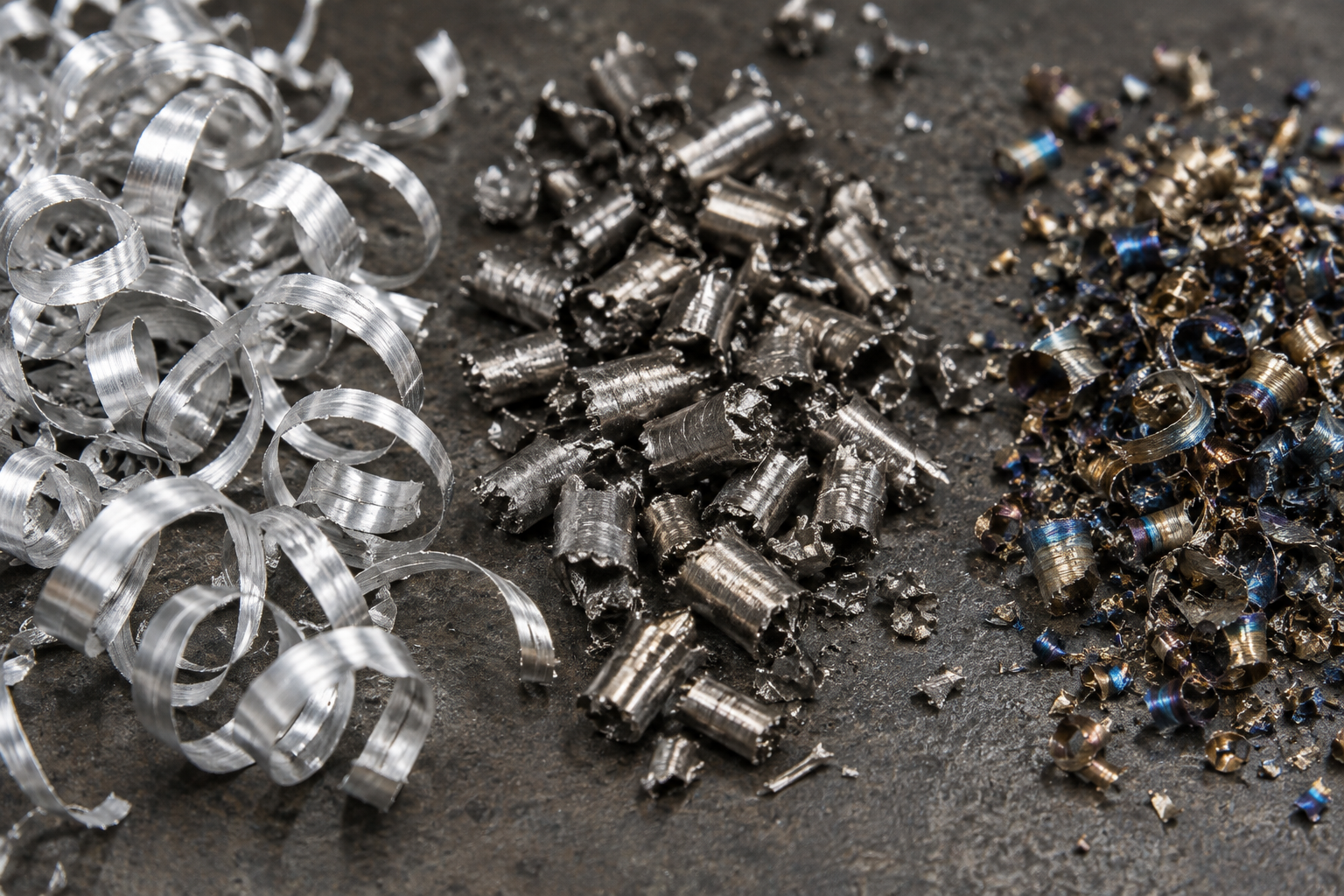
Materials with high hardness and poor thermal conductivity significantly increase the demands on tools and cooling. Nickel alloys have large cutting forces and cause rapid tool wear, usually requiring specialized tools and more conservative parameters. Copper alloys are soft, and excessive clamping force can easily cause deformation, while deburring is also labor-intensive. These materials are not impossible to machine, but they need to be taken into account at the quotation and process planning stages.
When material selection and manufacturing risk are considered together, a pattern emerges: for materials with poor machinability, cost increases are often not linear. Shorter tool life, longer machining time, and higher scrap rates stack on top of one another. Therefore, under equivalent function, prioritizing materials with good machinability is one of the most direct ways to control CNC costs. For specific grades and machining plans, it is recommended to confirm with the supplier when requesting a quote.
A quick-reference table: common CNC material properties and applications
The previous sections discussed environment, metals, plastics, and machinability separately, but in actual material selection people do not go through them one by one. Below, common grades are condensed into a table: first look at characteristics and applications, then look at machining considerations—the last column is often the key to determining cost and lead time.
| Material | Common grades | Main characteristics | Typical applications | Machining considerations |
|---|---|---|---|---|
| Aluminum alloy | 6061 | Light, good machinability, low cost, anodizable | Prototypes, enclosures, fixtures, brackets | Thin walls deform easily; leave finishing allowance and remove material symmetrically |
| Aluminum alloy | 7075 | High strength, hardness higher than 6061 | High-stress structural parts, load-bearing fixtures | High internal stress, thin walls and flatness require extra review, corrosion resistance is average |
| Stainless steel | 304 | Corrosion resistant, cleanable, passivation compatible | Food equipment, general corrosion-resistant structural parts | Work hardening is pronounced, tool wear is fast, feed cannot be too small |
| Stainless steel | 316 / 316L | Contains molybdenum, better resistance to chloride ion corrosion | Medical, chemical, marine environment parts | More prone to gumming than 304, cutting heat is concentrated, cooling must be sufficient |
| Titanium alloy | Grade 5 (TC4) | High specific strength, good corrosion resistance, temperature resistant | Aerospace structures, lightweight high-strength parts | Poor thermal conductivity, concentrated cutting heat, fast tool wear, conservative parameters required |
| Copper alloys | Brass, beryllium copper, etc. | Good thermal and electrical conductivity, easy to machine | Electrodes, heat sinks, conductive contacts | Soft material; prone to deformation and burrs/flanging if improperly clamped |
| Nickel alloys | Inconel-type | Good high-temperature resistance, corrosion resistance, and strength retention | Components for high-temperature, highly corrosive conditions | High cutting forces, extremely rapid tool wear; requires specialized tooling and low parameters |
| Engineering plastics | ABS | Low cost, easy to machine, acceptable appearance | Appearance parts, general structural parts, prototypes | Soft, prone to chip welding; chip evacuation and clamping force must be controlled |
| Engineering plastics | POM | Good rigidity, low friction coefficient, dimensional stability | Gears, sliders, precision fitting parts | Good machinability, but watch for thermal expansion and clamping deformation |
| Engineering plastics | Nylon (PA) | Good toughness, wear-resistant, self-lubricating | Wear parts, bushings, light-load gears | Dimensional changes after moisture absorption; evaluate humidity effects for high-precision parts |
| Engineering plastics | PC | Impact-resistant, can be transparent | Transparent covers, protective parts, impact-resistant parts | High internal stress, prone to stress cracking; annealing and stress relief must be considered |
| Engineering plastics | PEEK | High temperature resistance, chemical resistance, good mechanical properties | Harsh operating conditions, medical, semiconductor parts | High price; chip evacuation and cutting heat need to be controlled, parameters should be conservative |
How to use the quick reference table: locate first, then verify
It is simple to use: first, based on the environment and load conditions in the previous section, circle two or three candidates in the table, then use the machinability column to judge which one is easier to produce consistently. For example, for an indoor light-load bracket, both 6061 and ABS are candidates; if the drawing has thin walls or tight-tolerance fits, 6061's machinability is usually more controllable, while ABS depends on fixturing and deformation. Conversely, for a slider that needs self-lubrication, POM or nylon is more suitable; switching to metal instead requires oil passages or coatings.
This table is a starting point, not the end point. The same grade under different conditions (such as 6061-T6 versus annealed), from different supplier batches, and under different heat treatments will vary in strength, hardness, and dimensional stability. The "typical applications" in the table are common industry scenarios and do not mean a given part is necessarily suitable. Final confirmation must return to the drawing: tolerance bands, surface roughness, post-processing, and inspection requirements. Missing any one of these can make an otherwise suitable grade unsuitable. When unsure, give the functional requirements list together with this table to the processor so material selection and process can be evaluated together; this is less troublesome than fixing the grade first and then finding a process.

How Post-Processing and Inspection Change Material Decisions in Reverse
Anodizing, Passivation, Plating: Surface Treatment Changes Dimensions and Performance
Inspection Plans Also Drive Material Choices Backward: Requirements for CMM, Thread Gauges, and Roughness Inspection
How to Select Materials at the Prototype Stage: Validate with Low-Cost Materials First, Then Finalize the Grade
How to select materials for CNC processes is actually two different questions at the prototype stage and the production stage. The prototype stage needs to answer "does this structure assemble and do the fits work," while the production stage answers "can this material withstand the service environment." Mixing the two together most often leads to this waste: using the final grade for trial assembly, then finding the structure needs to change, with money and time spent on the material itself rather than on the design.
So the more practical order is—at the prototype stage, choose cheap, easy-to-machine materials first and validate the structure and assembly clearly; after design freeze, switch to the final grade based on environment, post-processing, and inspection requirements.
Prototype Stage: Validate the Structure Clearly with Easy-to-Machine Materials
The core task at the prototype stage is to expose design problems, not to prove material performance. 6061 aluminum and ABS are two common starting points in the industry: 6061 has good machinability, stable cutting, and is unlikely to create extra trouble during trial production, making it suitable for structural parts, enclosures, and fixture-type samples; ABS is low-cost and easy to machine, suitable for rapid validation of appearance parts and general structural parts. At this stage the focus is on fits, interference, assembly sequence, and operating space—things you can't see on a drawing and only discover by assembling once.
Using low-cost materials has another side benefit: changes don't hurt as much. Revise the design once, remake one part, the cost is controllable, and the iteration pace is faster. If you start prototyping with titanium or PEEK, material costs and machining hours raise the psychological cost of every change, which actually slows down validation.
Finalizing the Grade: Put Environment, Post-Processing, and Inspection into the Decision Together
After the structure is confirmed, converge on the grade according to service conditions: what media it contacts, what operating temperature, whether insulation or thermal conductivity is needed, whether cleaning and disinfection are required, whether anodizing or passivation is needed. These conditions are often deliberately ignored at the prototype stage, but become hard constraints at production. Which category of material to choose can refer to the earlier approach of grading by environment; the final grade still needs to be confirmed against the supplier's actual condition.
Material Switching Isn't Just Changing the Name: Dimensions, Weight, Surface, and Fixturing All Need Re-Evaluation
Switching from 6061 to stainless steel or titanium isn't as simple as replacing the material name. Density changes, so weight and center of gravity change with it; machinability and rigidity change, so the same thin walls, deep cavities, or slender overhangs that were stable in the original grade may require modified fixturing, added auxiliary support, or adjusted cutting parameters after switching. Switching from plastic to metal means surface treatment methods, thread strength, and the value ranges for mating clearance all need to be reviewed again.
A more reliable approach is: list the key dimensions and fit relationships validated in the prototype, confirm item by item which ones will be affected after switching materials, re-evaluate tolerance bands and fixturing plans, and then move to volume production. If a part involves both structure and appearance, it's advisable to validate the final material once more during small-batch trial production rather than jumping straight to mass production.

To wrap up this section in one sentence: in the prototyping stage, material is traded for iteration speed; in the production stage, material is traded for service reliability. Rapid prototyping and CNC machining can both start from the same drawing, but the material strategy must be decided separately. When you are unsure which features will be affected after switching, hand the prototype part, final material requirements, and inspection methods together to the machining provider for evaluation; this is closer to reality than looking only at grade parameter tables.
Frequently Asked Questions
The following questions basically all come from the earlier decision chain of "from functional requirements to grade." The grades and conditions given in the answers are common industry practices, but for your specific drawing, you still need to confirm with the supplier the condition, heat treatment, and inspection requirements.
How do you choose a material for a CNC process, and what should you look at first?
First look at what the part needs to do, not at the grade you are familiar with. List load, stiffness, weight, operating temperature, corrosive media, wear, electrical and thermal conductivity, and cleanliness, then use that list to screen materials. If the functional requirements are not clearly defined, choosing 6061 or 304 is just guessing.
What is the difference in material selection between a general indoor environment and a harsh corrosive environment?
For general indoor, dry, long-maintenance-interval situations, 6061 aluminum or ABS is often sufficient. For situations with long-term exposure to corrosive media and repeated cleaning and disinfection, more corrosion-resistant materials such as 316 stainless steel or PEEK can be considered. The basis for judgment is where the part is installed, what media it contacts, and how often it is maintained, not the extreme values on a material marketing page.
Why is machinability said to affect CNC cost and surface quality?
Machinability directly determines cycle time, tool wear, burrs, cutting heat, and surface roughness. For materials with good service performance such as titanium and nickel alloys, cutting heat is concentrated and tool wear is fast, and thin walls, deep cavities, precision holes, or fine threads are often harder to machine stably. When the drawing has these features, first evaluate whether the material can be machined stably, then discuss the grade.
Do post-processing and inspection requirements in turn change material selection?
Yes. Anodizing changes dimensions and surface texture, passivation mainly affects the corrosion resistance of stainless steel, coatings may affect conductivity and fit, and heat treatment brings deformation and hardness changes. CMM, thread gauges, and roughness inspection also have requirements for material stability and surface condition. When requesting a quote, state the post-processing and inspection requirements together to avoid discovering process incompatibility only after the material has been selected.
Can the final material be used directly in the prototyping stage?
Not necessarily cost-effective. In the prototyping stage, low-cost, easy-to-machine materials such as 6061 aluminum or ABS are often used to validate fit, interference, and assembly sequence. After the design is confirmed, switch to the final grade based on the service environment, post-processing, and inspection requirements. Material switching may bring changes in dimensions, weight, surface, and machining method, and tolerances and fixturing need to be re-evaluated.
Key takeaways
- The starting point for material selection is the part's functional requirements (environment, load, temperature, corrosion, electrical and thermal conductivity, cleanliness), not familiar grade names.
- Environmental classification is the fastest initial screening: for severe corrosion, consider 316 stainless steel or PEEK; for general environments, 6061 aluminum or ABS is often sufficient.
- Machinability translates directly into cost and surface quality: difficult-to-machine materials such as titanium and nickel alloys usually increase tool wear and cycle time.
- Soft materials such as copper alloys and thin-walled plastic parts are prone to deformation or burrs when improperly clamped, so fixturing and toolpath planning must be done in advance.
- Post-processing (anodizing, passivation, plating, heat treatment) and inspection plans may in turn change material decisions, and should be stated together when requesting a quote.