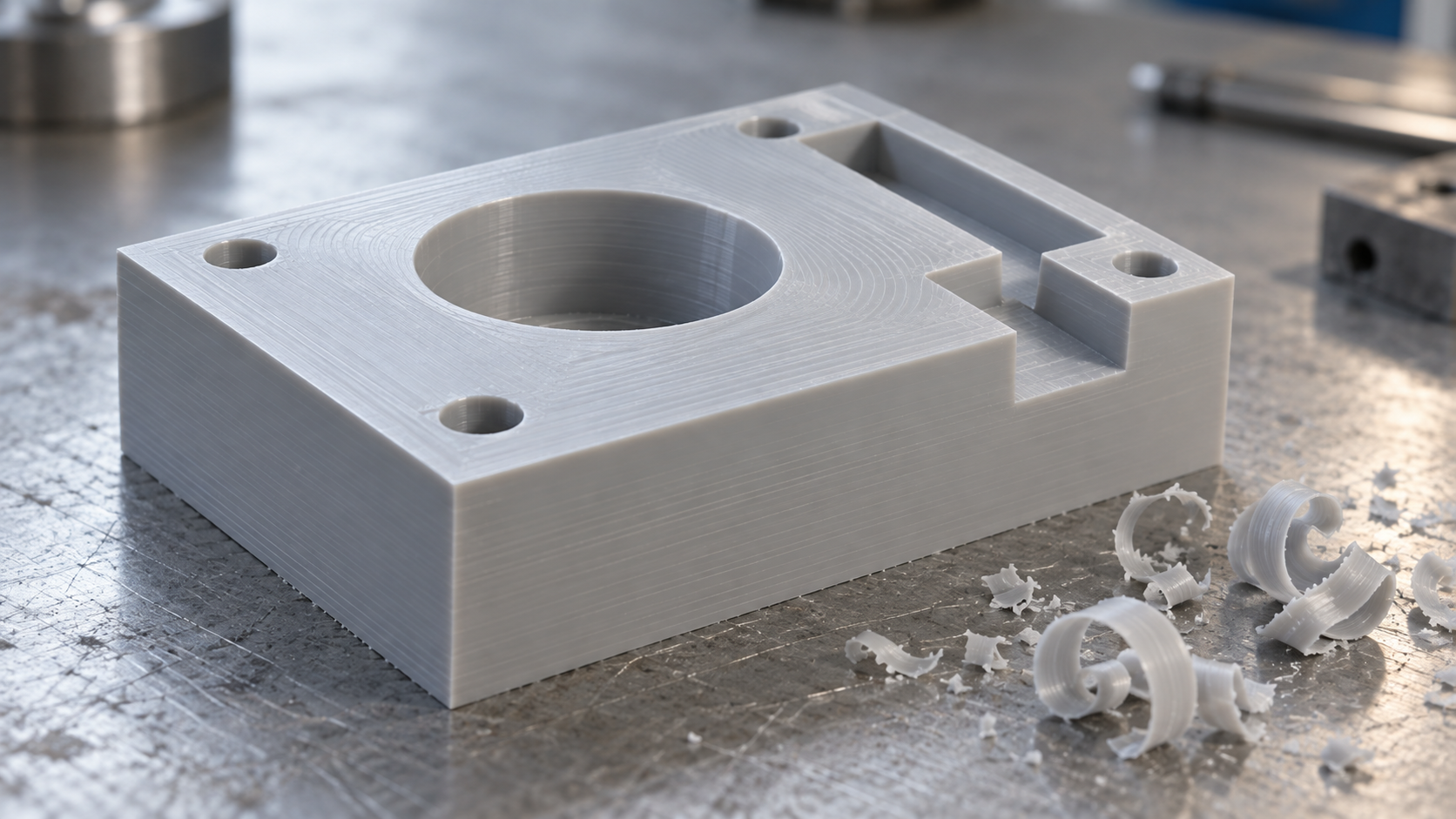
After a PVC sheet is returned: first distinguish whether it is a material problem or a machining problem
A common scene on the shop floor: a PVC sheet is machined and sent to the assembly line, and quality inspection finds yellowed edges, localized melted edges and stringing, and some hole positions that do not match dimensions. Purchasing's first reaction is "this batch of PVC sheet is no good" and asks the supplier to replace the material. But when the same batch of sheet is moved to another machine and cut again with a different tool, the problem often disappears—this shows that the root cause of the return is not necessarily the material itself.
PVC's machining behavior is the result of formulation system, cutting heat, and process selection working together, not something a single grade can determine. The same sheet, cut with a dull tool at high speed, will burn; cut with a sharp tool and reasonable chip evacuation, it can produce a clean cross-section. The difference between flexible and rigid PVC is also far greater than the difference between two metal grades. So the main thread of this article is clear: first separate "material problems" from "machining problems," then discuss how to choose the process.
PVC's true position as an engineering material
On the shop floor, PVC is often treated as a "cheap substitute," but it actually has clear boundaries of application. Its advantages are concentrated in several areas: low raw material cost, stable resistance to acids, bases, and most inorganic chemical media, good electrical insulation, and it can be bonded with solvents or hot-air welded. Flame-retardant formulations are very common in electrical and construction scenarios. These characteristics have long given PVC a place in chemical equipment guards, electrical control box liners, water treatment components, and display and structural validation parts.
Its weaknesses are equally clear. PVC's heat deflection temperature is not high, and it softens easily near heat sources or from friction-generated heat; under sustained long-term load it creeps, meaning it slowly deforms; weather resistance and solvent resistance depend heavily on the formulation—plasticizer content, stabilizer system, and whether flame retardants are added all make the same category of "PVC" behave completely differently. So when selecting material, you cannot just write "PVC"; you need to specify the exact sheet, rod, or pellet grade.
Sheet/rod and injection-molding pellets are not the same set of conclusions
PVC sheet and rod used for machining are usually already formed and stabilized semi-finished products. When cutting, the focus is chip evacuation, cutting heat, and clamping deformation. PVC pellets used for injection molding, however, go through melting, flow, and cooling shrinkage, so the focus is flowability, thermal stability, and mold venting. The formulation orientation, processing window, and inspection priorities of the two are different. Using sheet cutting experience to infer injection-molded part performance, or the reverse, easily leads to wrong conclusions. Before making a process decision, first confirm which type of material you have, then discuss parameters and acceptance.
CNC machining PVC: practical logic of tools, chip evacuation, and cutting heat
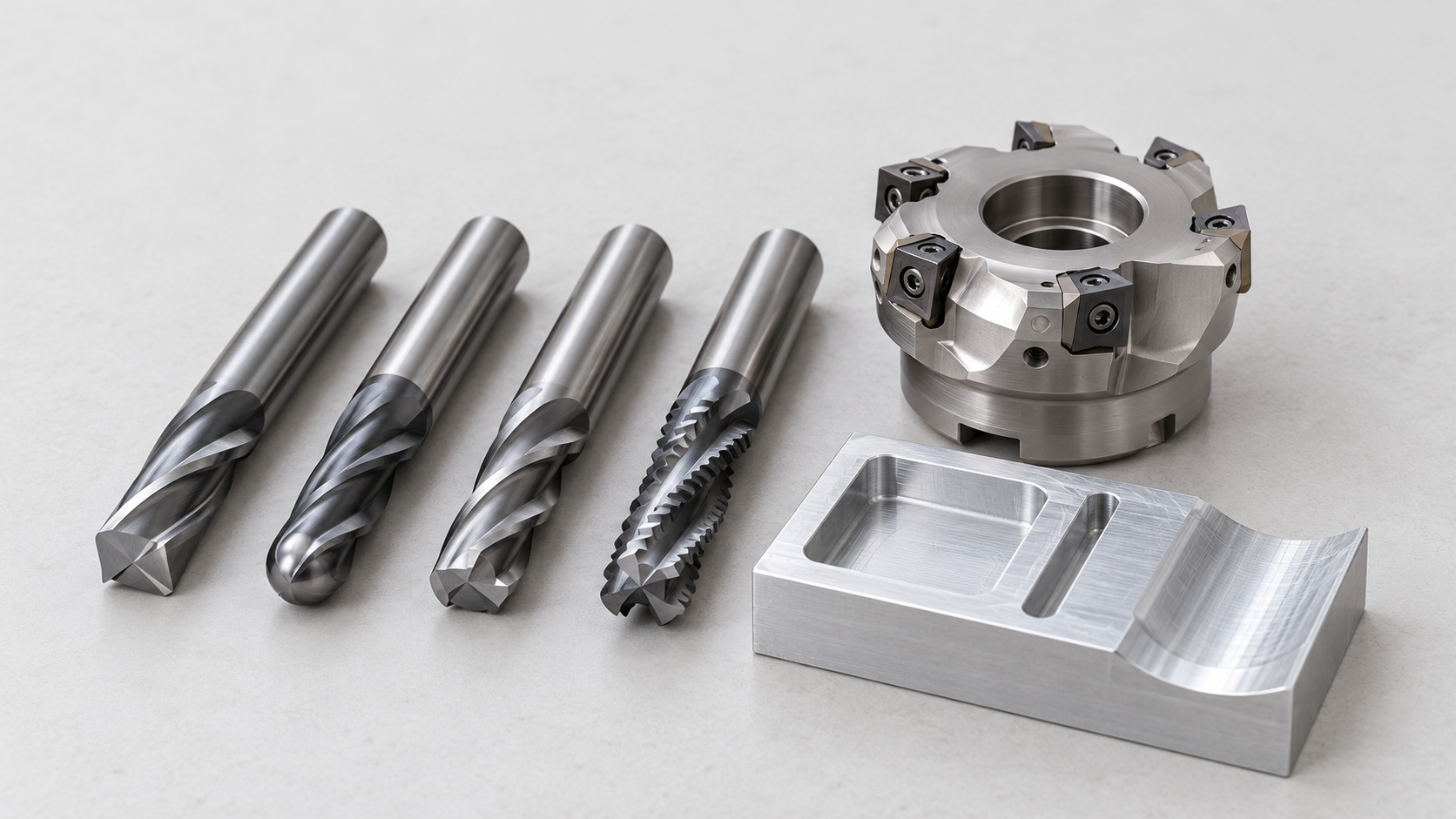
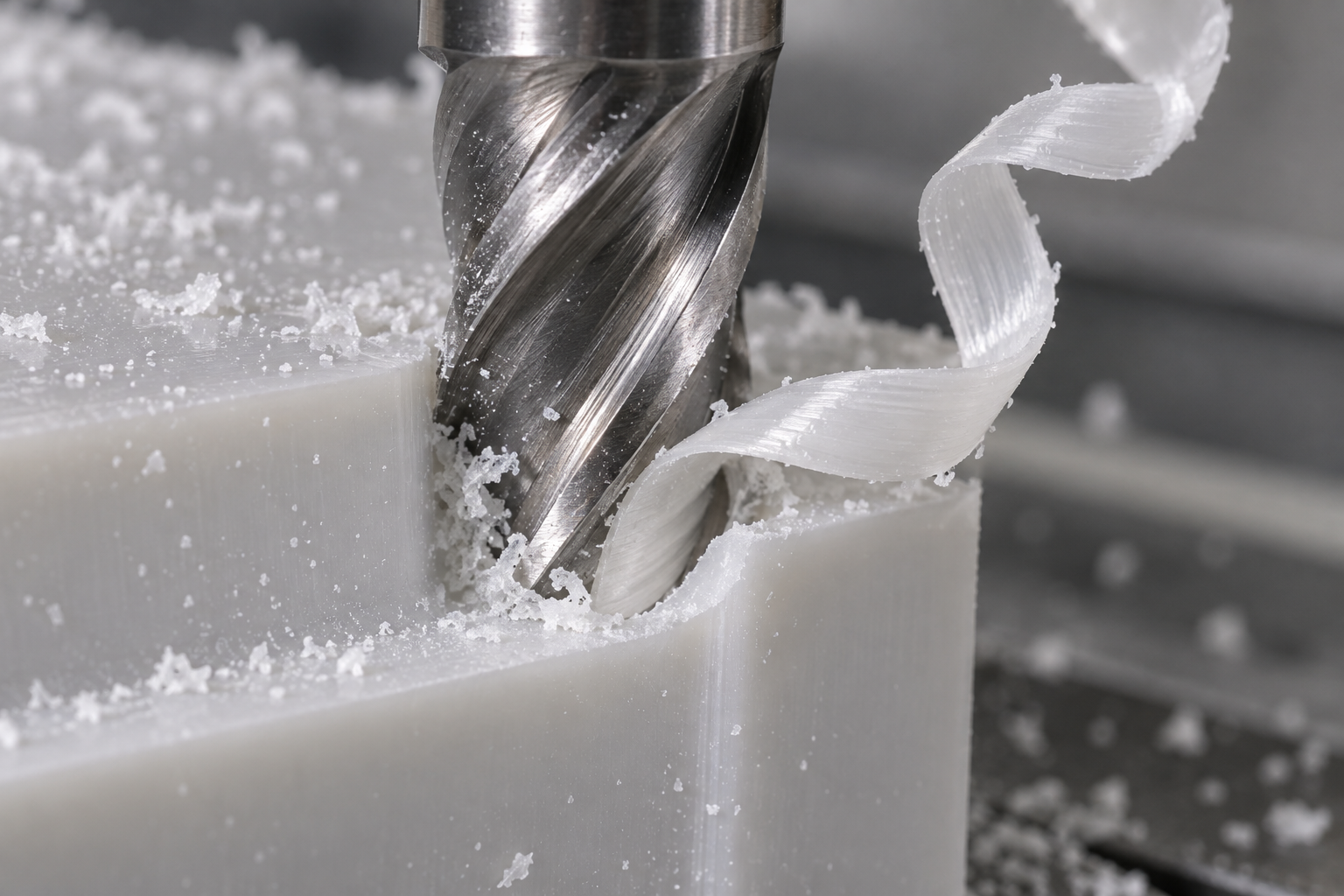
PVC is not difficult to cut on a CNC, but it is especially sensitive to cutting heat. Flexible and plasticized formulations are particularly prone to chip sticking, and a built-up edge quickly forms on the cutting edge, turning the originally sharp edge into a dull arc. The cut surface becomes shiny and sticky, and dimensions begin to drift. The most reliable on-site judgment is not to change parameters first, but to look at the chips first: the ideal state is continuous but easily broken strips or short curled chips, with a color close to the base material; if the chips are soft, stringy, and smeared on the tool, heat is accumulating and the heat generated per unit time needs to be reduced.
Strategically, PVC is better suited to sharp tools combined with a larger depth of cut and a moderate feed per tooth, letting the chips carry away heat, rather than repeatedly rubbing the same area with high speed and a small depth of cut. Chip evacuation must be smooth; once chips are recut in the groove, the local temperature rises quickly. For cooling, compressed air is often cleaner than a large amount of cutting fluid and makes it easier to observe chip morphology; if liquid cooling must be used, note that some formulations are sensitive to components in the cutting fluid, which may cause surface whitening or stress cracking. It is recommended to validate with a small sample first.
Causes of yellowing and melted edges
Edge yellowing and localized melted edges are almost always heat damage, not discoloration of the material itself. There are three common sources: friction-generated heat after tool dulling, feed too slow causing the cutting edge to dwell in the same position, and excessive clamping force creating extra friction between the workpiece and the tool. Thin-walled parts are also easily deformed by the fixture and spring back after release, appearing as "dimensions not matching." For deburring, it is recommended to use a sharp scraper or fine-tooth file for one-directional trimming, avoiding high-speed grinding wheels that burn the edge yellow again; when polishing is needed, use low speed and light pressure, and proceed in stages.
Prototypes and small batches: should PVC go through CNC, vacuum casting, or injection molding?
For PVC prototype parts, the choice of path often affects the result more than the material itself. Each of the three paths has boundaries: CNC machining sheet is suitable for single parts and structural validation, and directly provides the feel and assembly feedback of the real material; vacuum casting (prototype casting) uses one master mold to duplicate multiple appearance parts, suitable for small-batch trial production or exhibition prototypes; injection molding is true mass production, but requires a mold, with higher upfront investment and lead time. The criteria are simple: how many parts are needed, whether the structure will change, and how high the appearance requirements are.
| Path | Suitable scenarios | PVC adaptation points |
|---|---|---|
| CNC machining | Single parts, structural validation, assembly trial fitting | Direct cutting of sheet/rod, pay attention to cutting heat and clamping deformation |
| Vacuum casting | Small-batch appearance parts, consistent duplication of multiple parts | Master mold surface quality determines the appearance of duplicated parts; casting material and PVC performance are not completely equivalent |
| Injection molding | Mass production, requiring consistent performance and amortized cost | Requires a mold; PVC pellet systems differ from sheet, and shrinkage and formulation need to be confirmed with engineering |
One thing to keep in mind: vacuum casting duplicates typically use castable resin systems, and their chemical resistance and flame-retardant performance may not match those of PVC sheet. If the part will ultimately come into contact with acids or bases, or requires flame-retardant certification, don't assume the duplicate can replace the PVC body itself—tell engineering about the service environment in advance. If it's only for appearance and fit verification, a duplicate is sufficient; if long-term load-bearing or chemical contact is involved, going straight to CNC or evaluating other materials is more reliable.
Acceptance and common failure modes of PVC parts
When inspecting PVC parts, first separate machining heat damage from inherent material defects, otherwise it's easy to reject parts by mistake. On appearance, focus on yellowing, melted edges, and scratches: yellowing and melted edges are usually concentrated in the areas with the highest cutting heat and are a machining-side issue, while color variation, impurity spots, or internal porosity in the raw material itself are randomly distributed and unrelated to the toolpath. On dimensions, PVC parts may slowly drift after machining due to residual stress release, so it's advisable to let them sit in a constant-temperature environment for a period before re-measuring critical dimensions, rather than judging immediately off the line.
Two things to watch during assembly: first, thread strength—PVC is relatively soft, and repeated disassembly or over-torquing can easily strip threads, so switch to metal inserts or increase thread engagement length if necessary; second, bonding—before bonding PVC, clean and sand the bonding surface to remove mold release agents and oil contamination. The performance of solvent-based adhesives varies greatly by formulation, so it's advisable to run a small-sample validation before full-scale application. Putting these items into a checklist is more effective than arguing afterward about whether it's a material problem.
Frequently Asked Questions (FAQ)
The following questions basically cover the points most often asked about PVC, from material selection to acceptance. The answers aim to give judgment logic rather than absolute numbers—PVC's performance depends heavily on the specific formulation and processing conditions, so when in doubt, confirm with engineering.
Can PVC be CNC machined?
Yes. PVC sheet and rod have practical applications in CNC milling, turning, and drilling, but its cutting behavior tends to be "soft and sticky," making it prone to tool buildup and poor chip evacuation. The key is to use sharp tools, control cutting heat, and evacuate chips promptly, rather than applying metal cutting parameters. Before machining, it's advisable to confirm the formulation type of the sheet, as different formulations vary significantly.
Why do PVC edges turn yellow after machining?
In most cases it's localized heat damage caused by accumulated cutting heat, not the material itself being substandard. Slow feed rates, dull tools, and repeated rubbing at the same spot all raise the temperature near the chips and cutting edge, causing yellow or melted edges. Check the chip form and tool wear first, then decide whether to adjust parameters or change tools—usually more effective than directly switching materials.
Can PVC prototypes be vacuum cast?
Vacuum casting (prototype duplication) itself is suitable for duplicating multiple appearance parts from a single master model, but vacuum casting commonly uses polyurethane-based materials, which are not the same system as PVC. If your goal is a "PVC-material prototype," the more direct approach is CNC machining PVC sheet; if you just need small-batch appearance parts, you can discuss using vacuum casting as a substitute, subject to engineering evaluation.
Are the PVC used for machining and the PVC used for injection molding the same thing?
No. Machining uses already-formed sheet or rod, while injection molding uses pellets. Their formulations, additives, and processing histories all differ, so their mechanical and thermal performance cannot be directly applied to each other. A grade that performs well as sheet does not mean the corresponding injection-molding compound will have the same results in an injection-molded part.
Will PVC parts deform over long-term use?
Possibly. PVC's heat deflection temperature is not particularly high, and it has a tendency to creep under long-term load; temperature, load, and support method all affect the outcome. If the part will bear load long-term or be in a higher-temperature environment, it's advisable to clearly describe the service conditions at the material selection stage and consider switching materials or adjusting the structure if necessary, rather than remedying it afterward.
Key takeaways
- PVC's advantages are cost, chemical resistance, and ease of bonding; its weaknesses are heat sensitivity, chip sticking, and long-term dimensional stability. Selection should be based on application, not price.
- The key to CNC machining PVC lies in tool sharpness, chip evacuation, and cutting heat control. Yellowing, melted edges, and burrs mostly come from friction-generated heat, not the material itself.
- At the prototype stage, machining PVC sheet or vacuum casting can both quickly produce parts with an appearance close to mass production, but vacuum casting is better suited to small-batch duplication, while single-part validation is still more direct with CNC.
- Injection-molded PVC and machined PVC are two different formulation systems. Passing validation on a machined part does not mean the injection-molded part will perform the same, and they need to be confirmed separately.
- When inspecting PVC parts, judge appearance, dimensions, and assembly separately. First confirm whether it is machining heat damage, then discuss tolerances and scrap.