Why parts production is the "foundation, support, and bottleneck" of the machinery industry
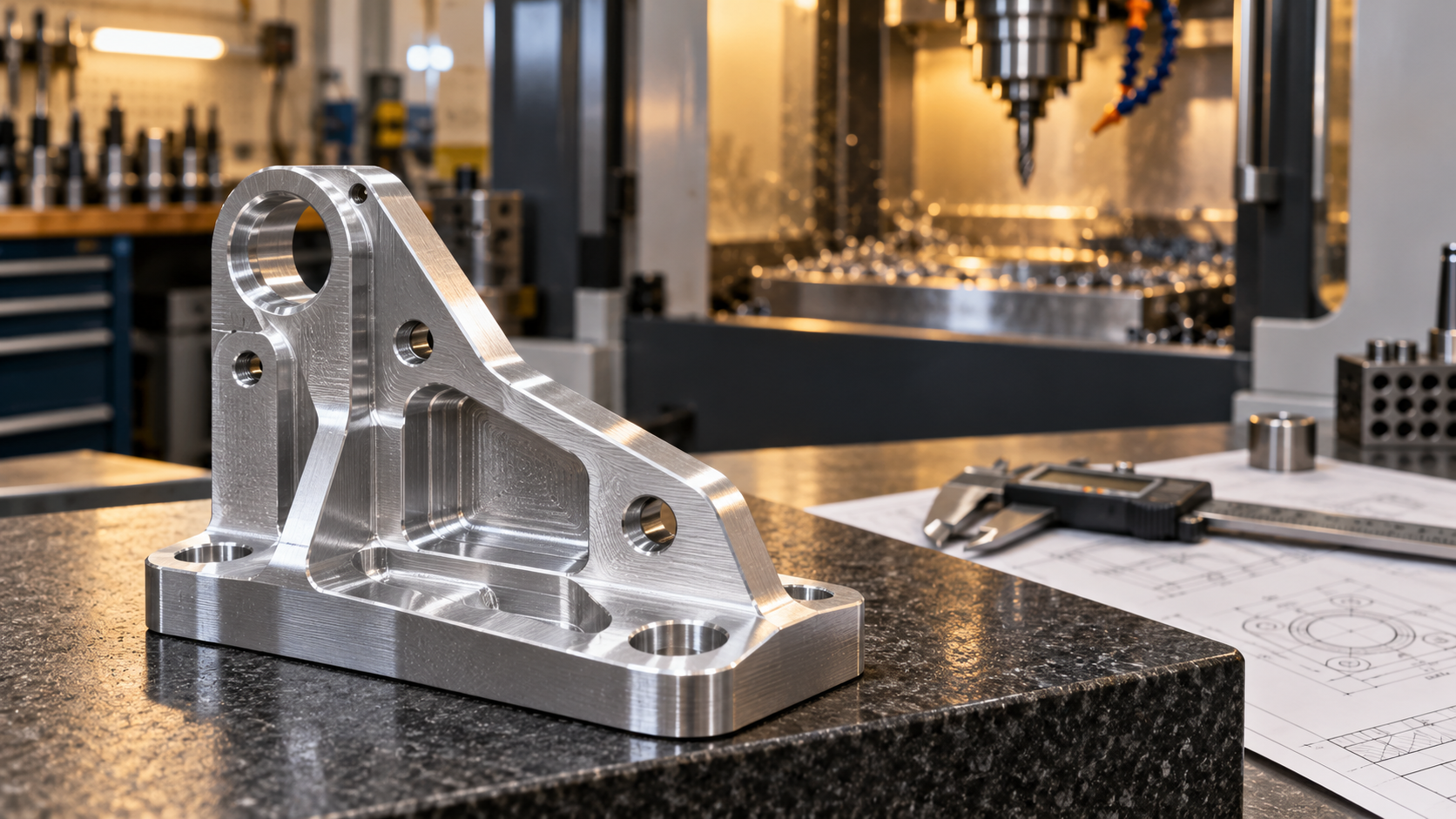
Complete machine output is rising, and export data does not look bad either, but many machinery companies find after doing the math that profits are as thin as paper. Where did the money go? Looking downstream, it is price wars; looking upstream—key components are not in their own hands. This is the most real influence of parts production on the machinery industry: it is not a supporting player, but simultaneously plays the triple role of foundation, support, and bottleneck.
It is called the foundation because the performance, reliability, and service life of a complete machine are essentially the superimposed result of part performance. Whether the hydraulic system of an excavator can output stably depends on the fit clearances and surface quality of parts such as pumps, valves, and motors; whether a machine tool can maintain precision over the long term depends on the heat treatment and grinding level of parts such as guide rails, screws, and spindles. What complete machine manufacturers do is integration and calibration; what truly determines the lower limit is the upstream parts.
It is called support because the degree of specialization in parts production determines the speed of complete machine iteration. If the design side wants to change a structure, and the parts factory can deliver samples within a few weeks and achieve stable mass production after several rounds of iteration, the complete machine can be quickly verified and brought to market; if every key part requires waiting for imports, shipping schedules, and the other party's production scheduling, the pace of innovation is locked down.
It is called a bottleneck because some parts are not "impossible to make," but rather "unstable to make, not cheap to make, and not fast to make." Hydraulic components and transmission systems in the construction machinery field have long relied on imports, complete machine enterprises have weak bargaining power, and the proportion of industry profits eaten by upstream suppliers may be quite large—such observations are often mentioned in the industry, and the specifics for a particular category need to be verified separately. The bottleneck is not whether a single piece can be trial-produced, but whether batch consistency, life verification, and the cost curve can support mass production.
Measure the influence of parts production along four lines, rather than vaguely saying "important"
"Important" is a word with no informational value. Breaking down the influence of parts production, it can be observed along four lines, and this article also unfolds along these four lines: cost structure—how import dependence for key parts squeezes complete machine profits; precision ceiling—how different part sources such as machining and casting determine fit, strength, and surface quality; innovation speed—aerospace lightweighting, automotive electrification, and medical and electronics miniaturization must ultimately be realized through precision parts manufacturing; supply chain security—how much initiative can be regained through localization, specialization, and standardization. The four lines are not parallel relationships: cost and precision are current competitiveness, while innovation speed and supply chain security determine who can still stay at the table in the next few years.
There is also a hidden main line: most manufacturing cost is already locked in at the design stage. The influence of parts production does not only occur in the workshop; at the moment tolerances are marked on drawings, materials are selected, and casting or machining is decided, most of it is already determined. The following sections will unfold this main line in turn.
How import dependence for key components eats into whole-machine profit
When an excavator rolls off the line, if even a few of the engine, hydraulic pump, main valve, or travel reducer are imported, the cost structure of the whole machine is no longer yours to control. An imprecise but directionally credible observation has circulated in the industry: in some construction machinery categories, key components have long relied on imports and are expensive, so the bulk of industry profit is taken by upstream suppliers, and the portion left to whole-machine manufacturers is squeezed very thin. This claim should not be used as precise statistics, but the problem it points to is real—component production is connected to whole-machine cost at one end and to the bargaining power of whole-machine manufacturers at the other.
The reason key components are repeatedly brought up is that they play three roles at once: foundation—the performance and reliability of the whole machine are built on them; support—the pace of product iteration for whole-machine makers is determined by them; constraint bottleneck—once a certain hydraulic valve or transmission part cannot be supplied, the entire assembly line has to wait. The industry's high-technology research has long concentrated on engines, hydraulics, transmission, and control technologies, which is essentially a contest for control over this bottleneck.
Why whole-machine manufacturers are at a disadvantage in bargaining
When facing imported key components, whole-machine manufacturers have very few cards to play. First, there are few alternative suppliers. For a high-pressure piston pump or a high-torque travel reducer, there are only a handful of manufacturers worldwide that can supply stably, switching costs are high, and validation cycles are long. Second, the performance binding period is long. The efficiency, response, and service life of a hydraulic system are often bound to a specific model at the whole-machine design stage, so changing the part is equivalent to redoing system validation. Third, volume-based bargaining does not hold. The annual output of a single model for a whole-machine manufacturer is limited, and the procurement volume spread across a single model is not large, making it difficult to obtain price concessions.
The result is this: whole machines compete on price in the market, upstream suppliers do not loosen their prices, and the difference in between can only come out of the whole-machine manufacturer's own profit. This is also why "component production" is not a workshop-level issue, but a competitiveness issue at the enterprise level.
The hard part of domestic substitution lies in the gap between "being able to make it" and "making it consistently"
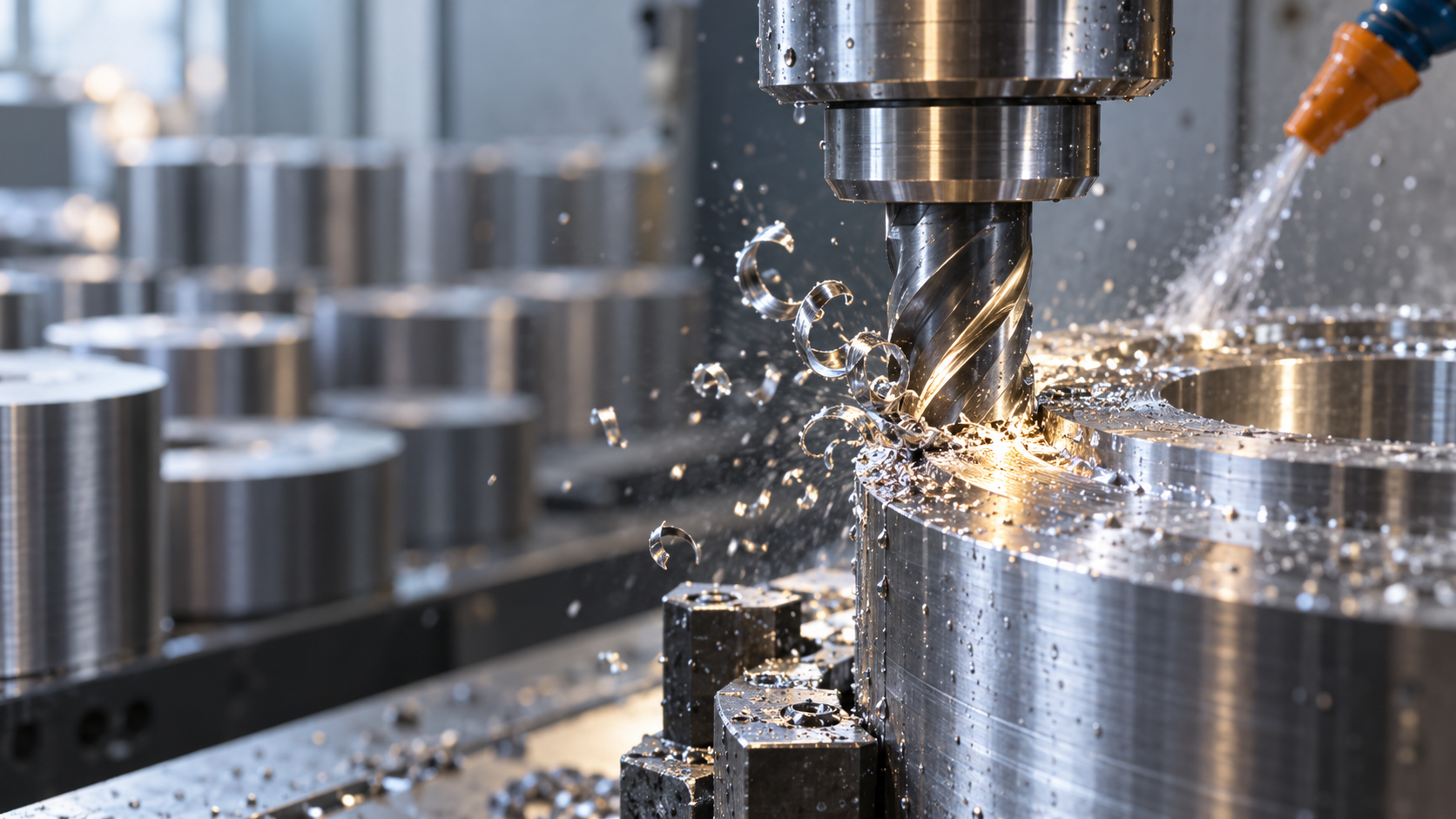
For many key components, it is not that they cannot be made domestically at all; the difficulty is batch consistency. The fit clearance of hydraulic parts is often in the micron range, and slight fluctuations in surface roughness, cylindricity, or heat-treatment hardness distribution will show up as leakage, abnormal noise, and scattered service life. Such parts have a complete set of requirements for machining equipment, cutting tools, fixturing, gauges, and process control; if any link is missing, they cannot be made consistently.
Therefore, the real value brought by localized production is not just "a little cheaper," but three things: shortening order and delivery times, so that whole-machine manufacturers' production scheduling is no longer led around by others; forming a reasonable economic scale, so that investment in dedicated production lines and gauges can be spread out; increasing standardization and commonality rates, so that valves, pumps, and reducers of the same specification can be reused across different models, making both procurement and maintenance simpler. Only when these three things are combined can the profit that has been eaten away be gradually taken back.
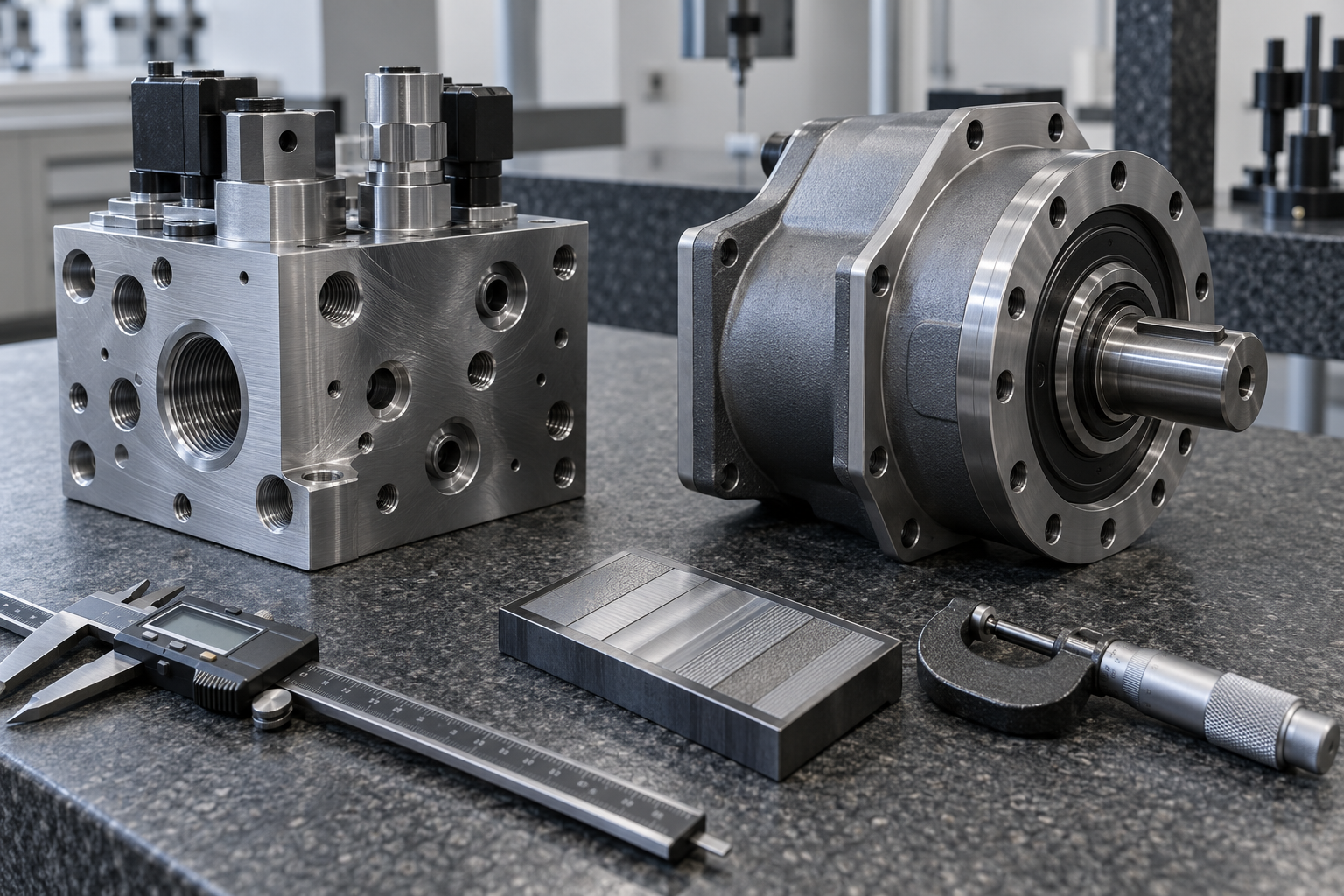
It should be noted that localization does not mean imports can be replaced tomorrow. Validation of key components usually has to go through bench tests, whole-machine working-condition tests, and actual-use assessment, with timelines measured in quarters; the specific cycle depends on the component category and validation standards, and when making plans, margin should be left according to the most conservative estimate. What truly determines whether substitution can hold up is still that old saying: it is not about whether you can make one piece, but whether you can continuously make a thousand consistent pieces.
Machining and casting: how component production determines precision, strength, and cost
For the same part, you can use a solid blank and remove excess material bit by bit, or you can melt metal into liquid, pour it into a mold cavity, and let it cool and take shape. The difference between these two routes is not just the amount of chips seen in the workshop; it directly determines the upper limit of precision, strength consistency, unit cost, and delivery rhythm for that part—which is the most intuitive segment of component production's influence on the machinery industry.
Machined parts are made by removing material from a solid blank, with continuous grains and no melt solidification process, so their mechanical properties are usually more stable and more predictable; the properties of castings, by contrast, depend heavily on cooling rate, material quality, and defect control, and gas porosity, shrinkage cavities, and uneven grains all lower actual strength. This is not to say castings are inferior, but that their performance fluctuates more and requires stricter process discipline to compensate.
Item-by-item comparison: precision, surface, design freedom, and material waste
| Process type | Subtractive, removing material from a solid blank | Forming: after the melt fills the mold, it cools and solidifies |
| Best suited for | Key parts with high dimensional accuracy, medium batch sizes, and relatively regular structures | Blanks with complex shapes, internal cavities or irregular contours, and larger batch sizes |
| Initial investment | Low, relying on general-purpose machine tools and tooling | High, requiring mold making and process validation |
| Unit cost | Higher at small batch sizes; more material removal makes it more expensive | Significantly diluted at large batch sizes; per-piece cost can be reduced |
| Dimensional accuracy | Usually high; mating surfaces can ensure repeatability in a single setup | Medium; critical dimensions often require secondary machining |
| Surface quality | Can achieve finer surface roughness, depending on the tool and feed | Affected by the mold and cooling; machining allowance is often left |
| Design flexibility | After drawing changes, most adjustments rely on reprogramming, enabling fast response | Changing the structure often requires modifying the mold, with long lead times and high costs |
| Material waste | When removal volume is large, there is more waste, but it can be recycled | Near-net shaping, less waste, but process losses and rejects must be counted |
| Lead time | Fast first article, suitable for prototyping and small batches | Slow first article, mold opening and debugging take up most of the time |
| Production role | The gatekeeper of critical features, assembly surfaces, and final dimensions | The blank provider, responsible for forming complex shapes |
The most important thing to remember from this table is not which item is higher or lower for whom, but that the two play different roles in the production chain: casting first creates the complex shape, while machining is responsible for closing in on critical dimensions, mating surfaces, and surface quality. Many parts are actually a combination of "cast blank + secondary machining," using casting to get the shape and machining to get the precision, with cost and performance each playing to their strengths.
Why critical features often still have to come back to machining
During the solidification process of castings, thick walls and thin walls cool at different rates, and shrinkage cavities and gas porosity tend to appear in the regions that solidify last; even if flaw detection passes, the dimensional tolerances and geometric tolerances of mating surfaces are also difficult to stabilize directly to assembly requirements. Therefore, features such as shaft holes, sealing surfaces, and bolt hole locations usually leave machining allowance, and then use fixturing and positioning plus tool paths to ensure repeatability. This is also why the influence of part production travels all the way to the assembly takt time of the complete machine—if mating surfaces are out of tolerance, the assembly line has to rework and selectively fit, and hidden costs immediately rise.
Conversely, if a complex housing with internal cavities is excavated by machining alone, the material removal volume is enormous, tool accessibility is poor, and the number of setups is high, so unit cost and warping risk both rise rapidly. At this point, castings or other near-net shaping methods are instead more economical. The key to judgment is: which features determine function, and which features merely provide shape. The former are covered by machining, while the latter are left to the shaping process.
Surface roughness follows the same logic. Sealing surfaces, sliding mating surfaces, and fatigue-sensitive areas are more sensitive to roughness and residual stress, so feed parameters, tool edges, and cooling methods all have to be adjusted accordingly; non-mating surfaces do not need to be finish-machined across the board. Grading machining allowance and precision requirements by function is the most direct step in controlling part cost. If you want to further verify the feasibility of a specific process route, you can refer to the CNC machining capabilities page or first do a quote evaluation.
In one sentence: the contest between machining and casting is not a contest of good versus bad, but a trade-off between the upper limit of precision and shaping efficiency. The influence of part production on the machinery industry is written into cost structure, assembly reliability, and delivery rhythm precisely within this trade-off. Once you understand this layer, discussions of weight reduction, batch size, or localization have a basis for judgment.
From aerospace to automotive electrification: how precision part production drives industry innovation
When OEMs unveil a new platform at a trade show, what truly determines whether that platform can be mass-produced and whether it can make money is often the hundreds of parts behind the scenes. The speed of industry innovation is essentially constrained by the precision ceiling, batch consistency, and cost structure of part production. Below, along the three lines of aerospace, automotive electrification, and medical and electronics, we look at this through "pain point—role of part production—result."
Aerospace: the precision ceiling of lightweight structural parts is determined by part production
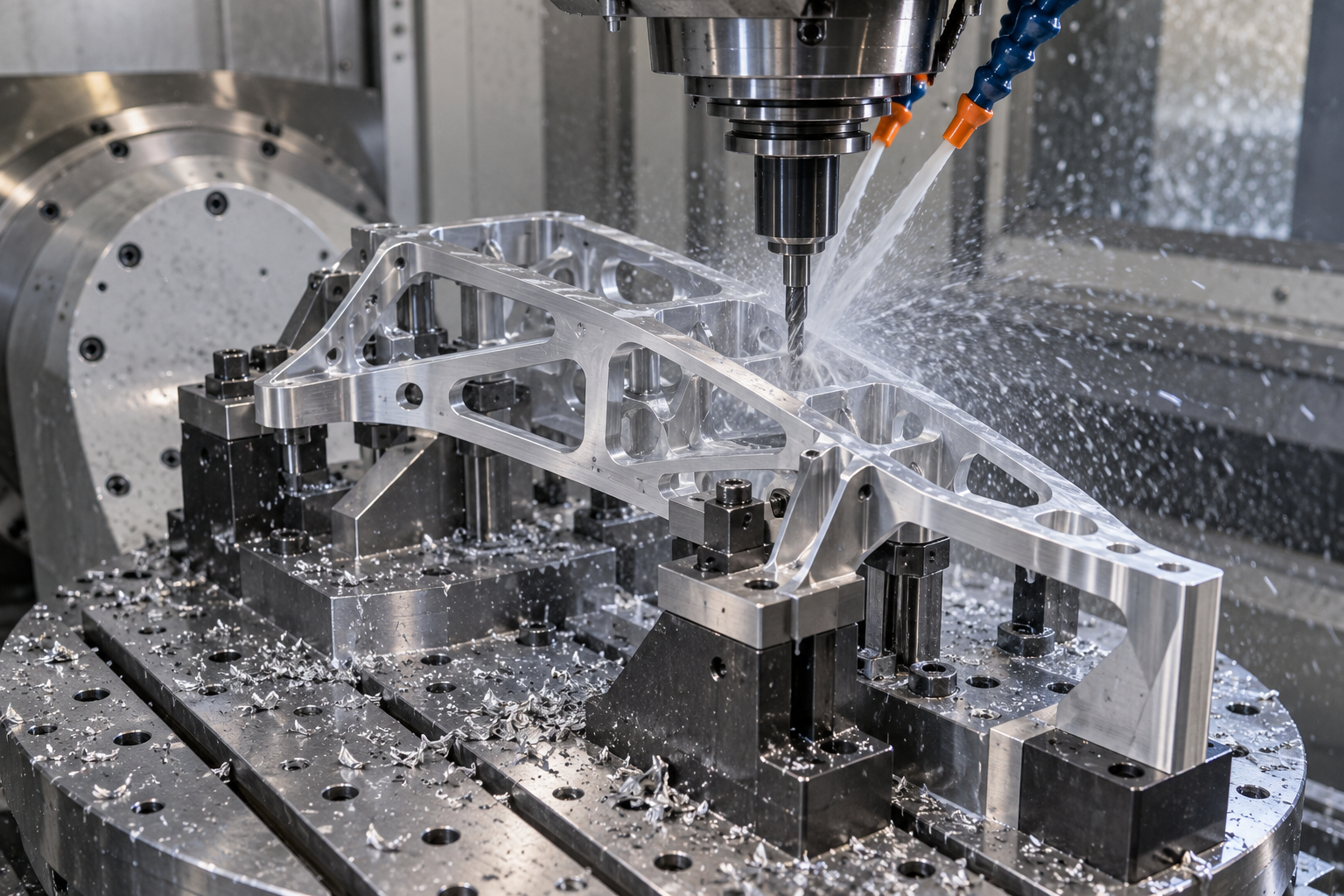
The pain point of aerospace structural parts is "lightweight, strong, and certifiable." The traditional approach relies on multiple plate parts bolted together; the fasteners themselves add weight, and bolt holes are also stress concentration points. The role of part production here is very direct: use five-axis CNC machining for integral frames, beams, and joints, turning a structure that originally required dozens of fasteners into a single integral part, reducing assembly interfaces and also reducing fatigue sources. In common industry cases, after adopting such integral structural parts, the structural weight reduction falls in the 15%–30% range (typical industry observation; the specific value depends on the original design and load path and must be evaluated part by part).
But weight reduction is not the only result. An integral part means that the positional relationships of multiple surfaces must be ensured within a single setup; thin-walled areas are prone to tool deflection and chatter, and deformation after heat treatment must also be left within the finishing allowance. These are not things that a design concept can solve; they are issues of process capability in the part production stage. Therefore, the schedule of aerospace projects often does not depend on the aerodynamic scheme, but on whether a certain titanium alloy joint can be stably machined and whether it can pass dimensional and surface integrity inspections.
Automotive electrification: batch consistency pushes parts production to the forefront
The pain point of automotive electrification is the opposite of aerospace: it is not single-piece extreme precision, but batch consistency across hundreds of thousands of parts. Motor housings, reducer housings, and electronic control heat dissipation parts—these parts are not demanding in terms of tolerance when viewed individually, but every batch is required to have its dimensional distribution fall within the same window, otherwise the assembly line will sort parts and stop the line. The influence of parts production here is reflected in two points: first, the stability of cast or die-cast blanks; second, the secondary machining of key mating surfaces, bearing bores, and sealing surfaces. Porosity, shrinkage cavities, and uneven grain structure in the blank will directly reduce performance, and key features usually still have to be ensured by machining.
In other words, whether an electrification platform can scale up does not depend on how advanced the motor solution is, but on whether housing-type parts can be supplied stably. The larger the batch, the more obvious the impact of parts production on the overall machine cost structure—saving a few cents per piece, multiplied by hundreds of thousands of pieces, becomes the difference in overall machine profit.
Medical and electronics miniaturization: tolerance and surface roughness are the function itself
The pain points of medical devices and consumer electronics are "small" and "dense." Parts are as small as a few millimeters, and tolerance bands and surface roughness are no longer just fit issues, but directly determine function: if the sealing surface roughness is insufficient, it leaks; if micro-channel burrs are not fully removed, it clogs; if residual stress in thin-walled parts is not released, they deform during use. The production of such parts often requires combining multiple processes—CNC machining to ensure key dimensions, deburring and surface treatment to ensure functional surfaces, and when necessary, 3D printing for prototype validation before moving to injection molding or machining for mass production.
Looking at these three lines together, the conclusion is consistent: industry innovation does not land first as a concept, but only when parts production can land first. If a concept can be drawn, but the part cannot be made, cannot be made stably, or cannot be made cheaply, innovation stops at the prototype stage. The influence of parts production is reflected in the fact that it is both an enabling condition for innovation and the upper limit on the speed of innovation.
Localization, specialization, and standardization: how parts production reshapes supply chain security
Both the cost and innovation lines ultimately come down to the same question: where do these parts come from, who makes them, and can they be made stably. The influence of parts production on the machinery industry is most directly manifested at the supply chain level—it determines whether overall machine enterprises can obtain key parts on time, and also determines who holds bargaining power.
Localized production: what is shortened is not just transportation distance
When key components have long relied on imports, order cycles and delivery rhythms are driven by cross-border logistics, exchange rates, and the other party's production scheduling. If the overall machine manufacturer wants to insert an order, change a design, or handle a batch abnormality, response speed is not in its own hands. Localized production changes this link: the time window from order to delivery narrows, engineering changes and after-sales repairs can be closed locally, and inventory strategy shifts from "holding a large safety stock" to smaller-batch rolling replenishment. A common industry practice is to first localize non-critical parts and structural parts, then gradually move up to parts with higher precision and consistency requirements, such as hydraulics and transmission.
Localization also provides conditions for standardization and generalization. When part sources are similar and the machining language is shared, tolerance bands, thread specifications, and interface dimensions on drawings are easier to unify, and the proportion of shared parts across models can increase. With more shared parts, per-piece batch size rises, unit cost falls, and the amortization of molds and tooling becomes more reasonable, forming a reasonable economic scale. This positive cycle does not happen automatically; it depends on suppliers being willing to deliver according to the same set of standards, and also on OEMs managing generalization as a goal at the drawing stage.
"Can make" and "can make stably" are two different things
Supply chain security does not mean replacing all imported parts with domestic ones. The real threshold is batch consistency: the first piece passing is easy; the thousandth piece still falling within the same tolerance band, the same surface roughness, and the same mechanical property range is the prerequisite for substitution to hold. When evaluating a localization route, what should be examined is not a single-piece inspection report, but process capability—the CPK of key dimensions, the stability of heat treatment and surface treatment, the calibration chain of inspection fixtures and gauges, and the traceability and isolation mechanisms for abnormal batches. These capabilities usually require several rounds of trial production and small-batch validation to explain clearly, and the time span for localization substitution is therefore often underestimated.
For products such as lifting machinery, upstream components have already formed a relatively good industrial scale in China. Market concentration in links such as motors, frequency converters, and reducers is not high, and the competitive landscape is relatively stable, which provides overall machine manufacturers with room for multi-source selection. But multiple sources do not mean arbitrary switching. If different suppliers differ in material batches, heat treatment curves, and machining allowance allocation, problems such as inconsistent fit tightness, abnormal noise, or scattered service life will appear during assembly. The essence of supply chain security is maintaining a consistent quality language among multiple selectable sources.
How specialized division of labor and standardized interfaces reduce systemic risk
The influence of parts production is also reflected in the mode of division of labor. By handing complex parts to processors with a higher degree of specialization, overall machine manufacturers can focus their energy on overall machine integration and system matching; specialized processors, in turn, accumulate process experience in specific materials and specific precision ranges, such as deformation prevention for thin-walled parts, chip evacuation for deep-cavity parts, and tool life management for high-hardness materials. For this division of labor to hold, the prerequisite is interface standardization—drawings, tolerances, acceptance rules, and inspection fixture references must be aligned, otherwise collaboration costs will eat up the benefits brought by specialization.
Standardization also affects spare parts and after-sales service. When the interface dimensions and installation methods of key parts are unified, overall machine manufacturers can cover more models with fewer spare part types, repair response is faster, and channel inventory is thinner. For parts producers, standardization means clearer batch expectations and a more stable production scheduling rhythm. Supply chain security is therefore not just "whether goods are available," but whether every link in the entire chain operates according to the same set of rules.
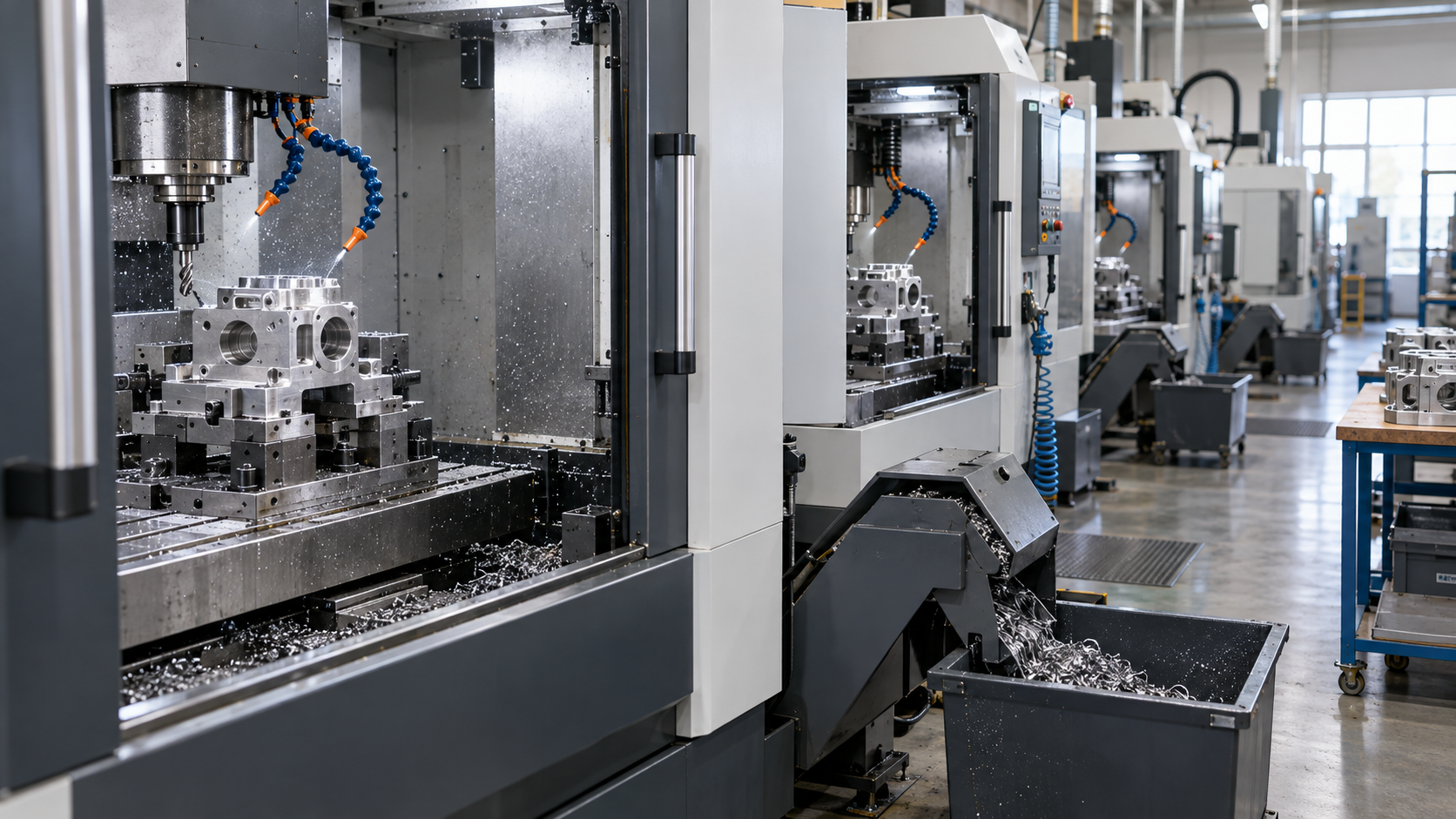
Put these three things together: localization addresses response speed and cost structure, specialization addresses process depth, and standardization addresses collaboration and generalization. The influence of part production on the supply chain security of the machinery industry operates through these three paths simultaneously. The next lever is actually earlier in the process—at the drawing and process review stage.
DFM and Yield: How the Influence of Part Production Moves Forward to the Design Stage
The previous section discussed the supply chain; this section takes a step back: the influence of part production on the machinery industry does not begin with the first cut in the workshop. At the moment the drawing is finalized, materials, structure, tolerance bands, and surface requirements essentially lock in the cost range and the yield ceiling. A commonly cited judgment in the industry is that the design stage determines about 80% of manufacturing cost—subsequent trial production, rework, and process changes are mostly paying for earlier choices. A considerable portion of the influence of part production is therefore moved forward: the workshop only executes; the drawing is the watershed.
Why the Cost Structure of Part Production Is Essentially Set Once the Drawing Is Done
Look at a few specific items. A feature with a deep cavity, narrow slot, or corner radius smaller than the tool radius directly determines whether EDM is needed, whether a smaller tool must be changed in, and whether multiple setups are required; an unnoted sharp corner will simultaneously increase stress concentration and tool wear. Whether the tolerance band is written as ±0.01 mm or ±0.05 mm can mean the difference between an ordinary machine and a high-precision machine on a CNC, or the difference between adding a finishing pass and saving one. Raising surface roughness from Ra 3.2 to Ra 0.8 often means a finishing tool, a slower feed pass, or even a polishing operation.
These are all signals on the drawing; quotations, process routes, and inspection fixture plans are read from it. So when discussing the influence of part production on the machinery industry, the design side cannot be avoided: it affects both unit price and batch consistency—the same drawing, understood differently, may produce parts that are not interchangeable.
DFM Is Not Drawing Review, but Clarifying Part Production Constraints in Advance
DFM (Design for Manufacturing) is often simplified into “reviewing drawings for errors,” but what it actually does is put part production constraints such as tooling, fixturing, draft, wall thickness, burrs, and deburring methods on the table before the design is frozen. In typical industry observations, after applying DFM to automotive component projects, machining time can often be shortened by 15%–20%, with scrap rates falling at the same time. The numbers are not a promise but an order-of-magnitude reference: the gains mainly come from one fewer setup, one fewer rework, and one fewer drawing change because a feature cannot be made.
A common action is to expose “unmachinable features” in advance. For example, thin-walled parts tend to deflect and chatter during milling; poor chip evacuation in deep holes can break tools; if the draft direction for die castings is decided late, later correction can only rely on EDM. If these are discovered only after the first article comes out, what gets changed is the mold or tooling, at a completely different cost. The value of DFM lies in moving such judgments from the workshop forward to the design review table.
Yield Is Not the Result of the Workshop Fighting Alone
Yield appears to be a production line metric, but in fact half is determined by design and half by the manufacturing system. In industry observations, under conditions of a relatively complete quality management system and controlled process capability, raising yield from about 93% to around 99.5% is a possible order of magnitude; the several percentage points in between usually come from stable fixturing, tool life management, first-article and patrol inspection, and consistency of measurement plans, rather than from the precision of a single machine alone.
Conversely, if the drawing requirements themselves exceed the process window, or if key dimensions lack clear datums and inspection methods, even the best shop-floor management will struggle to keep yield stable. This is also why the influence of part production must include the design side: design provides the target, the workshop provides the path to achieve it, and if the two do not match, yield is lost in between.
Putting the Influence of Part Production onto Specific Parts: A Judgment Checklist
The first six sections broke the influence of part production into four lines: cost, precision, innovation, and supply chain. But to truly judge whether a certain part is “stuck” by production capability, one cannot stop at industry slogans; one must return to the individual part level: who is making the key features of this part, who is the tolerance band on the drawing left for, and whether the batch size is enough to support localization. Below is a judgment checklist to go through in order; each step corresponds to one line from the previous text and also indicates the drawing information to verify.
Step One: Are the Key Features of This Part Constrained by Imports?
First distinguish “structural parts” from “functional parts.” Parts such as housings, brackets, and guards do not affect the overall profit structure even if their precision is ordinary; for parts such as hydraulic valve bodies, reducer gear shafts, and motorized spindle rotors, once they depend on imports for a long time, bargaining power is no longer in the hands of the machine builder. The judgment question is very specific: would failure of this part cause machine downtime, rework, or a safety accident? If so, it is a key part, and priority should be given to examining whether there is stable domestic batch production capability, rather than comparing price first.
Information to verify: the mating dimensions on the drawing, the material grade and heat treatment requirements, and any traces of a designated supplier (for example, a specific standard part number is noted). These often expose the supply chain path already locked in at the design stage.
Step Two: Precision Requirements Determine Whether Machining or Casting Should Be Used
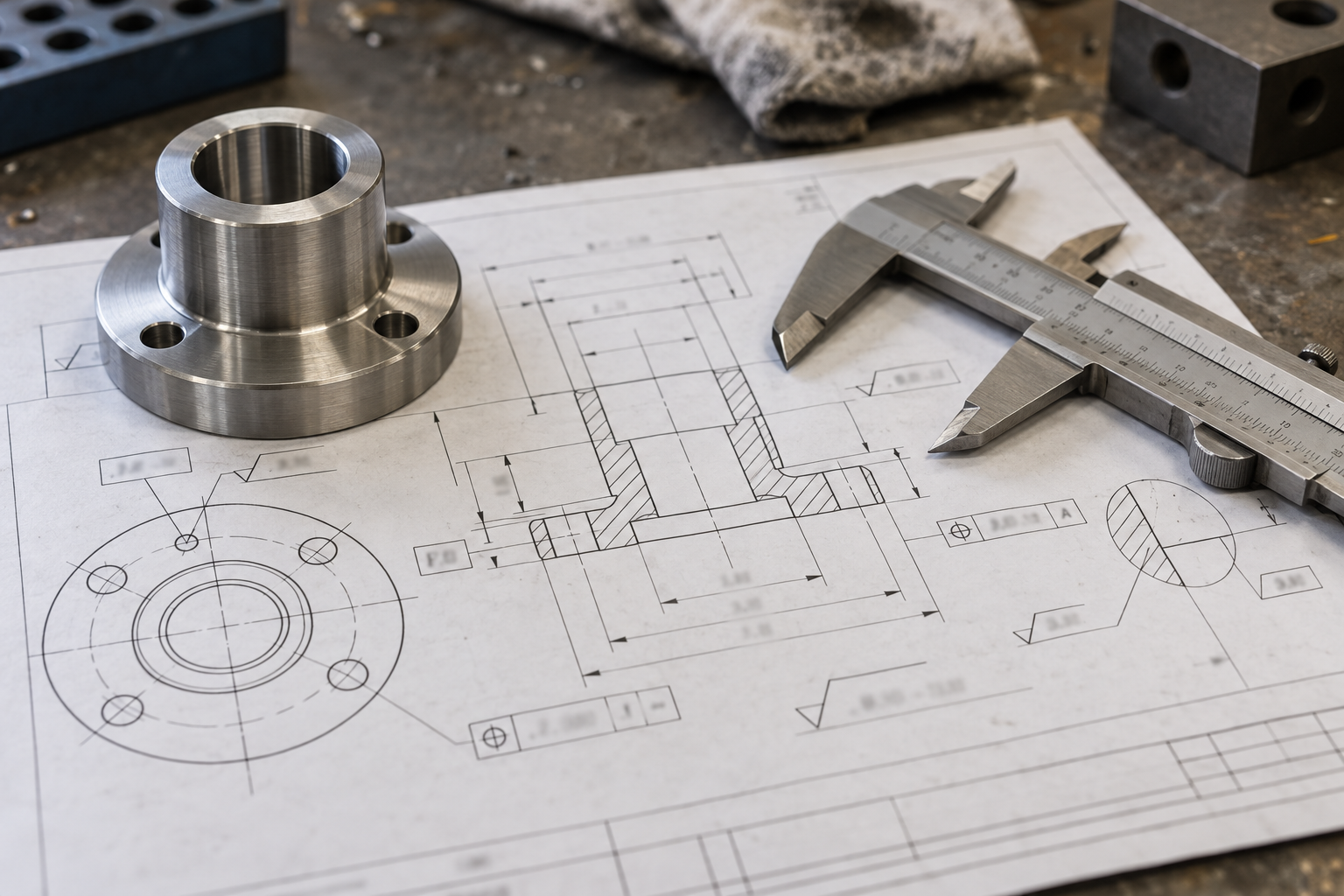
How part production determines the precision ceiling was already discussed in Section 3: machining removes material from solid stock, and dimensions and mechanical properties are usually more stable and predictable; casting is suitable for complex shapes and batches, but porosity, shrinkage cavities, and uneven grain structure can degrade performance, and key features often require secondary machining. For an individual part, first look at the tolerance band: if the tolerance on a mating surface is within ±0.05 mm, or there is a clear surface roughness Ra requirement (for example, below Ra 1.6), a machining operation must basically be arranged, and casting can only serve as the blank. Then look at geometric tolerances: when coaxiality, perpendicularity, and position requirements are high, the fixturing plan and datum selection affect the result more than the machine itself.
Information to verify: where the datum surfaces are, whether there is a default standard for unnoted tolerances, and whether heat treatment is arranged before or after rough machining. If heat treatment is placed in the middle of or after machining, it will introduce distortion, and allowance must be left.
Step 3: Do batch size and cost structure support localization?
Localization does not mean immediately replacing imports. What you are judging is: whether the annual volume of this part, the amortization of molds or tooling, and the cost of quality verification can be spread thin enough. For single pieces or small-batch trial production, using rapid prototyping or CNC machining is more reasonable; once volume reaches a certain scale, the mold investment for injection molding or casting starts to pay off. Questions to ask: Is there a stable annual volume forecast? Are there acceptable alternative materials? Can batch consistency be held through gauges and first-article inspection?
From a supply chain perspective, localized production of key components can shorten ordering and delivery times, form a reasonable economic scale, and increase standardization and generalization rates. But the premise for these benefits is batch consistency—being able to make it and making it consistently are two different things, and the verification stage usually requires data from multiple consecutive batches for support.
Step 4: Was DFM done at the design stage?
Finally, back to the source. The design stage determines about 80% of manufacturing cost, and the influence of part production is already largely locked in at the drawing stage. Check whether the drawing considers draft and demolding direction, whether wall thickness is uniform, whether there are overly deep narrow slots requiring tools with too large an aspect ratio, and whether there is a usable datum surface for fixturing. DFM on automotive components can typically shorten machining time by 15%–20% and reduce scrap rates, but the premise is that process judgment is built in at the design stage, rather than waiting for shop floor feedback before changing the drawing.
This checklist does not produce conclusions, only questions: Are key parts constrained by imports? Must precision be achieved by machining? Does batch size support localization? Was DFM done in design? Once these four questions are answered, the influence of part production on this equipment becomes roughly clear. If you need to evaluate the manufacturability and process route of a specific part, you can combine it with a DFM review, then move on to the quote stage.
FAQ: Common follow-up questions about the influence of part production
The following questions are basically the ones most likely to come up after reading the four main threads above: Has import dependence actually eased? Is machining necessarily better than casting? Can those percentages be applied directly to your own case? How long does localization substitution take? The answers all come with boundaries and do not guarantee anything for a specific project.
Has the import dependence of key components eased now?
Some categories are easing, but this is not an overall turnaround. In areas such as hydraulic parts, transmission systems, and high-end bearings, usable domestic alternatives already exist, and the motors, inverters, and reducers upstream of lifting machinery have also formed a decent industrial scale with low market concentration. But “being able to make it” and “the OEM daring to switch it in at volume” are two different things: they require batch consistency data, installation verification cycles, and after-sales responsibility allocation. To judge whether a specific part is still constrained, look not at industry news, but at whether the supplier list for this part has a second or third switchable source.
Is machining necessarily better than casting?
No. The two solve different problems. Machining removes material from solid stock, and its mechanical properties are usually more stable and predictable, with good dimensional and fit repeatability, making it suitable for critical mating surfaces, load-bearing features, and high-precision small batches; casting excels at complex shapes and batch forming, with high initial mold investment but unit costs that can be spread thin, at the cost of properties being more affected by cooling rate, material quality, and porosity or shrinkage cavities. In actual parts, a cast blank plus secondary machining of critical features is a common combination. Which to choose depends on whether the feature needs shape freedom or dimensional certainty.
Can the 15%–30% aerospace weight reduction range also apply to ordinary parts?
It cannot be applied directly. This range comes from typical scenarios of five-axis machining complex high-strength structural parts and replacing multiple connectors and bolts with an integrated structure, with the premise that the part itself has a large amount of assembly redundancy that can be eliminated. Ordinary brackets and housings do not have that many connection points, so the weight reduction potential is much smaller. To really evaluate it, first look at how many bolt holes and how many stitch welds are on the drawing—that is where the weight reduction comes from.
Can the figures of DFM shortening machining time by 15%–20% and improving yield from 93% to 99.5% be treated as promises?
They can only be treated as reference magnitudes, not promises. These are typical industry observations, and actual benefits depend on part complexity, the degree of redundancy in the original design, and the supplier’s process stability. A mature part that has already gone through several rounds of DFM naturally has less room for further optimization; a new part that has never been reviewed may have more room for change. The reasonable approach is to run a DFM review on your own part and see which features can actually be changed, rather than back-calculating from someone else’s percentages.
How long does localization substitution of key parts generally take?
There is no uniform answer, and one should not be given. The cycle depends on three things: the precision grade of the part (whether five-axis is needed, whether dedicated gauges are needed), whether the material is special, and how much verification risk the equipment end is willing to bear. Shortening ordering and delivery times and increasing standardization and generalization rates are direct benefits of localization, but the premise is that the local supplier can stably reproduce batch consistency. When evaluating, first ask: What ensures the critical dimensions of this part, what inspects them, and who will do first-article confirmation after switching suppliers?
Key takeaways
- Parts production is the foundation of the machinery industry: the performance, reliability, and cost structure of complete machines are all built on components, and key parts are even more of a bottleneck.
- In some categories of construction machinery, imported key components may account for a large proportion of the complete machine's cost, with profits squeezed by upstream suppliers—this is the most direct manifestation of the influence of parts production.
- The mechanical properties of machined parts are usually more stable and predictable; casting is suitable for complex shapes and volume production, but defects such as porosity and shrinkage cavities reduce consistency, and key features often require secondary machining.
- The design stage determines about 80% of manufacturing cost. DFM and yield management push the influence of parts production forward to the drawings, rather than waiting for the workshop to put out fires.
- Localization, specialization, and standardization are realistic paths to amplify the positive influence of parts production, but the specific pace depends on the category and capacity and needs to be evaluated item by item.