What exactly is the difference between a part, a component, and a workpiece: first remember the two criteria
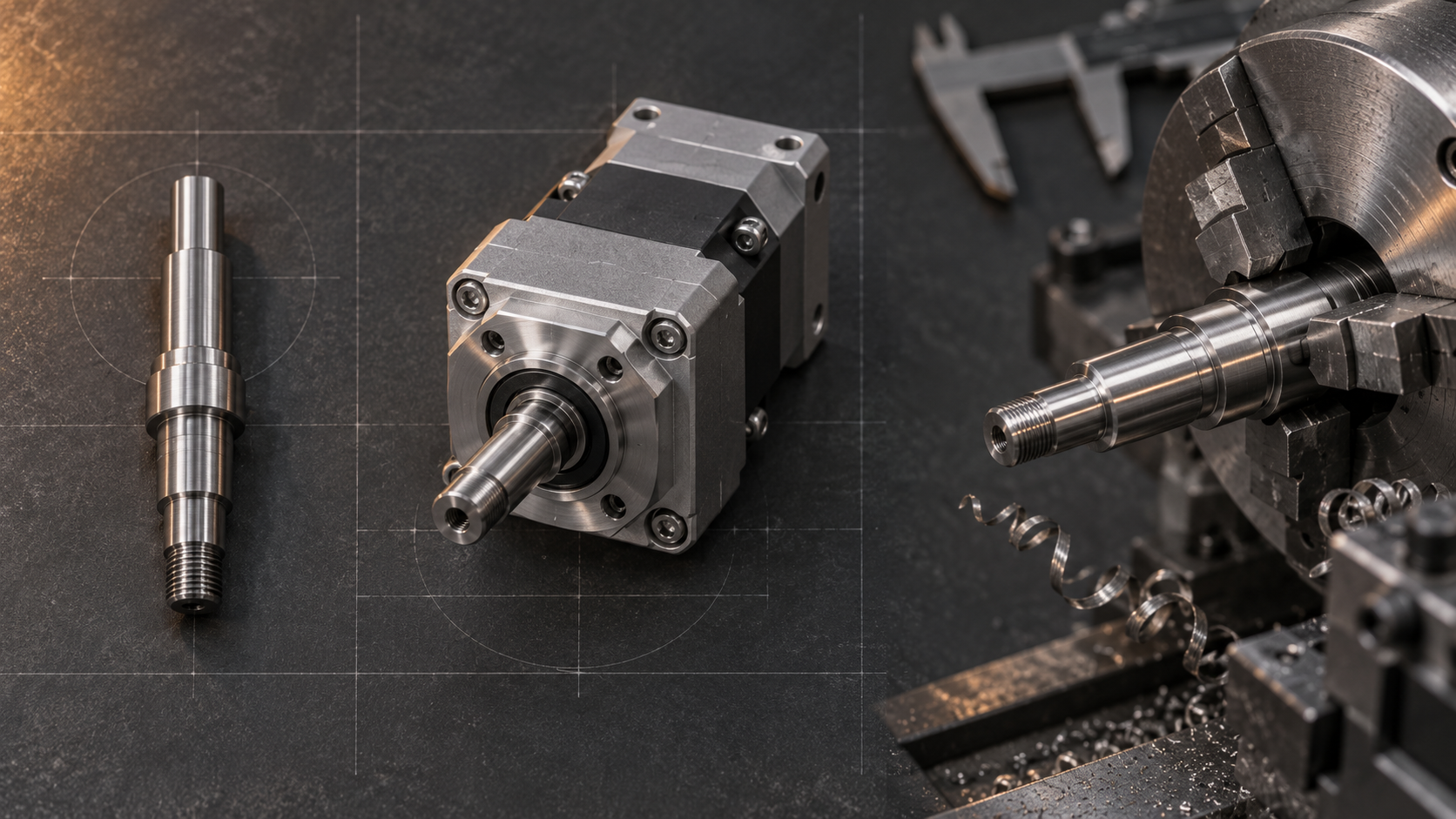
Three terms are mixed together every day on the shop floor: part, component, and workpiece. The drawing bill of materials says part, the assembly site calls it component, and the process card always writes workpiece. Mixing them does not necessarily cause trouble, but it does when you reconcile accounts—the BOM and assembly relationships do not match, purchasing terminology and inventory terminology conflict, and suppliers estimate labor hours according to the wrong hierarchy. Let us put the conclusion at the beginning: what can be disassembled further is a component, what cannot be disassembled further is a part; the object currently being machined is called a workpiece. Part, component, and workpiece do not stand on the same classification line; they are not near-synonyms in the same dimension.
Run the criteria through four examples and it becomes clear.
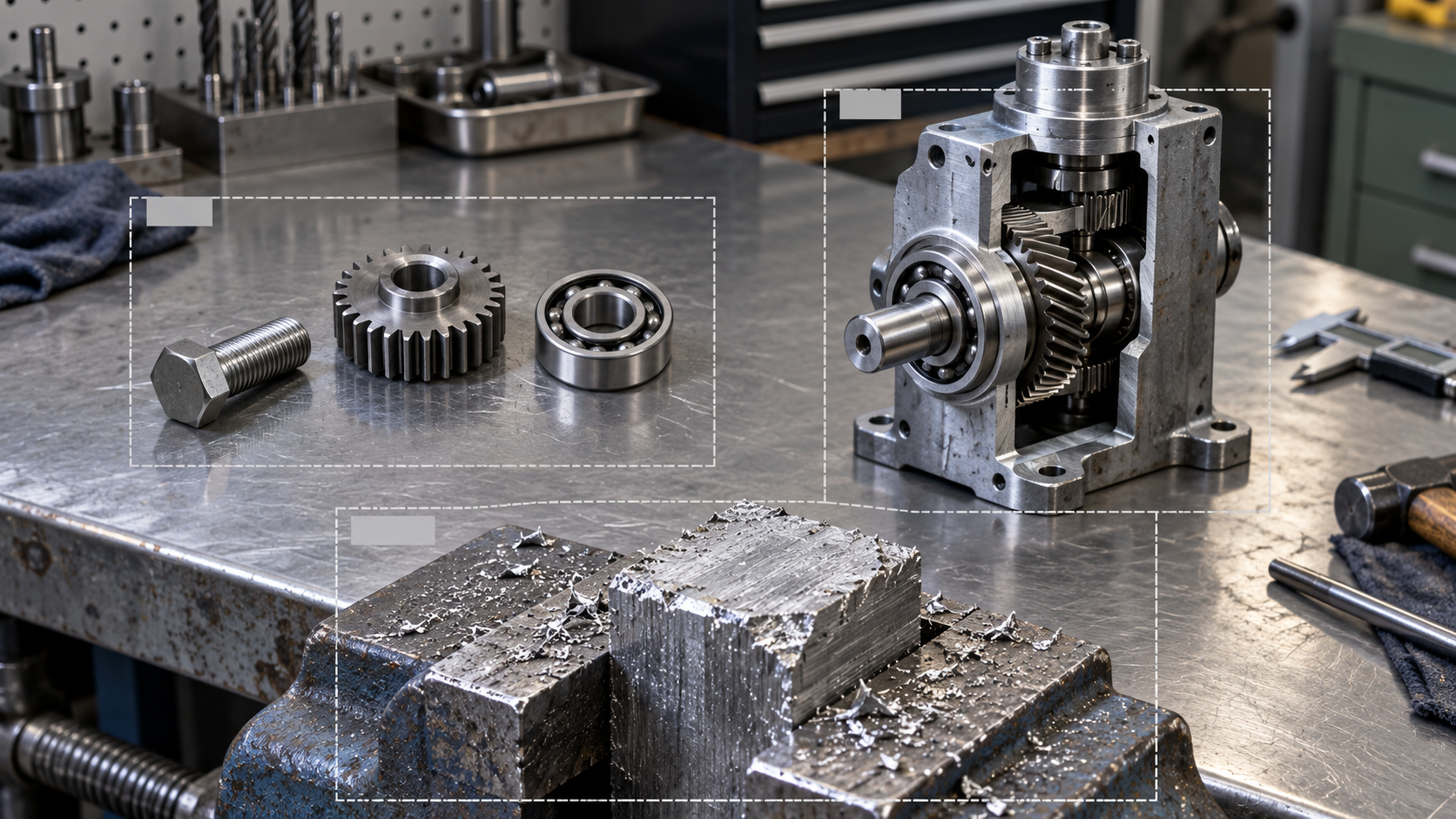
- Bolt: for a hex bolt, if you disassemble it further, only the shank and head remain, and it loses its design function as a fastener—part.
- Gear: a single gear can be installed once made, and if disassembled it is no longer a gear—part.
- Bearing: in an assembly tree it is usually treated as a part, while in national standards it is also called a standard part; in purchasing and inventory terminology it is often classified separately—part, but with an extra identity in naming.
- Gearbox: gears, shafts, bearings, and housing are assembled together, and it can independently perform the function of speed changing and torque transmission, and can be removed and replaced as a whole when it fails—component.
The three stand on three different lines
A part stands on the line of manufacturing and assembly hierarchy: it is the smallest unit of manufacturing and also a leaf node in the assembly tree. A component stands on the line of functional hierarchy: it is composed of several parts, can independently realize a certain function, and can be replaced or repaired as a whole. A workpiece stands on the line of machining status: it emphasizes "currently being machined," and the same object can be called a workpiece at the blank, in-process, and finished-product stages, regardless of its position in the assembly tree.
So on the shop floor you will hear usage like this: the team leader says, "All these workpieces go on the three-axis today," referring to the work currently mounted on the table; the process engineer says, "This component gets a separate airtightness test," referring to the unit whose function can be independently assessed; the designer says, "Tighten the tolerance band on this part," referring to a single indivisible drawing on the drawing. For the same piece of equipment, all three ways of speaking are valid, because each of the three people is talking about their own line.
Remember these two criteria, and the next few terms—component, assembly, unit, machine part, parts and components—can all be attached to them. In terms of order, first ask "can it independently complete a function," then ask "is it currently being machined." Most terminology problems will be resolved on the spot.
Part: the smallest unit of manufacturing—why "cannot be disassembled further" is key
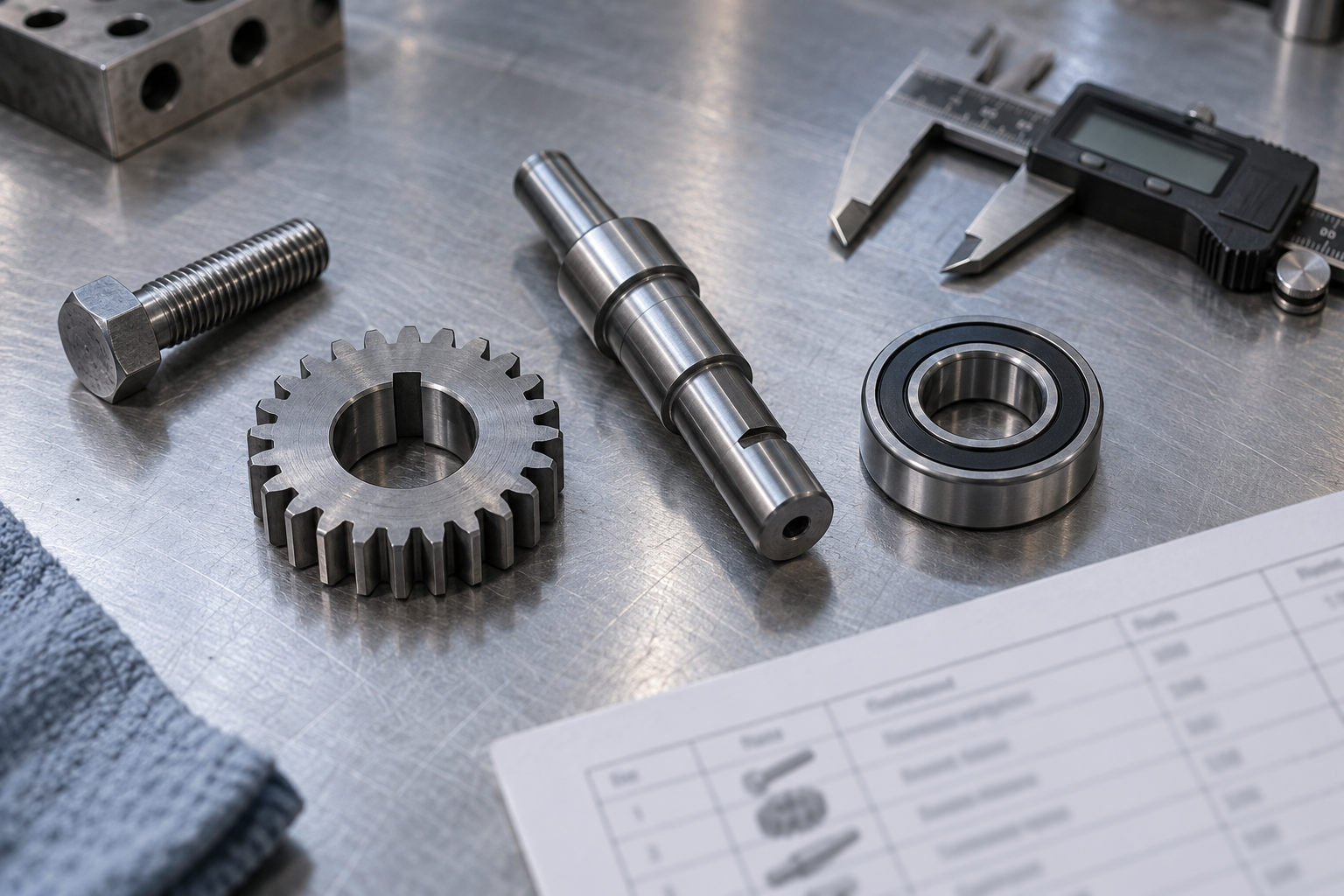
To answer "what is the difference between a part, a component, and a workpiece," you first have to pin down the part: a part is the smallest unit of manufacturing and assembly. Its structure is usually simple and its function is single-purpose; held alone in your hand, it does not complete any action—a bolt does not perform a connecting function unless tightened, and a gear does not transmit torque unless mounted on a shaft. Only after being assembled into a larger combination does its design function hold.
The phrase "smallest unit," when it lands on the shop floor, becomes an operational criterion: cut it apart one more time, and it loses its design function. A bolt, if disassembled further, is just a shank and a head; a gear, if disassembled further, is just teeth and a hub; a plain shaft, if disassembled further, is no longer a shaft. A bearing is a good example—it is treated as a part in mechanical installation, and in procurement terms it is often separately classified as a standard component. Both names are common in the industry, but neither changes its identity as something that is "no longer disassembled further during assembly."
How to judge "cannot be disassembled further": three on-site questions
To judge a part on a drawing, you do not need to memorize definitions; asking three questions is enough:
- Does it have an independent assembly process? If it is assembled, welded, or pressed together with other parts, then it is most likely a part.
- Is it a single whole when it leaves the factory? Castings, forgings, and injection-molded parts usually enter assembly as a single blank, so they are parts.
- If it breaks, is it replaced separately? Replacing a single gear or a single shaft rather than the entire housing indicates that it is at the part level.
If at least two of the three hold true, it can basically be written into the bill of materials as a part. Conversely, if you need to "open it up to explain what is inside," then it is more likely a component.
Do not mix manufacturing classification with hierarchy classification
There is another common confusion on the shop floor: treating "casting," "forging," and "machined part" as terms parallel to part and component. In fact, the former is a classification of parts by manufacturing method, answering "how was this part formed?"; the latter is a position in the assembly hierarchy, answering "what level does it count as in the whole machine?" The same part can be a casting and also a constituent part within a component. The two sets of terms do not conflict, but they cannot replace each other.
So on the shop floor you will hear: "This housing is a casting, received into inventory as a part, and during assembly it goes into the reducer component." One sentence makes the manufacturing method, hierarchy, and destination all clear. If a process card only says "casting," the assembly line does not know where to install it; if it only says "part," the supplier does not know whether a mold needs to be opened. Each label handles one segment; do not expect one word to do everything.
To wrap up this section in one sentence: a part stands on the line of "the smallest unit of manufacturing and assembly," and judging it depends on "can it be disassembled further, and does it still function after disassembly?" Hold this criterion firmly, and when you look at "component" in the next section, it will not conflict with it—a component is precisely the level that is "assembled from several parts and can work independently."
Component: a combination of parts that can independently complete a function
Next, look at component. The definition is straightforward: an assembly made by assembling several parts, capable of independently realizing a certain function, and able to be replaced or repaired as a whole. There is only one criterion for judging it—can it complete a function on its own.
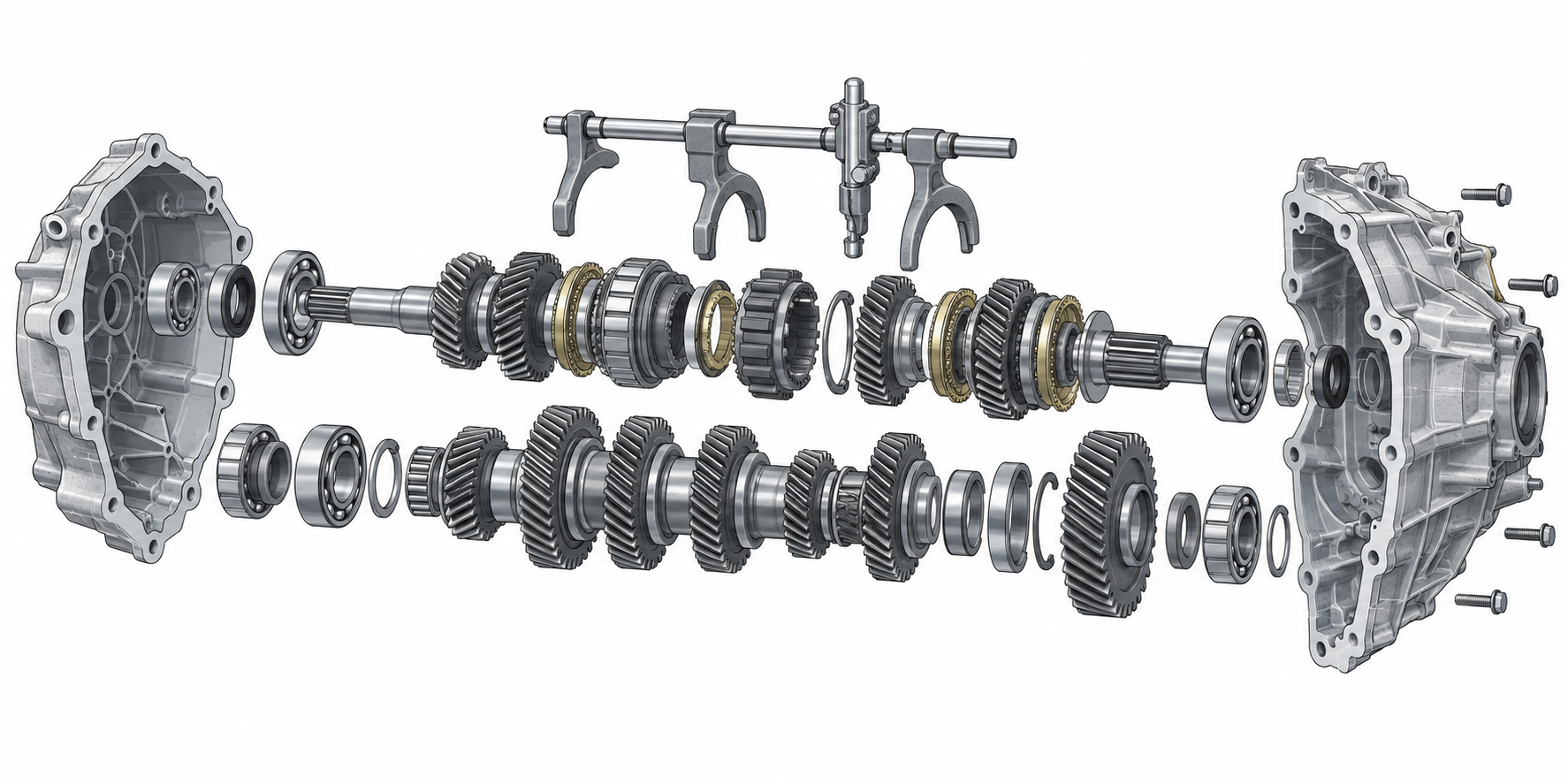
An automotive gearbox is the best example. It is assembled from several parts such as gears, shafts, bearings, housing, and synchronizers, and it performs the single function of changing speed and transmitting torque in the complete vehicle; when it fails, it is usually removed and replaced as a whole, rather than having the gears inside replaced one by one on site. So on the shop floor you will hear "gearbox assembly comes off the line" and "this component is reworked as a whole," all referring to this level. An assembly is not defined by "size"; a very small functional module, as long as it independently performs one function, is still an assembly.
The boundary of an assembly: it can also be "one part plus a group of auxiliary parts"
An easily overlooked boundary point: an assembly can also consist of only one part. In that case that part is called the main part, and it carries the defined function; the remaining parts only serve auxiliary roles such as connection, fastening, guidance, and sealing. In other words, the "number of parts" in an assembly is not the criterion; "whether it can independently perform a function" is. So when looking at an assembly drawing, first find the main part, then find the auxiliary parts, and the hierarchy becomes clear.
Standard parts are called different things under the two framings
Items such as bearings and bolts are usually treated as parts in the assembly tree, belonging to the smallest unit of manufacturing; in procurement and inventory terms, they are often classified separately and called standard parts. Both ways of speaking are common in the industry, depending on whether you are talking to the design side or the supply chain. When judging, there is no need to agonize over the name; just ask: in the current context, is it a unit that is "installed into something else," or a material that "can be ordered separately"?
Put this criterion back on the shop floor: when a supplier asks during quoting, "Are you quoting a part or an assembly?" what differs is not the name but the level of labor hours, assembly operations, and inspection fixtures. Once the level is made clear, the path forward goes smoothly. When you need to check machining and assembly framing by level, you can start by reviewing the typical process breakdown on the CNC machining capabilities page.
Workpiece: the object currently being machined, which is not the same thing as a part
Where does "workpiece" appear in shop-floor language?
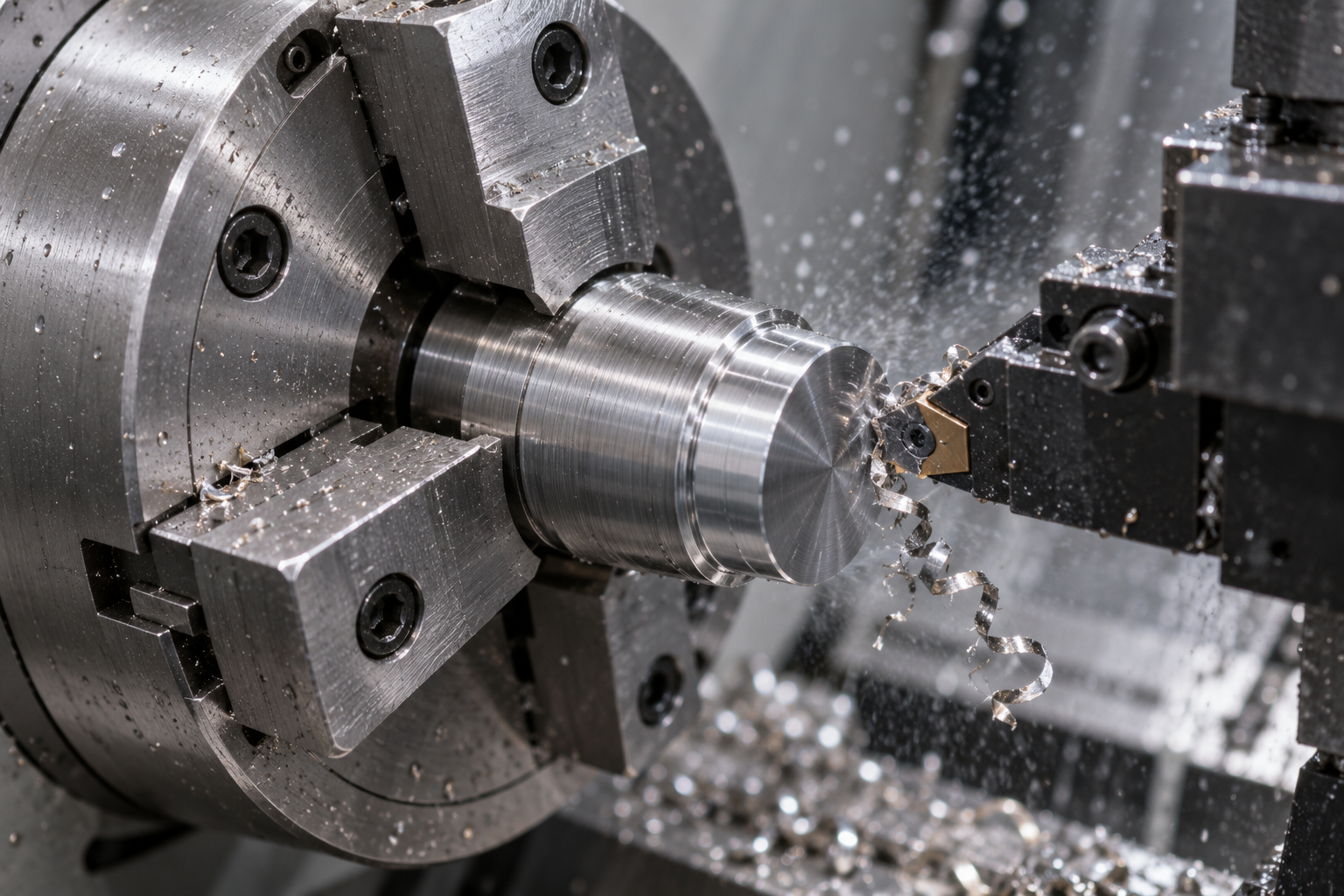
Why can the same object have multiple names?
By the way, let's distinguish: component, assembly, assembly unit, machine part, parts and components
After covering the three lines of parts, components, and workpieces, there are still several other terms floating around the workshop: component, assembly, assembly unit, machine part, and parts and components. They are not synonyms; each stands on a different classification line. Mixing them up means the assembly drawing and the bill of materials won't match.
Component: a motion unit in a mechanism, while a part is a manufacturing unit
A component is a motion unit in a mechanism, while a part is a unit of processing and manufacturing. These two lines cannot be interchanged.
A component can be just a single part. The crankshaft of a single-cylinder internal combustion engine is a component in motion analysis, but in machining processes it is just a shaft, a part—one object with two identities, depending on which ruler you use to measure it.
A component can also be a rigid structure formed by connecting several parts. The connecting rod component is a typical example: the connecting rod body, connecting rod cap, bolts, and nuts are each parts, and after assembly they move as a whole within the mechanism. So in the workshop you will hear "this crankshaft is a component"; design talks about motion relationships, process talks about machining plans, and both are talking about the same thing from different angles.
Assembly, assembly unit, machine part: different levels and registers
Assembly leans toward the assembly level, referring to a set of parts assembled together that does not necessarily independently perform a complete function. Assembly unit leans toward the product level, usually capable of independently performing a certain function and replaceable as a whole; semantically it emphasizes "delivered as a set" more than component. Machine part is a colloquial general term with no strict definition; it can refer to either a part or a component on a machine, and in formal documents it should not be used to replace part or component.
Parts and components usually refer to all parts and components except the frame. The frame itself is also a component, but it is generally not included in the scope of "parts and components." Castings and forgings are classifications of parts by manufacturing method, which is not the same as the hierarchical classification of part/component/workpiece—the same casting is a part in the assembly tree, and can also be called a workpiece at a machining station.
Don't confuse them with "OEM parts, aftermarket parts, supporting parts, pure salvage parts"
OEM parts, aftermarket parts, supporting parts, and pure salvage parts are source classifications in the automotive aftermarket, divided by supply chain channel and source. Parts, components, and workpieces are divided by manufacturing level and processing state. The two are not on the same dimension; comparing them in the same table will lead to meaningless conclusions such as "OEM parts are more advanced than components."
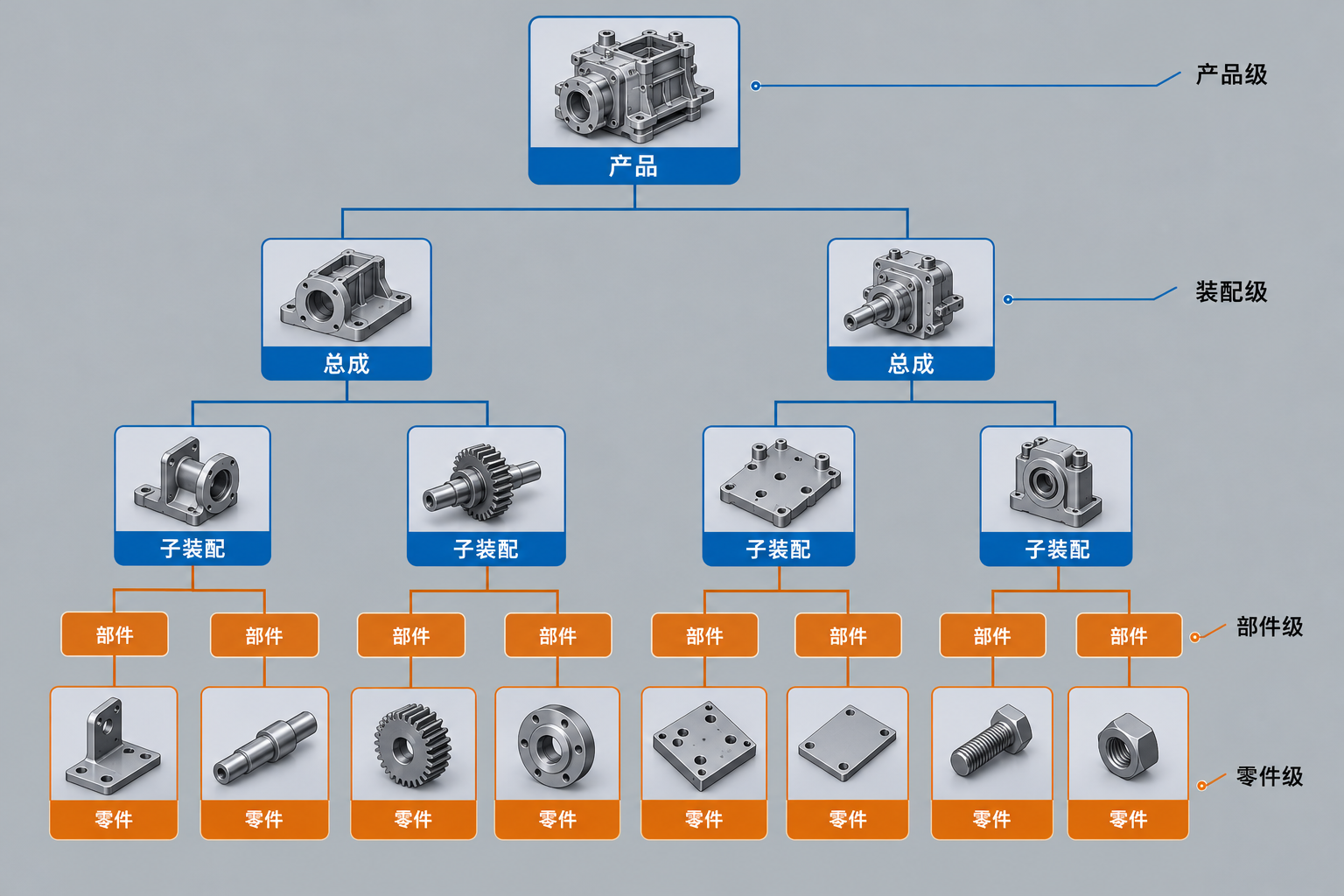
So in the workshop you will hear "Has this component arrived?" and "Is this workpiece clamped?"—the first asks about assembly progress, the second asks about processing status. The two terms each cover a different stage and should not be interchanged.
Understand at a glance with one table: the boundaries of part, component, workpiece, component, and parts and components
The previous sections separately discussed parts, components, and workpieces, and also mentioned components and parts and components in passing. This section places them side by side in one table, measuring them with the same set of dimensions, so the boundaries become clear. The approach to choosing dimensions is simple: first see which classification line it stands on (manufacturing/assembly level, motion level, or processing state), then see whether it can independently perform a function and whether it can be replaced as a whole, and finally look at typical examples and common misuse. These four columns are enough to separate the terms most easily confused.
| Term | Classification line it belongs to | Whether it can independently perform a function | Can it be replaced as a whole | Typical examples | Common misuse |
|---|---|---|---|---|---|
| Part | The smallest unit at the manufacturing/assembly level | No, it only has function after assembly | Usually not replaced individually; replaced according to assembly relationships | Bolts, gears, shafts, bearings | Calling a gearbox "one big part" |
| Component | Functional level, assembled from several parts | Can independently achieve a certain function | Can be replaced or repaired as a whole | Automobile gearbox, pump body assembly | Used interchangeably with "part," the bill of materials does not match up |
| Workpiece | Processing state, not an assembly level | Not applicable | Not applicable | A shaft on a chuck, a weldment on a table | Written into the BOM, procurement definitions become inconsistent |
| Component | A moving unit within a mechanism | Bears motion or transmits force within a mechanism | Depends on the structure; can be disassembled and assembled as a whole | Crankshaft, connecting rod components | Used interchangeably with "part," ignoring the two types of units: motion and manufacturing |
| Parts and components | A collective term for assembly levels | Not applicable (it is a collective concept) | Not applicable | All parts and components except the frame | Including castings and forgings as well |
| Standard parts | Classified by standard or procurement definition | Not applicable (used according to assembly relationships) | Can be replaced individually | Bearings, bolts, nuts | Set in opposition to "part," assuming they are mutually exclusive |
The most easily overlooked column in the table is the "classification line" column. Parts and components stand at the manufacturing and assembly level, components stand at the motion level, workpieces stand at the processing state, parts and components is a collective term, and standard parts are delineated by standard or procurement definition. The same object can appear on two lines at the same time—a bearing is treated as a part in the assembly tree, while in procurement and inventory definitions it is often separately classified as a standard part, and both names are common in the industry. This is not a contradiction; it is just that the questions being asked are different.
There is another easy trap to fall into in the table: components usually refer to all parts and assemblies except the frame, and the frame itself is also an assembly. Castings and forgings, however, are classifications of parts by manufacturing method, which is not the same concept as "components and parts." You cannot just throw them into the same basket because they all contain the word "part." The classification dimensions are different, and mixing them will cause problems in the detail table and procurement terminology.
Common modeling practice in the industry: a few assemblies, dozens of parts
In most general mechanical products, a complete machine usually consists of a few to a dozen or so assemblies, and each assembly consists of a few to dozens of parts. This range is only a common sense of magnitude in the industry; the specific number varies greatly with product complexity, so it is not appropriate to give a fixed number. How many levels the assembly tree is built to depends more on how the drawings are divided, how the BOM is managed, and who replaces parts, rather than on how many levels are required by terminology.
From one table back to two criteria
After looking at the table and then returning to the two criteria at the beginning, they line up: whether it can be further disassembled and whether it can independently perform a function determines parts and assemblies; whether it is currently being machined determines the workpiece. The terms component, part, and standard part each have their own classification line. Before using them, first think clearly about which type of question is being asked in the current context. The next section places this table into real scenarios involving drawings, BOMs, process cards, and CAD assembly trees to see what communication costs arise from using the wrong term.
What happens when the wrong term is used in drawings, BOMs, process cards, and CAD assembly trees
Once the concepts are explained, they need to be put into practice. The difference between part, assembly, and workpiece is not a language question; each has a fixed place in the four engineering documents, and writing it in the wrong place will make downstream people work at the wrong level.
Drawings and detail tables: marking an assembly as a part breaks the assembly relationships
The detail table (the one at the head of the BOM) is expanded level by level according to the assembly hierarchy: assemblies hang under the top-level assembly, and parts hang under assemblies. If an entire gearbox is written as a "part" in the detail table of an assembly drawing, the gears, shafts, and bearings at the next level have no attachment point, and the assembly relationships break. Conversely, if a pin shaft that cannot be further disassembled is written as an "assembly," the assembly worker will look for its subcomponents, fail to find them, and waste a round of labor hours.
A common practice in the industry is: in the detail table, any node that can still be expanded one level down is treated as an assembly; those that cannot be expanded are treated as parts. This is not a standard clause, but an empirical practice to make the detail table readable by the next process. The specific approach should be based on your factory's drawings and PLM templates.
BOM and process cards: workpieces should not enter the bill of materials; process cards are more appropriate for writing workpieces
The BOM is a material scope, governing "what to buy, what to store, what to assemble," so it only contains parts and assemblies. "Workpiece" is a machining-state word. The same shaft is called a workpiece when it is clamped for turning, and after being put into storage it is a part. There is no place for it in the BOM. If a workpiece is written into the BOM, procurement and warehouse staff will look up a material number that does not exist.
Process cards are exactly the opposite. A process card is written around "this machine, this clamping, how this tool moves," and its subject is naturally the workpiece: the workpiece is clamped in a three-jaw chuck, aligned, and the outer diameter is rough-turned. Writing "part" here is awkward instead, because the process card cares about this object being on the machine tool at this moment, not about its level in the assembly tree.
CAD assembly tree: parts are independent files, assemblies are logical nodes
In the assembly structure of mainstream 3D CAD, a part is the basic unit of design, saved as an independent file and able to be drawn separately; an assembly describes the logical assembly relationships between parts and does not itself become a separate file; a product is the final assembly result and is stored independently. Some materials translate assembly as "component" and part as "component/part," which easily makes people mistakenly think these are two different types of constituent parts. In fact, they are just nodes at different heights in the same tree.
So on the shop floor you will hear: design says, "I haven't finished assembling this assembly," meaning the logical relationships have not been fully built; process says, "this workpiece goes to the machining center first," meaning the clamping sequence of the machining object.
The cost of using the wrong term in the inquiry stage is the most direct. If you throw an entire assembly to a supplier for a "part price," the other party can only estimate labor hours and materials at the wrong level, and when it comes back for verification, both sides have to redo it. Before creating a BOM or sending an inquiry sheet, first confirm which level the node you are providing stands at in the assembly tree. That is less troublesome than explaining afterward.
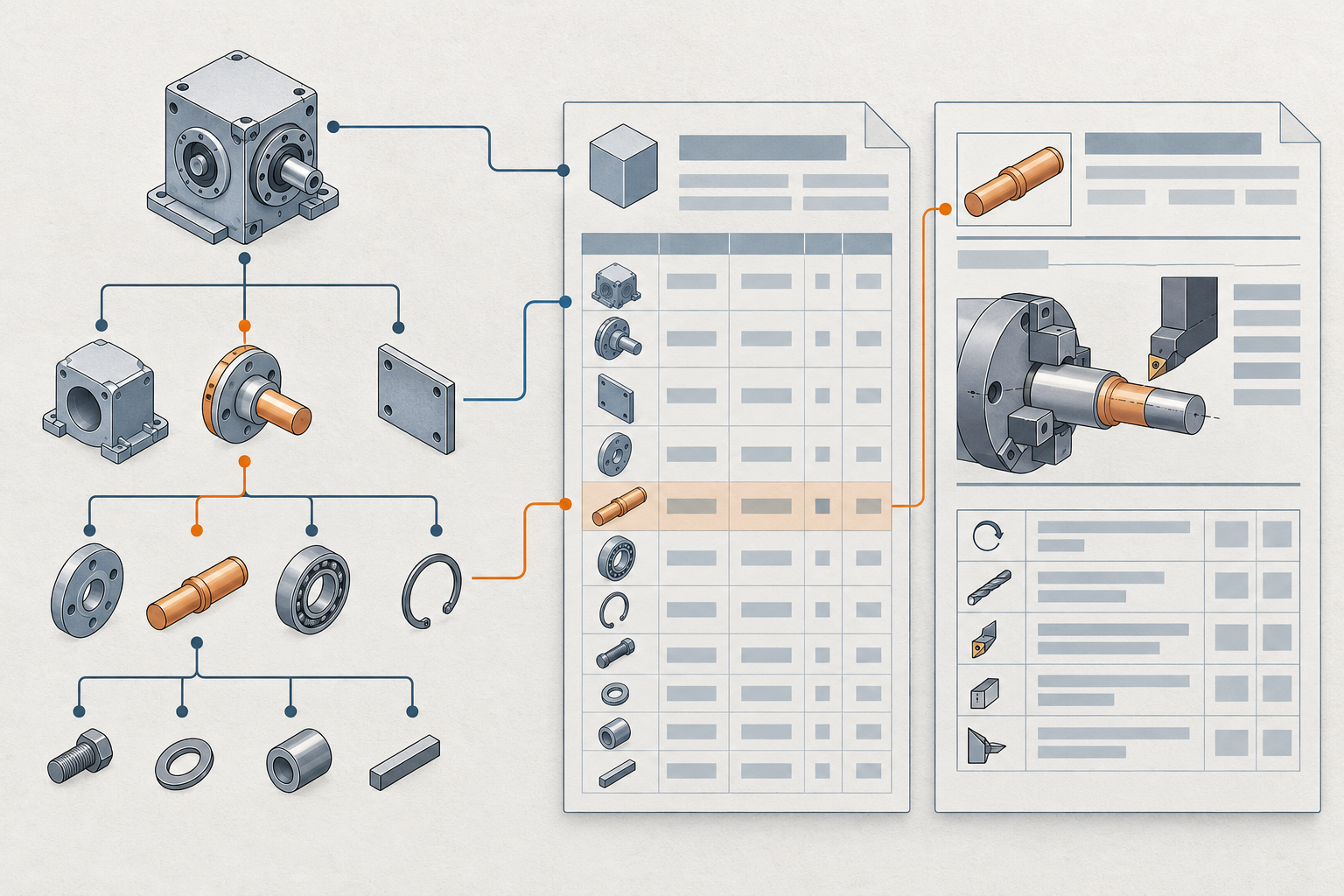
Quick term reference: two questions determine three terms
First question: can it independently perform a function
Second question: Is it currently being machined?
The order cannot be reversed, nor should it be treated as a rigid rule
Frequently Asked Questions
The following questions are the boundary issues readers most often follow up on after distinguishing parts, components, and workpieces. The answers stick as closely as possible to the two criteria above, without giving fixed numbers or drawing conclusions on anyone's behalf.
If a part can perform a certain function on its own, is it a part or a component?
Both identities can hold at the same time; it depends on which line you are speaking from. In manufacturing terms, it is still a part that cannot be further disassembled; in functional terms, it is a component containing only the main part. The crankshaft mentioned in the article is a typical example: in a mechanism it is a motion unit, while in a drawing item list it is one part. When writing a BOM, list it as a part; when writing a functional breakdown or maintenance manual, describe it as a component. There is no need to force a choice between the two.
Are workpiece, part, and component parallel relationships? Why can't they be used interchangeably?
They are not parallel relationships. Part and component answer "what is it in the assembly hierarchy," while workpiece answers "is it currently being machined." The same object can be called a workpiece at the blank, in-process, and finished-product stages; only once it is installed on a machine is it referred to as a part or component. Writing "workpiece" on a process card is more appropriate because the process card describes the machining process; writing "workpiece" on a bill of materials would confuse procurement and inventory terms.
Should standard components (such as bearings and bolts) be counted as parts or components?
In most assembly trees they are treated as parts because they are usually not disassembled further. But in procurement and inventory terms, standard components are often classified separately, and both names are common in the industry. The article also mentions that a bearing is a part in mechanical installation, while in national standards it is also called a standard component; if it primarily performs rotation or transmission in a given machine, colloquially it may also be called a main component or wear part. Which terminology to use depends on the purpose of your document, and it is advisable to note the basis for classification in the document.
Member and component differ by only one word. What exactly is the difference?
A member stands on the line of "motion unit," while a component stands on the line of "functional unit." A member can be a single part, or it can be a rigid structure formed by connecting several parts, such as a connecting rod member made by connecting parts such as the rod body, rod cap, bolts, and nuts; a component, by contrast, emphasizes being able to independently achieve a certain function and being replaceable or repairable as a whole. A component may contain multiple members, and a member may also span several parts. The two are not synonyms on the same dimension.
Which word should actually be used on drawings, BOMs, and process cards? Is there a universal rule?
There is no rule that applies universally, but you can choose according to the purpose of the document: drawing item lists and BOMs are written by assembly level, using part, component, and assembly; process cards are written around the machining process, where workpiece is more natural; in a CAD assembly tree, a part corresponds to an independent file, a component corresponds to a logical node, and a product corresponds to the assembly result. The two questions mentioned in the article—can it independently perform a function, and is it currently being machined—can serve as a self-check before choosing words, not as rigid rules. Using the wrong word will not itself scrap a part, but it will make the item list, procurement terms, and labor-hour quotations fail to match, and the cost of reconciliation is often much higher than changing one word.
Key takeaways
- A part is the smallest unit of processing, manufacturing, and assembly, and usually cannot be disassembled further; a component is a functional unit made by combining parts that can independently perform a certain function and can be replaced or repaired as a whole.
- A workpiece is not a term on the assembly hierarchy; it emphasizes "the object currently being machined"—the same object can be called a workpiece at the blank, in-process, and finished-product stages.
- A structural member is a moving unit in a mechanism, while a part is a manufacturing unit; an object can be both a structural member and a part at the same time (such as the crankshaft of a single-cylinder internal combustion engine), or several parts can be connected into a rigid structure (such as a connecting rod structural member).
- Near-synonyms each have their own place: parts and components usually refer to all parts and components except the frame; standard parts belong to parts under the manufacturing perspective; assembly/assembly group leans toward the assembly hierarchy; castings/forgings are classified by manufacturing method, which is not the same thing as hierarchical classification.
- Using the wrong term in drawings, BOMs, process cards, and CAD assembly trees directly raises communication and verification costs; asking those two questions before opening a BOM is cheaper than reworking afterward.