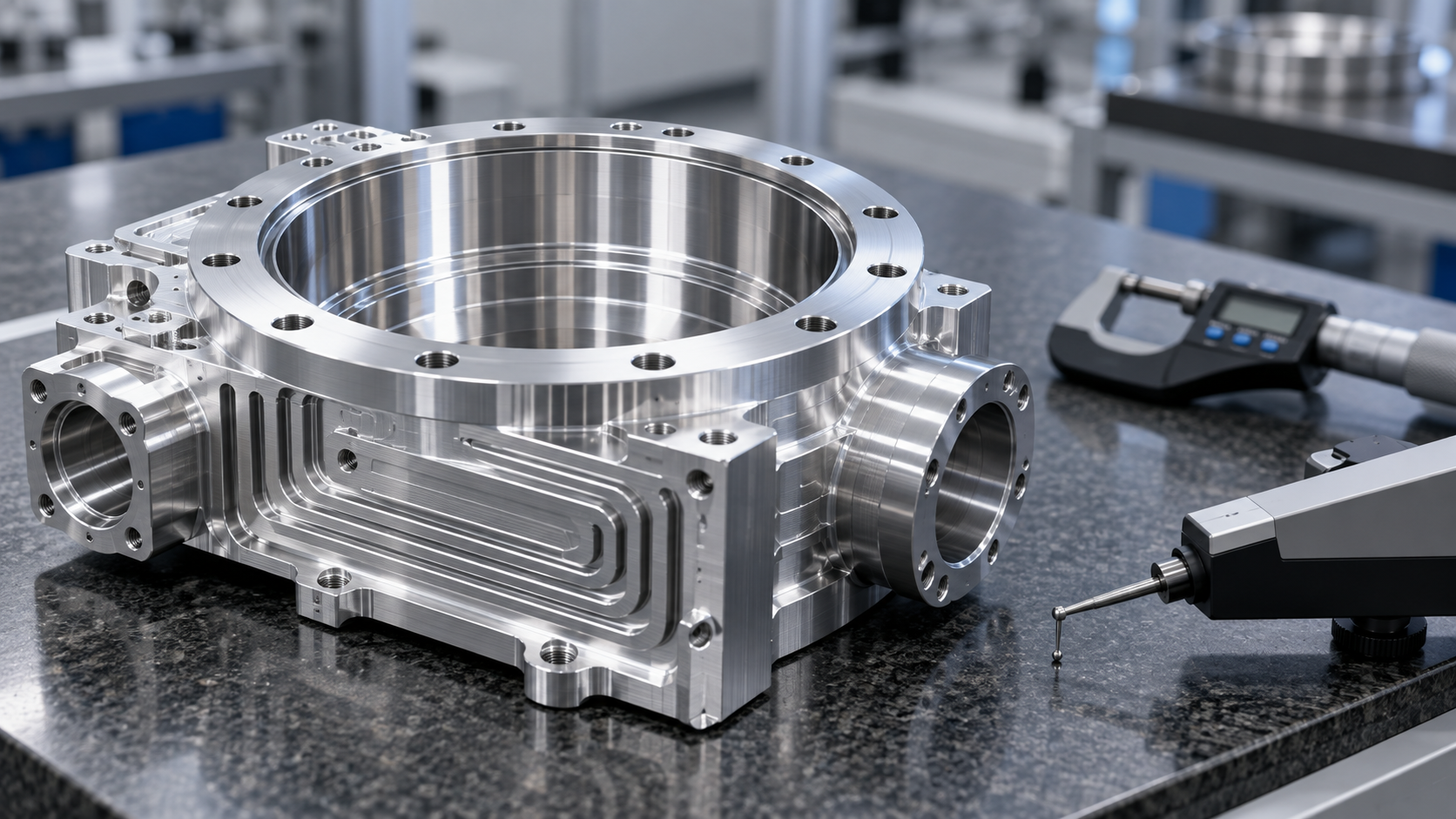
South Korean Semiconductor Parts Machining: Why Have Lead Times Suddenly Doubled?
A South Korean equipment company executive put it bluntly to industry media: components for deposition equipment used to arrive in 4 months, but now it takes 10 months. This is not a problem at one supplier, but a slice of the overall lengthening of South Korea's semiconductor parts machining and procurement chain. Even more extreme is laser processing equipment, where lead times for core components procured from Japan are said to possibly reach 40 months—more than three years, longer than the R&D iteration cycle of most complete equipment systems.
Putting these two sets of numbers together makes the conflict clear: AI computing demand has pushed equipment orders higher, but capacity on the component side has not kept pace. The segment of South Korean semiconductor parts machining has long been treated as "supporting work," and now it has become the bottleneck determining whether complete equipment can be delivered on time. This article only discusses parts machining and lead times; it is not an industry overview, nor does it discuss export-value bookkeeping.
Doubled Lead Times Are Not a Single-Point Shortage
If it were a shortage of a single part, switching suppliers or paying more to expedite usually could ease it. But this round of delays spans multiple equipment categories including deposition, laser processing, and packaging, showing that the problem lies in capacity and investment rhythm, not in the scheduling of a certain production line. A common industry situation is: orders arrive, but upstream machining equipment, cutting tools, inspection stations, and skilled operators are all fully booked, so lead times can only be pushed back.
Two concepts need to be distinguished here. One is machining capacity—the quantity and precision level of machine tools, fixturing solutions, and inspection gauges; the other is supply chain capacity—the available slots for upstream materials, heat treatment, and surface treatment. Semiconductor parts often strain both: precision requirements narrow the range of usable suppliers, and once capacity within that narrow range is fully loaded, replacement options are almost zero.
Why It Is Erupting All at Once Now
The AI supercycle is the direct driver. Equipment orders are released intensively in a short period, while capacity expansion decisions on the component side usually lag—building production lines, buying machine tools, tuning precision, and running certifications take years. The demand curve is steep, the capacity curve is flat, and the gap lands on lead times. South Korea's domestic component supply chain is also delayed; some companies report procurement times about 50% longer than usual, with packaging equipment parts that originally took 4 months now taking 6 months or even longer.
This is not a problem that can be solved by "raising prices and buying immediately." The capacity of semiconductor parts machining is limited by precision capability and inspection gauge conditions. Money can accelerate part of it, but it cannot accelerate precision verification and process stability. Only by understanding this can one understand the reasons to be broken down in the following sections: conservative Japanese capacity, a long-term low localization rate, difficulty finding alternative supply chains, and high precision thresholds. These four stacked together produce the result of "doubled lead times."
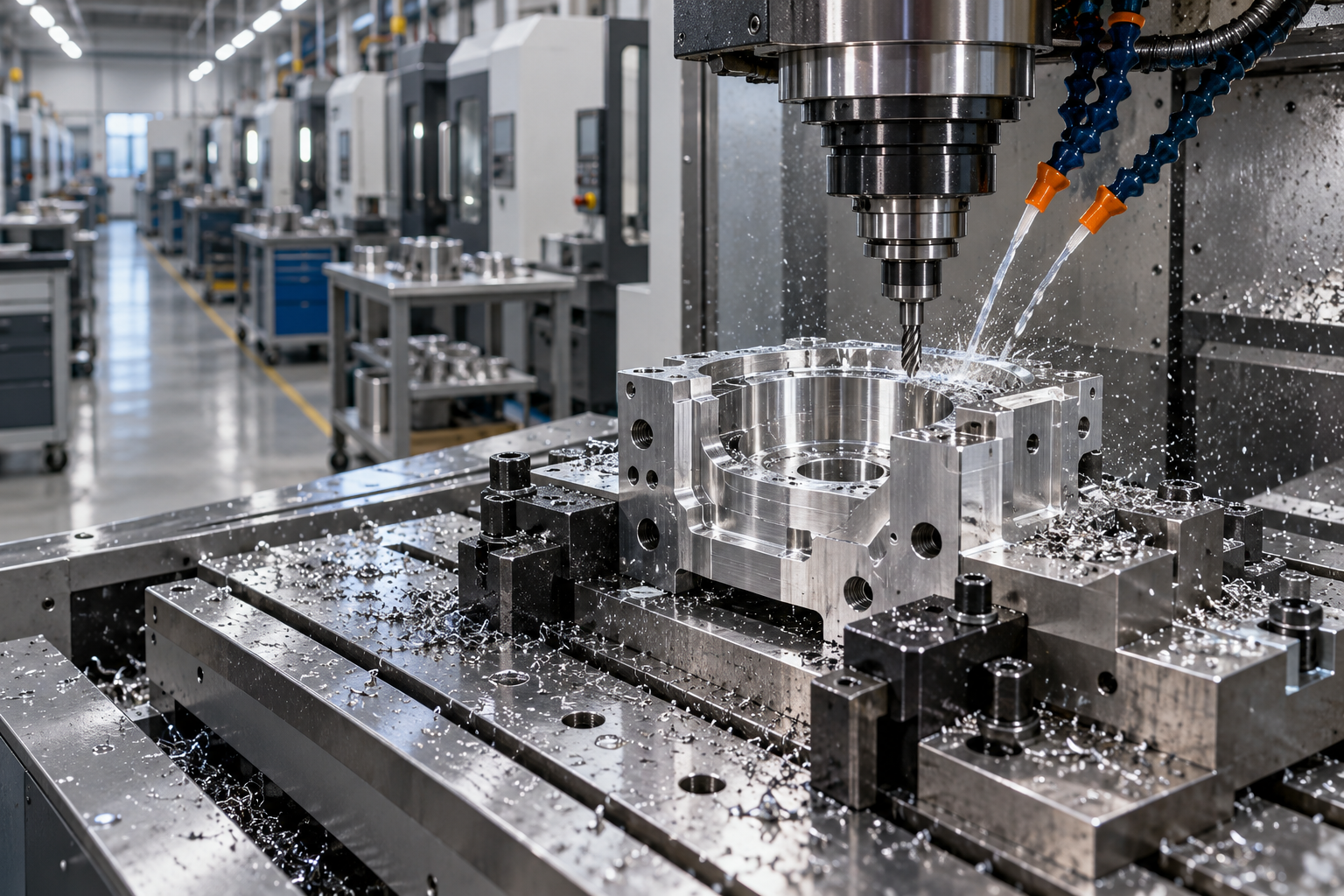
The next question is: what exactly do these delays look like, where are the root causes, and what can the machining side do. Let us start with a record of lead times for deposition equipment components.
From 4 Months to 10 Months: A Record of Deposition Equipment Component Lead Times
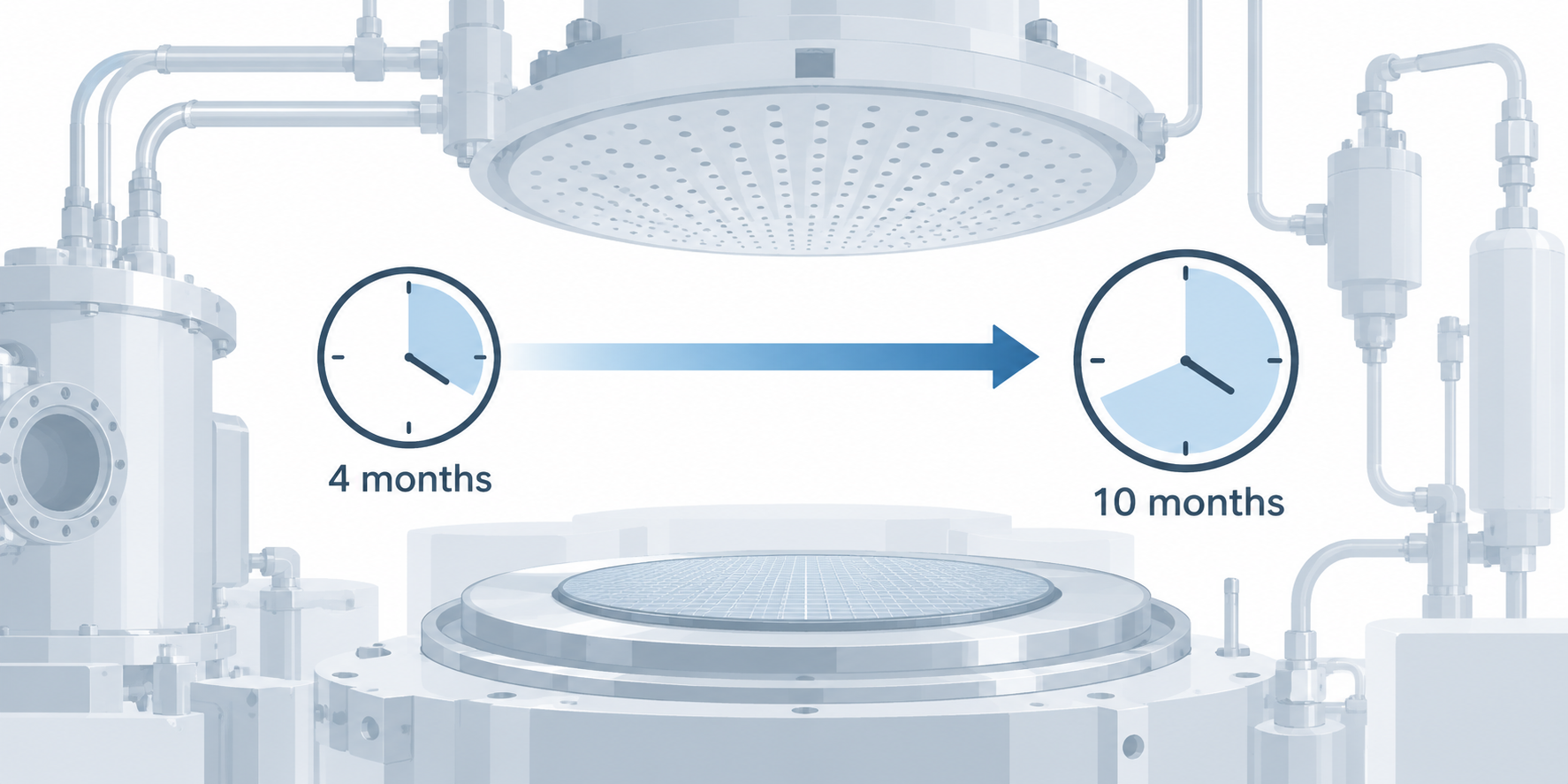
"It used to arrive in 4 months, now it takes 10 months." This quote from an industry insider refers not to complete equipment, but to key components of deposition equipment. On the chain of South Korean semiconductor parts machining, what is seen first is never the technical ceiling, but the lead time—if a piece of equipment cannot get one part, the entire production line has to queue.
Zoom in and look at two lines. The first is overseas procurement: deposition equipment components have stretched from 4 months to 10 months, already a relatively hard set of numbers in public information. The second is South Korean domestic procurement: a South Korean company code-named C said procurement times are about 50% longer than usual, with packaging equipment components that originally took 4 months now taking 6 months or even longer. Both lines slowing together shows that the delay is not simply "a shortage in some country," but that the rhythms of both demand and machining have been disrupted at the same time.
Overseas Line: 4 Months to 10 Months—Doubling Is Not an Isolated Case
Deposition equipment belongs to the "slow work produces fine results" segment in semiconductor front-end processes. Parts such as chambers, showerheads, gas lines, and carrier plates often go through multiple CNC machining, surface treatment, and cleaning steps, and any one stuck point will push the lead time back. A lead time going from 4 months to 10 months means the machining side must schedule not only production, but also materials, heat treatment, and inspection. The reality of South Korean semiconductor parts machining is: equipment makers are pressing for parts, and parts makers are pressing for upstream processes.
Domestic Line: Company C's Procurement Time Is About 50% Longer
The delay in domestic procurement looks smaller—about 50%—but its nature is different. Delays in overseas parts are often stuck in cross-border logistics, export controls, or the capacity of a single supplier; delays in domestic parts are more often stuck in machining scheduling and material arrival. Packaging equipment components going from 4 months to 6 months itself shows that even for parts with relatively simple structures and not top-tier precision requirements, machining resources are being squeezed by more urgent and more expensive orders.
- Deposition equipment components: about 4 months → about 10 months (overseas procurement line)
- Packaging equipment components: about 4 months → about 6 months or even longer (South Korean domestic procurement line)
- Overall domestic procurement time is about 50% longer than usual
After lead times double, buyer behavior is also changing. Previously orders could be placed quarterly; now capacity must be locked half a year in advance. Previously price comparison dominated; now the first question is "can you fit us in." This change is pressure on the machining side, but also a signal: whoever can explain lead times clearly and break down processes clearly is more likely to remain on the supplier list.
Behind the 40-Month Lead Time: Why Japanese Component Capacity Is Conservative
The most glaring number in South Korean semiconductor parts machining is not 10 months, but 40 months. According to public reports, a certain laser processing equipment company's core components procured from Japan may have lead times of about 40 months—from order placement to receipt, crossing three years. This is not a scheduling accident at one factory, but the result of long-term conservatism in capacity expansion among Japanese component suppliers. When AI-driven demand jumped within two years, the Japanese supply side barely added leverage in sync.
To understand how 40 months comes about, "capacity" must be broken into three links that do not loosen quickly: equipment, people, and certification.
Capacity Is Not a Matter of Money: Why the Japanese Supply Rhythm Is Half a Beat Slow
Japanese precision component manufacturers tend to be conservative in their investment logic. Semiconductors are a highly cyclical industry, and every historical expansion cycle has been accompanied by overcapacity. Equipment and component makers have been burned before, so they prefer to "lock in capacity against long-term orders" rather than immediately building lines when they see short-term demand double. High-precision grinding machines and ultra-precision lathes themselves take months to over a year to deliver, and cleanrooms and temperature-controlled environments aren't ready to use the moment they're installed. The physical time required for capacity ramp-up cannot keep up with the speed at which orders flood in.
This gives rise to a counterintuitive phenomenon: a price increase doesn't necessarily mean you can buy immediately. Even if the buyer is willing to pay more, the seller has no idle high-precision production line to schedule. Orders queue up ahead of capacity, and lead times can only be adjusted by shifting scheduling priority—the total volume can't be moved.
Why You Can't Buy It Even If You Pay More: Who Eats Up the Lead Time
Lead time is eaten up by three things. First, heat treatment and stabilization: after machining, high-precision metal parts need stress relief and aging, and dimensions change as internal stresses release. Skip this step, and precision can't be held. Second, precision inspection: CMMs, roundness testers, and roughness testers have limited throughput, and ultra-precision parts are often measured piece by piece, so gauge scheduling also queues up. Third, process qualification: semiconductor equipment components often require multiple rounds of confirmation on dimensions, materials, surfaces, and cleanliness, and switching suppliers or production lines means going through it all over again. None of these three stages happen on the machine tool, yet they account for the bulk of the lead time.
Some industry insiders note that the wait in certain machining stages is "not that it can't be made, but that after it's made, you still have to wait for inspection and certification scheduling." This also explains why once lead times for Japanese core components stretch out, it's hard to alleviate by snapping up stock at a single point.
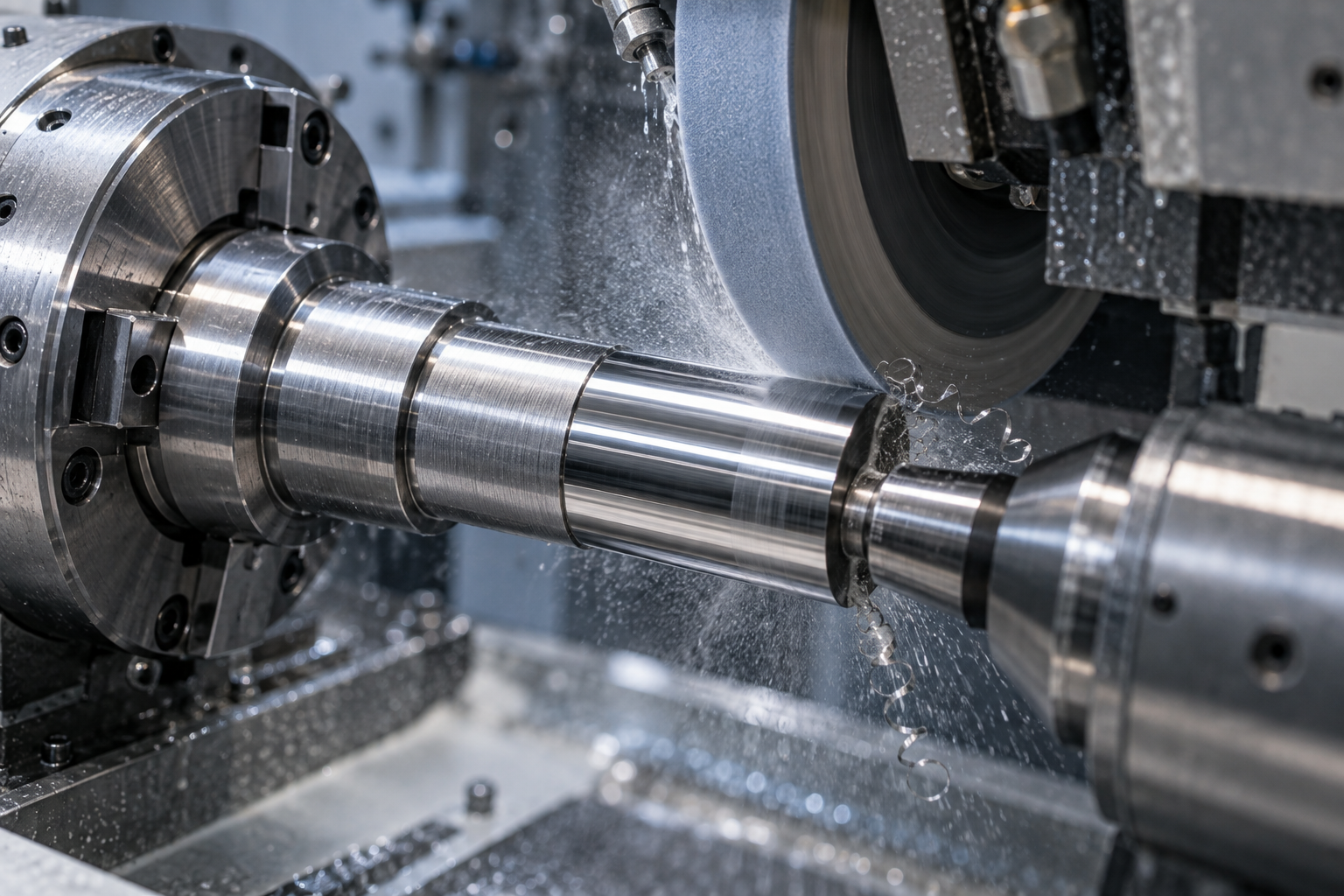
For procurement and process engineers, the practical implication of this structural fact is: treat "long lead times for Japanese core components" as a known constraint, not a temporary situation. What can truly be compressed are often the parts that aren't stuck at the very cutting edge—their precision requirements are manageable, materials are standard, and certification burden is light, so lead-time flexibility is much greater. If readers are mapping out the machining path for such parts, they can first look at the materials and tolerance boundaries covered by CNC machining capabilities, then judge which parts are suitable for diversion. The bottleneck in Korean semiconductor component machining is essentially a bottleneck in high-end capacity and inspection/certification resources, not in general machining capability.
The Truth Behind Korea's 20% Localization Rate: Where the Machining Stage Gets Stuck
Doubling lead times is not a one-off. Look at a colder set of numbers: the localization rate for parts in Korean semiconductor equipment was about 18% in 2004 and still about 20% in 2021. In seventeen years, it moved only two percentage points. The government has set a target of 50% localization for key materials, components, and equipment by 2030—the size of the gap is obvious at a glance.
Put this curve into the context of Korean semiconductor component machining, and the conclusion is straightforward: complete equipment and processes can reach the world's forefront, but the components and machining stages supporting them have long been weak links. The weakness is not "can't make it," but "even if it's made, it can't get onto the list."
Why Cleaning Is the First Area to Show a Breach
The weakest link most clearly identified in the sources is cleaning—materials, components, and equipment technologies are all relatively behind. Cleaning may not seem to involve the extreme precision of lithography, but its demands on machining consistency are no lower: tanks, spray piping, fixtures, sealing surfaces—any deviation in roughness or flatness becomes particle residue and yield fluctuation.
The characteristics of such parts are medium precision, high volume, and frequent changeovers. It is precisely this combination that most tests the machining side's scheduling and fixture reuse capability, rather than single-piece extreme precision. The reason Korea's localization rate has been slow to rise is often stuck here: single pieces can be made, but batch consistency can't be held steady, or it can be held steady but costs can't be pushed down.
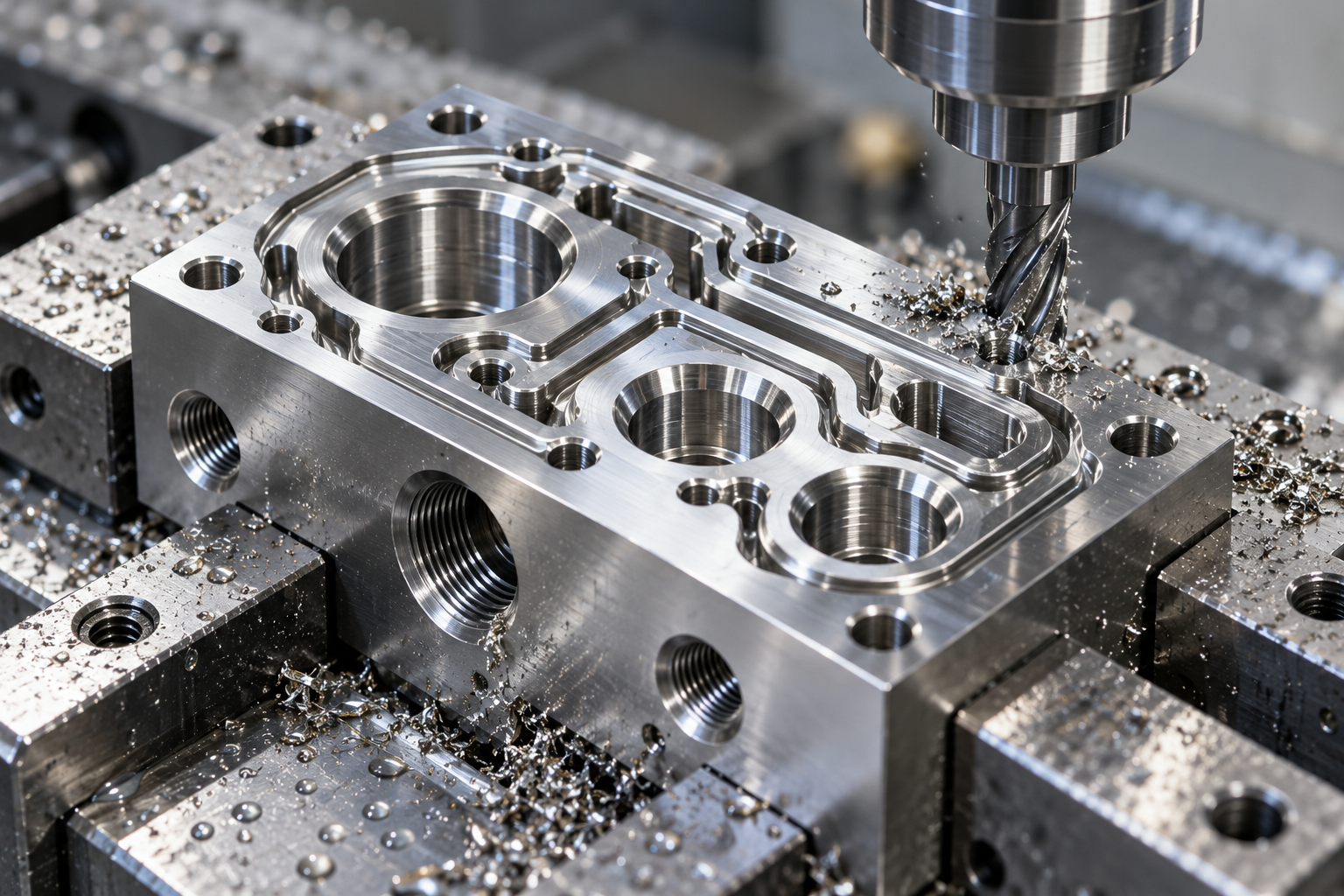
Only Two Percentage Points in 20 Years, Stuck at Three Gates
- Qualification gate: For a component to enter an equipment maker's approved supplier list, it must complete material traceability, dimensional reports, cleanliness and life testing, with cycles measured in years. Strong machining capability does not equal passing this gate.
- Scale gate: Semiconductor components have limited usage per model, and dedicated production lines take a long time to pay back. The machining side prefers multi-variety, small-batch work and is unwilling to lock capacity for a single model.
- Coordination gate: Drawing tolerances, gauge datums, and surface treatment specifications are often held by the equipment maker. Local machining plants receive incomplete information, and repeated trial and error pushes lead times back out again.
Stack these three gates together, and they explain why the localization rate curve is almost flat: it's not that there's no investment, but that investment is eaten up by qualification cycles and coordination costs. For Korean semiconductor component machining, the real threshold is not the machine tool, but translating machining capability into an evidence chain the equipment maker can sign off on—first article reports, process capability data, and batch traceability records.
What the 50% Target Means for the Machining Side
From 20% to 50%, the gap lies mainly in components and materials, and both must land on machining processes. A common industry approach is to enter in layers: first use non-core, high-volume structural parts and piping parts to practice the qualification process, and once it runs smoothly, take on higher-precision cavity and fixture-type parts. Build the evidence chain first, then talk about precision upgrades—reverse the order, and you'll stay stuck in the sample stage forever.
One caveat: the specific definition of the localization rate (by value, by number of models, or by equipment units) affects how the numbers are read. The above 18% and 20% come from public reports and should be viewed as trend signals, not as precise year-by-year statistics.
After Excluding Chinese Components, How to Find Alternative Supply Chains
US-China trade friction has pushed a question to the surface: if Chinese-made components are deemed to enter the core supply chain of cutting-edge semiconductors, US equipment makers may face transaction restrictions. So the procurement side has started doing one thing—picking out Chinese parts from the list and finding alternatives. But exclusion is easy; substitution is hard. Industry insiders say that switching suppliers for core components requires re-qualification, with cycles measured in quarters; the real gap actually appears in those non-core but high-volume components.
So when finding alternative supply chains, the order can't be reversed. First distinguish the part's role in the equipment, then look at material and precision, and only then discuss lead time. Get the order wrong, and you'll go back and forth in the qualification stage.
Step One: Distinguish Core from Non-Core Parts
Parts that directly contact plasma, contact process gases, or bear vacuum sealing are core parts. Substitution for such parts often must follow the equipment maker's qualification process; the machining side can only provide samples and data as required—the decision is not in the machining plant's hands. Conversely, parts like structural brackets, gas line transition blocks, housings, mounting bases, trays, and fixtures do not directly participate in reactions, but their usage per unit is high and changeovers are frequent, giving them strong machining attributes. After excluding Chinese components, such parts are the easiest to replace with local machining, because the qualification boundary is clear—usually only dimensions, materials, and surface treatment need to align.
Step Two: Align Materials and Precision First
Common materials for semiconductor equipment parts are aluminum alloys (6061, 7075), stainless steels (304, 316L), titanium alloys, and some engineering plastics. The most common pitfall when finding alternatives is "same shape, different material grade." Material traceability, batch consistency, and whether cleanroom environment requirements are met must all be clearly stated in the drawing or technical agreement. On precision, non-core parts don't necessarily need sub-micron, but indicators like flatness, hole positions, and sealing surface roughness cannot be relaxed. The way to judge is: copy down the tolerance band from the original drawing item by item, rather than quoting based on "close enough."
Step Three: Ask About Processes for Lead Time, Not Just Days
Lead time can't be explained by a single "a few weeks." You need to see which process is queuing: blank arrival, rough machining, heat treatment for stress relief, finish machining, surface treatment, and inspection. In semiconductor parts, heat treatment and stress relief are often hidden bottlenecks—skip them, and parts tend to deform after finish machining; do them, and lead time stretches out. A common industry practice is to require suppliers to provide a process-by-process schedule, rather than quoting just a total. CNC machining is usually faster than waiting for imported parts on such non-core parts, but the premise is clear drawings, materials in stock, and precision requirements falling within conventional capability.
Overall, the substitution path after excluding Chinese components is not mysterious: core parts follow the equipment maker's qualification process, while non-core, high-volume parts go to machining plants with precision control capability. The local supporting demand for Korean semiconductor component machining is precisely what grows in this gap. To run a batch of non-core parts through the above three steps, you can first send the drawings and material requirements to AI Chat Quote for a quick assessment.
The Precision Threshold for Semiconductor Component Machining: Micron and Sub-Micron Levels
With the lead-time issue covered, one unavoidable question remains: what exactly makes semiconductor component machining difficult? The answer is usually not in equipment tonnage, but in that one line of tolerance on the drawing. Gas nozzles, showerheads, electrostatic chuck bases, ceramic insulators, and support and sealing surfaces inside vacuum chambers in semiconductor equipment mostly require micron-level dimensional control, with some mating surfaces entering the sub-micron range. This is also why, when lead times tighten, the number of machining plants that can take the order doesn't increase—the threshold can't be lowered just because you want to.
What's the Difference Between Micron and Sub-Micron Levels
Common industry gradings are roughly: standard precision machining tolerances are on the order of ±5 to ±10 μm; micron-level machining is often required at ≤±2 μm, with some scenarios as low as ±0.5 μm, and mating surface roughness mostly at Ra 0.1–0.4 μm; ultra-precision machining can reach ≤±1 μm and Ra 0.01–0.05 μm. These are reference judgments for typical industry ranges, not any one factory's promised values—for a specific drawing, whether it can be achieved depends on feature shape, material, fixturing method, and gauge capability, and must be confirmed item by item.
Going from ±2 μm to ±0.5 μm doesn't change one parameter—it changes the entire chain: the machine tool's geometric accuracy and thermal stability, the micro-geometry of the cutting edge, control of cutting heat and cutting force, workshop temperature and humidity, and the repeatability of measurement itself. The measurement stage is especially easy to overlook—if the gauge's repeatability is already ±0.8 μm, then talking about ±0.5 μm is meaningless. If it can be written on a drawing but not measured, it's as good as not done.
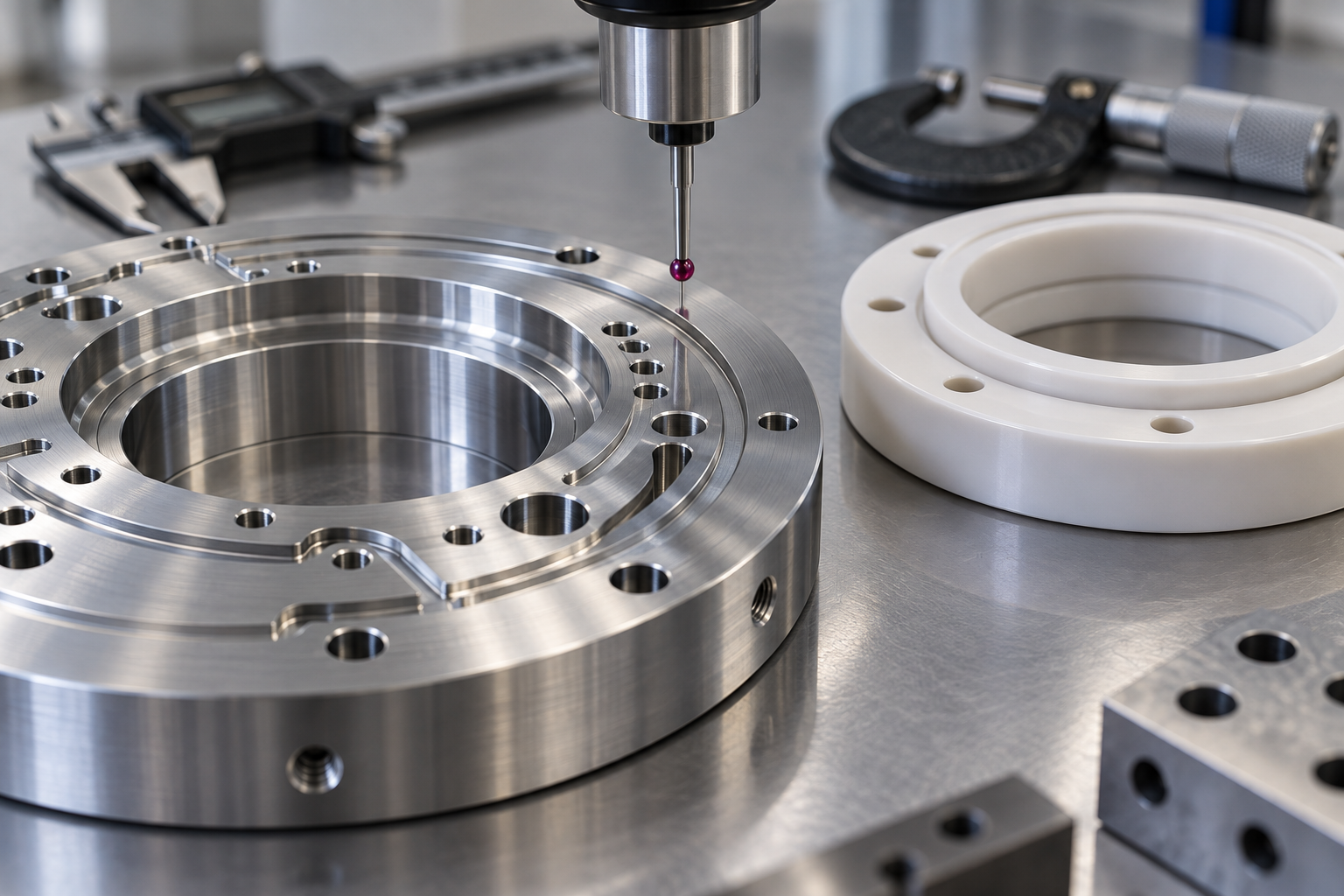
The three real bottlenecks on the machining side: fixturing, thermal deformation, and inspection gauges
The first bottleneck is fixturing. Semiconductor parts are mostly thin-walled, irregularly shaped, and densely perforated, so a slightly excessive clamping force deforms them, and releasing it causes springback. Common practice is to use vacuum chucking, wax sealing, or dedicated soft jaws to distribute the clamping force onto non-functional surfaces, adding process bosses where necessary and cutting them off at the end. If the fixturing plan cannot be settled, tolerances are just numbers on paper.
The second bottleneck is thermal deformation. In micron-level machining, cutting heat, spindle thermal elongation, and ambient temperature fluctuations all eat directly into the tolerance band. Common industry practice is to separate roughing and finishing, let the workpiece and machine tool fully equalize in temperature before finishing, and schedule finishing during constant-temperature periods; for mating surfaces with high Ra requirements, an additional grinding or polishing step is often added rather than expecting a single milling pass to get there. Any single pass that takes too much off will send surface roughness and dimensions out of control at the same time.
The third bottleneck is inspection gauges and the datum reference for judgment. The critical dimensions of semiconductor parts are usually not a single hole diameter but a combination of hole position, flatness, parallelism, coaxiality, and roughness. In the industry, gauges are typically built around the datum system specified on the drawing, a full-dimensional report is produced for the first article, and dedicated gauges or CMM sampling are used in the mass-production phase. If a supplier only has general-purpose calipers and plug gauges, sub-micron requirements basically cannot be closed out—this is also something to ask about before the machine tool list when evaluating a semiconductor parts machining supplier.
Putting these three together, you can understand why alternative suppliers are hard to find when lead times stretch: equipment can be bought, but fixturing plans, thermal deformation experience, and inspection gauges are accumulated. When choosing a process, CNC machining capabilities handle dimensional and geometric control for metals and plastics, while 3D printing is better suited to structural validation and non-critical flow-path parts; the two have different roles and cannot substitute for each other.
What it means for machining support when equipment makers set up factories locally in Korea
Stretched lead times and a localization rate stuck at around twenty percent—if you look at these two signals only from the procurement side, the conclusion easily slides toward "shortage." But from the machining side, there is a more concrete clue: international equipment makers set up manufacturing and technical support nodes in Korea long ago. Lam Research established its Korean manufacturing company in 2011, has been driving localization of major component suppliers since 2003, and operates plants in Osan, Yongin, and Hwaseong; Tokyo Electron set up a technical support center in Pyeongtaek in 2020 and plans to expand its Hwaseong R&D facility. Equipment makers placing factories and technical centers next to customer fabs shows one thing—the local support demand for Korean semiconductor parts machining is real, not propped up by policy slogans.
Local factories do not equal local procurement, but machining support benefits first
The first implication of equipment makers setting up locally is that assembly, debugging, refurbishment, and spare-parts warehousing move closer to customers, reducing cross-border logistics and customs waiting. The second implication is local procurement of components. There is a time lag between these two layers: the manufacturing base lands first, and supplier qualification follows slowly. For machine shops, the window is in this time lag—equipment makers need local machining capacity for repair parts, replacement parts, and non-critical structural parts, not a requirement that you supply core chambers from the start.
Tokyo Electron setting up a technical support center in Pyeongtaek and expanding R&D in Hwaseong is essentially moving engineering response forward. Moving R&D and technical support forward means the frequency of prototyping, revisions, and small-batch trial production rises. Dependence on rapid prototyping and short-cycle CNC machining for this kind of demand is often more direct than dependence on mass-production capacity.
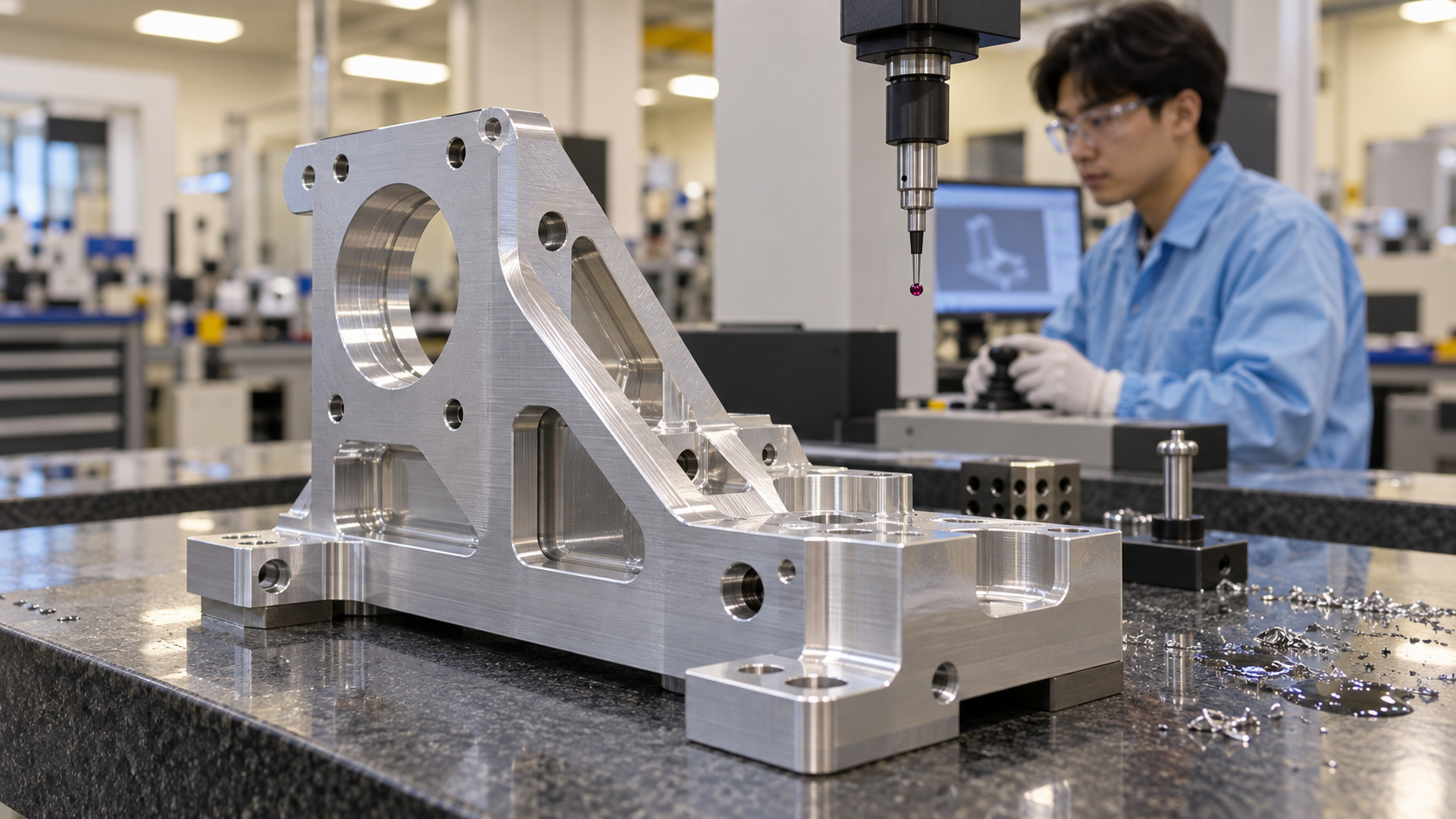
To take on the work, first see clearly the three types of jobs
Breaking down the opportunities brought by local factories, they roughly fall into three categories. The first is structural and frame parts: aluminum and stainless steel frames, mounting plates, cover plates—medium precision requirements but stable volume, where the competition is lead time and consistency. The second is fluid and vacuum path parts: gas blocks, flanges, fittings, sealing faces—surface roughness and flatness are the threshold, and gauges are often needed. The third is tooling, fixtures, and spare parts: equipment maintenance and refurbishment consume these quickly, with many one-offs and messy drawings, testing order-taking flexibility rather than production scale.
The common thread across these three categories is clear: none are the equipment maker's most core technical secrets, but all are sensitive to lead time, traceability, and surface quality. Against the backdrop of lead times stretching from 4 months to 10 months, local machining support that can deliver reliably is itself a scarce resource.
To get into this chain, what to prepare first
Equipment makers' supplier audits usually start with three things: material traceability, gauges and inspection records, and change control. If a machine shop can only say "we can do it" and cannot produce material certificates, first-article reports, and measurement data, it basically will not make the quotation list. On precision, common industry tolerances for micron-level parts can be controlled to ≤±2 μm, and as low as ±0.5 μm in some scenarios, with surface roughness Ra of about 0.1–0.4 μm; these are typical industry ranges, and for any specific part they must be confirmed item by item against the drawing—the range cannot be treated as a promise.
Also accept a reality: localization of Korean semiconductor parts machining cannot be filled in by one factory. What equipment makers want is a combined capability to support R&D iteration, take small batches, and supply continuously. High single-point precision but unstable lead times, or fast lead times but incomplete inspection records, will both struggle to stay on the supply list long term.
Opportunities and boundaries for Korean semiconductor parts machining under supply chain restructuring
Putting the previous sections together, the picture is not contradictory: on one hand, lead times stretch from 4 months to 10 months, with some core parts possibly taking as long as 40 months; on the other, the localization rate moved only from about 18% to about 20% in 20 years. The gap persists while demand expands—this is exactly the position where Korean semiconductor parts machining can cut in. But being able to cut in does not mean you can take on anything.
Opportunities concentrate in non-core, high-volume, precision-controllable parts
Core chamber parts and critical parts in direct contact with the plasma environment have long qualification chains and high failure costs, making supplier changes difficult in the short term. What is actually loosening is peripheral parts: gas line brackets, structural supports, transfer mechanism parts, packaging equipment parts, non-critical connectors. These parts have high volume, fast iteration, and relatively stable drawings; micron-level tolerances can be covered by process and gauges, which fits squarely within the range of CNC machining, sheet metal, and injection molding. The typical industry judgment is: first take parts where "a failure won't stop the line," then talk about penetrating into the core zone.
Boundaries: qualification cycle, gauge capability, material traceability
Three boundaries determine whether you can stay. First, the qualification cycle—equipment makers bringing in a new supplier usually go through sample parts, small batches, and installation verification, and the pace is set by the customer, not rushed by the machine shop. Second, gauge capability—if tolerances are specified to ±2 μm or tighter, without the corresponding measuring instruments and constant-temperature conditions, you cannot prove it even if you make it. Third, material traceability—batch, heat number, and incoming material certificates must line up all the way through; if one link is missing, the whole batch is unclear. If these three are not solved, no matter how low the price, you will not get onto the qualified list.
How to judge whether a part should be taken on
- First separate core from non-core: whether failure would stop equipment or scrap wafers—the answer determines how deep to invest.
- Then look at material and precision: whether the material is restricted and whether the tolerance falls within the range your own gauges can cover.
- Finally look at the lead-time commitment: is the customer now waiting 10 months or 6 months, and can your capacity fit into that window.
- At the same time confirm traceability requirements: whether incoming material certificates, batch management, and inspection records can be delivered in the customer's format.
Doubling lead times shows demand is real, and a localization rate stuck at 20% shows competition is not that crowded. The opportunity for Korean semiconductor parts machining is not in grabbing short-term orders for core parts, but in turning non-core parts into stable, traceable, lead-time-controllable regular supply, then moving up along the qualification path. Only when the boundaries are clear can the opportunity be held.
Frequently asked questions
The questions below all revolve around the lead times, precision thresholds, and alternative supply chains discussed above, so you can compare them against your own parts list to make judgments.
How long do lead times for Korean semiconductor parts machining generally take now?
There is no uniform answer; it depends on the part type and source. In public reports, deposition equipment components stretched from about 4 months to about 10 months, and core components for laser processing equipment procured from Japan may take as long as 40 months; local procurement in Korea has also generally extended by about 50%, with packaging equipment parts that originally took 4 months now taking 6 months or longer. These are specific cases, not universal lead times for all parts; specifics must be confirmed item by item according to drawings, materials, and supplier capacity.
Why did Korea's localization rate move only from 18% to 20% in 20 years?
Key components and materials have long depended on imports, and in areas such as cleaning, the technology for materials, parts, and equipment is relatively weak; short-term substitution requires re-verifying precision, cleanliness, and reliability, which takes a long time. The government has proposed a goal of 50% domestic production of key materials, components, and equipment by 2030, which shows the gap is acknowledged, but machining and components remain weak links.
How high exactly is the precision threshold for semiconductor parts machining?
The industry commonly works at the micron level: tolerances can be controlled to ≤±2 μm, as low as ±0.5 μm in some scenarios, with surface roughness Ra of about 0.1–0.4 μm; ultra-precision machining can reach ≤±1 μm and Ra 0.01–0.05 μm. These are typical industry ranges, not guaranteed values for any one factory; what can actually be achieved must be specified item by item on the drawing and verified with gauges.
After excluding Chinese components, how should alternative supply chains be found?
First separate core from non-core: core parts are heavily constrained by trade restrictions and qualification requirements, making substitution difficult; for non-core but high-volume components, the entry space for machining is more realistic. Then check whether material and precision fall within the machinable range, and finally look at lead time and traceability. If the order is reversed, it is easy to get stuck at the qualification stage.
What does it mean for machining support when equipment makers set up factories locally in Korea?
Lam Research established its Korean manufacturing company in 2011, has been driving localization of major component suppliers since 2003, and operates plants in Osan, Yongin, and Hwaseong; Tokyo Electron set up a technical support center in Pyeongtaek in 2020 and plans to expand its Hwaseong R&D facility. This shows the local machining support demand is real, but before taking orders you must confirm whether your gauge capability, material traceability, and qualification cycle can keep up.
Key takeaways
- Lead times for South Korean semiconductor equipment components have more than doubled: deposition equipment parts have stretched from 4 months to 10 months, and core parts for laser processing equipment may take up to 40 months—this is currently the hardest demand signal.
- The root cause of the lengthening lead times is a mismatch between AI-driven surging demand and conservative capacity investment in components; the low willingness of Japanese suppliers to expand production is the structural reason.
- South Korea's component localization rate has risen only from about 18% to about 20% in 20 years, and the machining segment is a long-term weak spot; the government aims for 50% domestic production of key materials, components, and equipment by 2030.
- Substitution after excluding Chinese components is not easy, but there is room for machining entry in non-core components with large volumes.
- The threshold for semiconductor parts machining lies at the micron/submicron level: common industry tolerances are ≤±2 μm and Ra 0.1–0.4 μm, while ultra-precision can reach ≤±1 μm and Ra 0.01–0.05 μm, requiring item-by-item confirmation on drawings and inspection gauges.