What Does a Metal Fabrication Factory Actually Do: First Distinguish the Boundaries of Casting, Forging, and CNC Machining
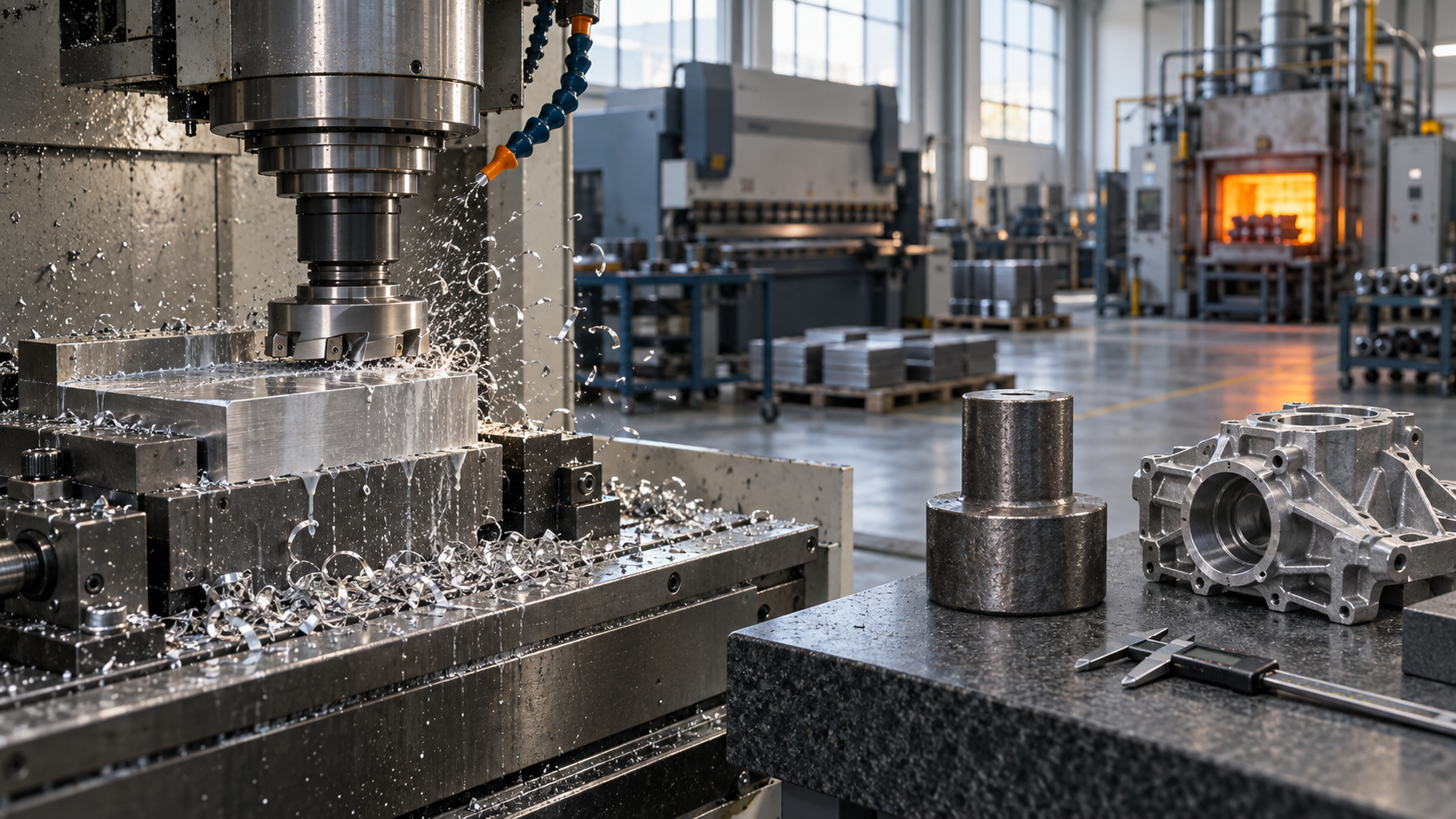
Search for "metal fabrication factory" and you'll get a screen full of factory directories, a page of equipment photos, and a pile of service lists reading "CNC machining, casting, forging, sheet metal, surface treatment." What really stumps you isn't finding a factory—it's judging which one's capabilities land on your part. For the same aluminum alloy housing, going with casting, forging, or CNC machining results in completely different cost structures, tooling investments, and achievable dimensional accuracy—choose the wrong process, and all subsequent price comparisons become meaningless.
So the first thing isn't asking "is this factory any good," but asking "which category of forming logic does my part belong to." The mainstream capabilities of metal fabrication factories roughly fall into three lines, each with clear physical boundaries.
Casting: Liquid Filling to Exchange Complex Internal and External Cavity Shapes
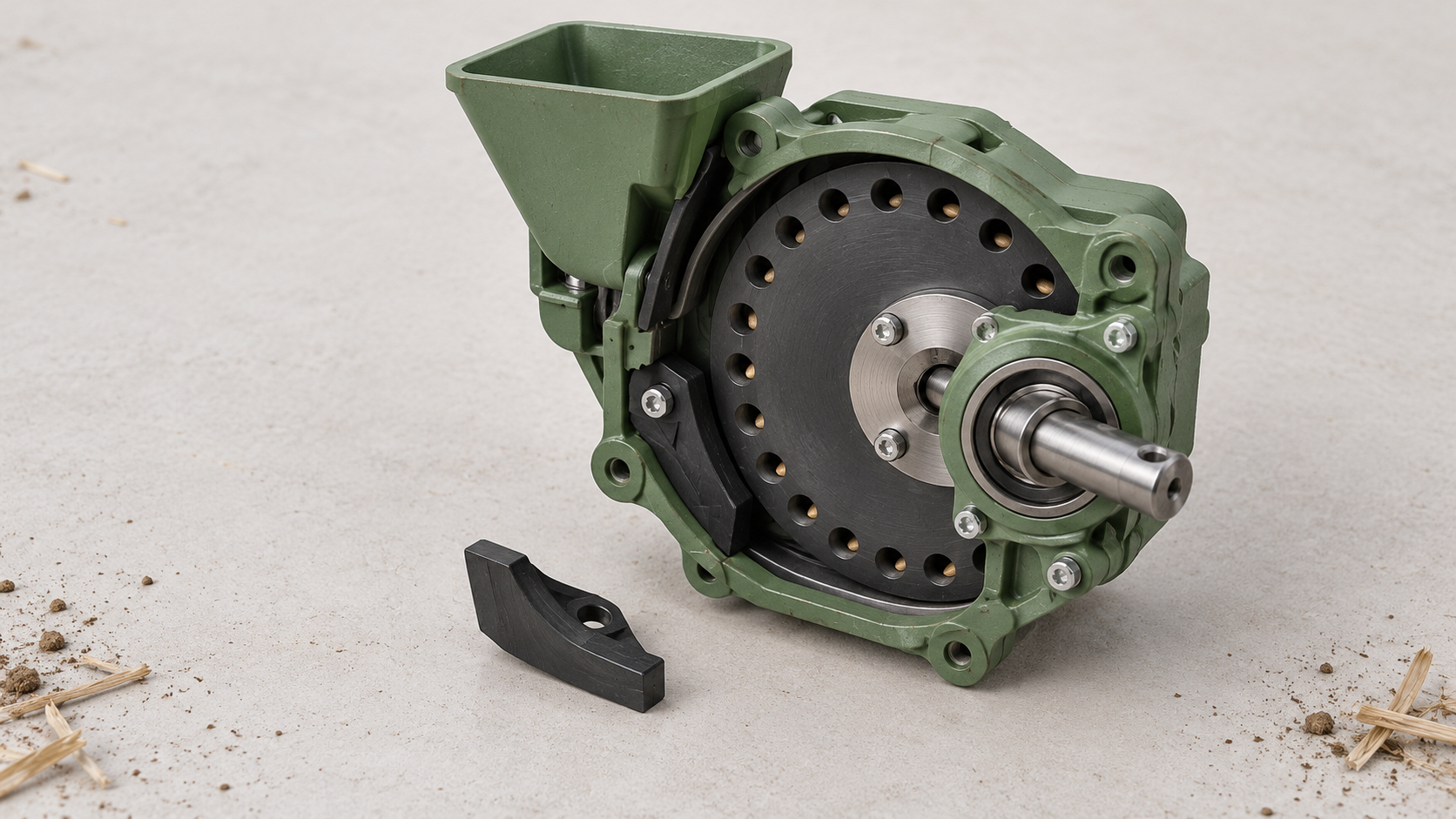
Casting pours molten metal into a mold cavity and obtains a blank after cooling. Its strength is shape freedom: internal oil passages, irregular cooling fins, thin-wall reinforcing structures—features that would take a long time or even be impossible to carve out by subtractive methods—are formed in a single casting. Common materials include aluminum alloy, brass, cast iron, and cast steel. The drawback is that surface roughness and dimensional consistency are usually inferior to machining, and critical mating surfaces often still need allowance before going on the machine. The larger the batch, the lower the per-piece tooling amortization; for one piece or a few pieces, tooling costs become uneconomical.
Forging: Pressure Shaping to Exchange Dense Structure and Mechanical Properties
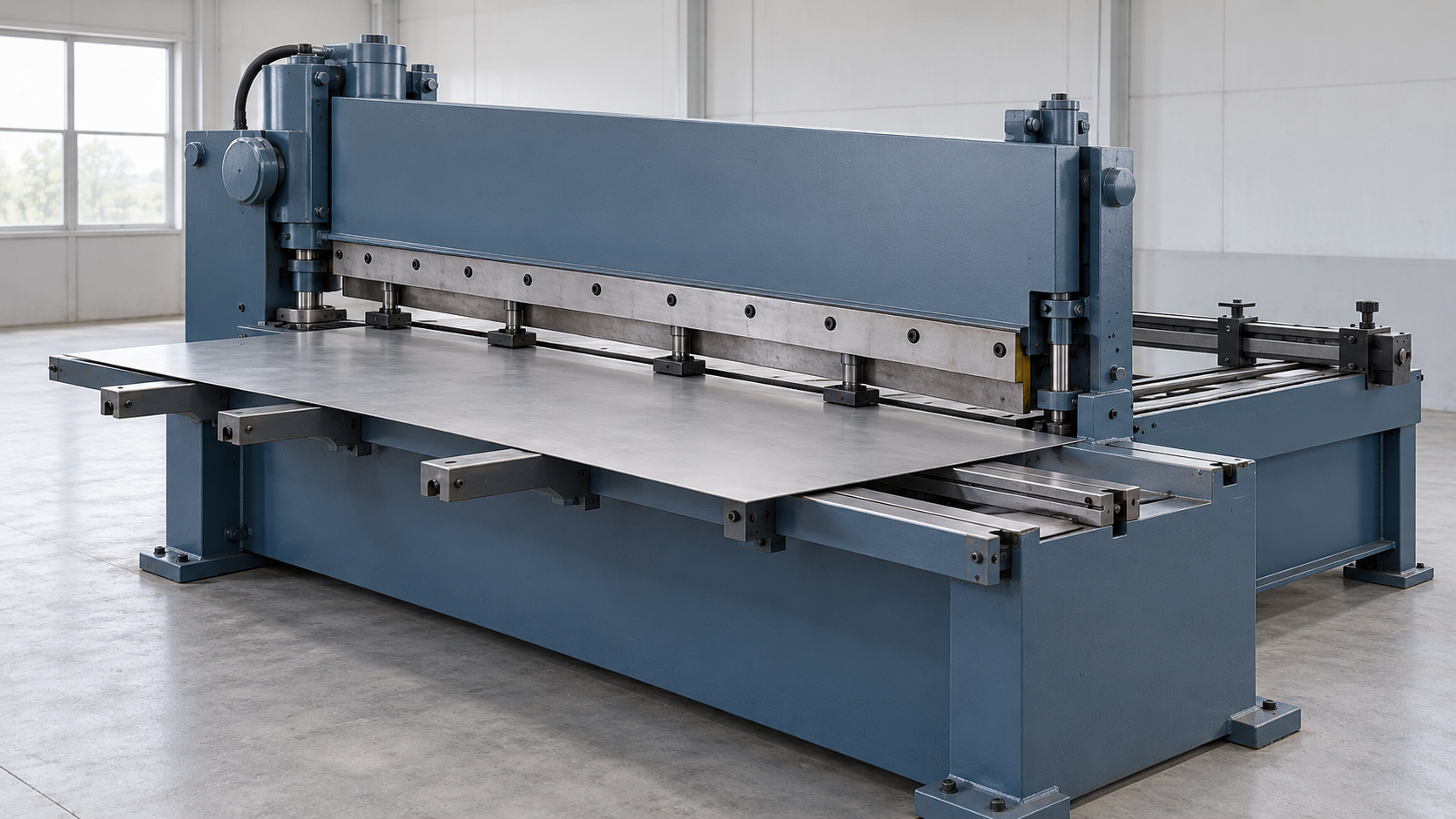
Forging uses pressure to squeeze a metal billet into a die cavity, with common equipment pressures in the industry ranging from hundreds of tons to tens of thousands of tons. After heating and softening, the metal flow lines distribute continuously along the part contour, grains become denser, and fatigue resistance and impact resistance are usually superior to castings of the same material. The cost is low shape freedom—undercuts, deep cavities, and fine internal flow channels are difficult to forge, and subsequent machining is often required. Suitable for load-bearing parts: connecting rods, flanges, wheel hubs, tool heads. The judgment signal is simple: if the part bears load and resists fatigue, forging takes priority; if only shape and dimensions are required, that's another matter.
CNC Machining: Subtractive Removal to Exchange Precision Dimensions and Consistent Tolerances
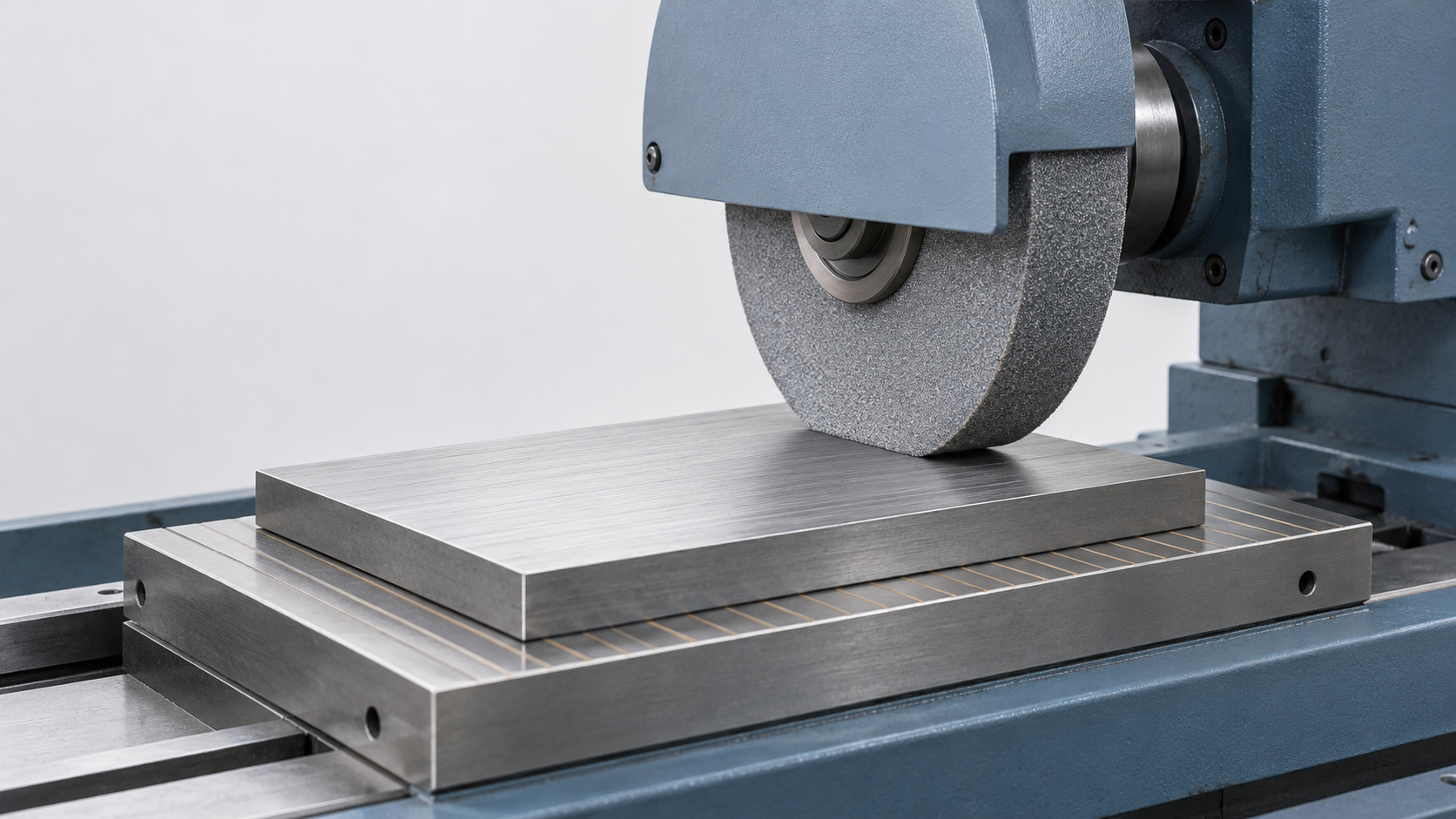
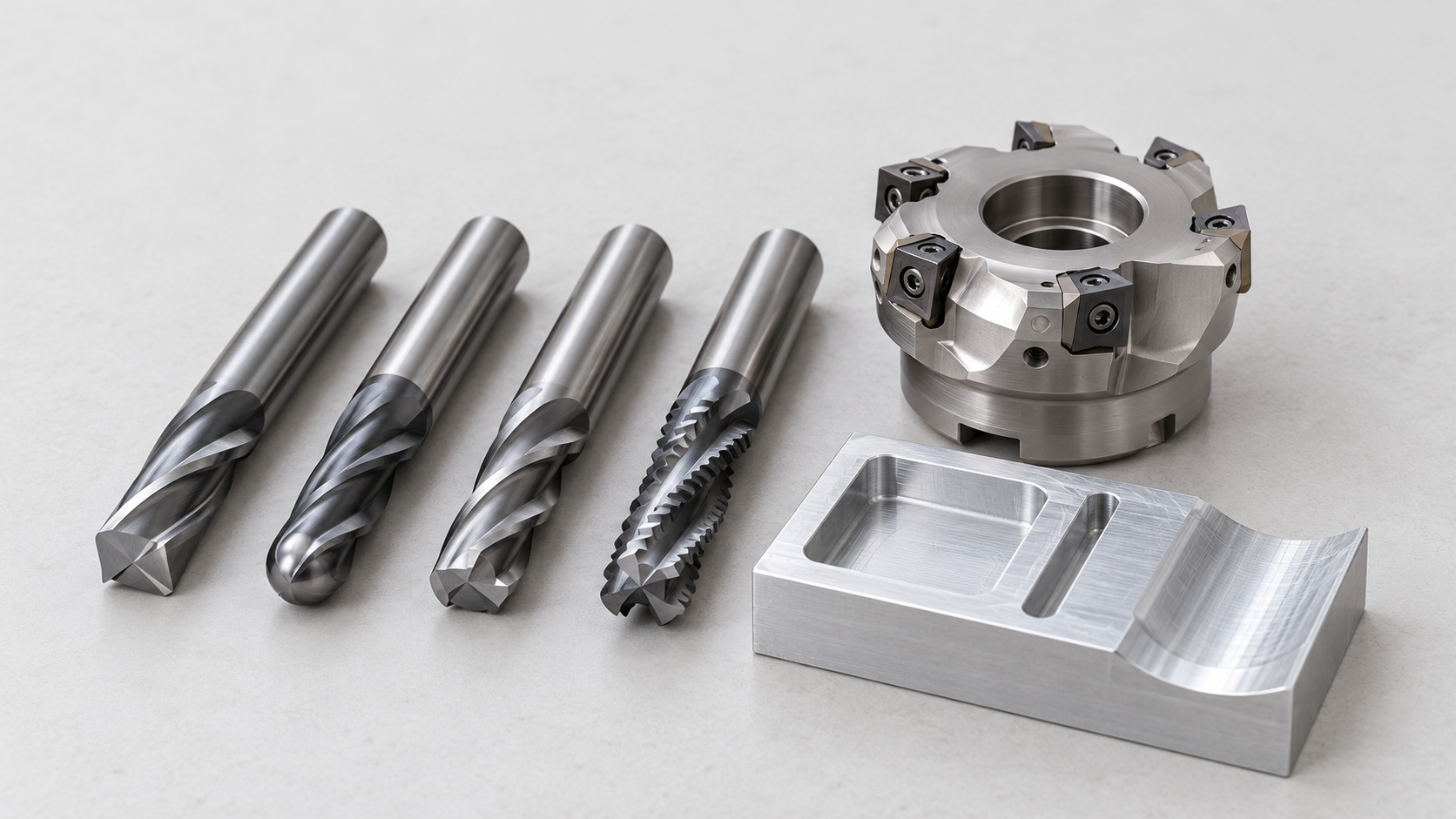
CNC machining mills, turns, drills, taps, EDM, and wire-cuts from a solid block, removing material layer by layer. Its core value is dimensional accuracy and surface quality: conventional machining tolerance bands in the industry often fall in the ±0.05mm range, with high-precision cases discussed separately, depending on structural rigidity, datums, and gauges. There is no tooling fee, and changing a design only requires changing the program, so prototypes and small batches almost default to CNC. The shortcoming is limited cost reduction at scale—every piece occupies machine time, and complex cavities take long to machine with high tool consumption.
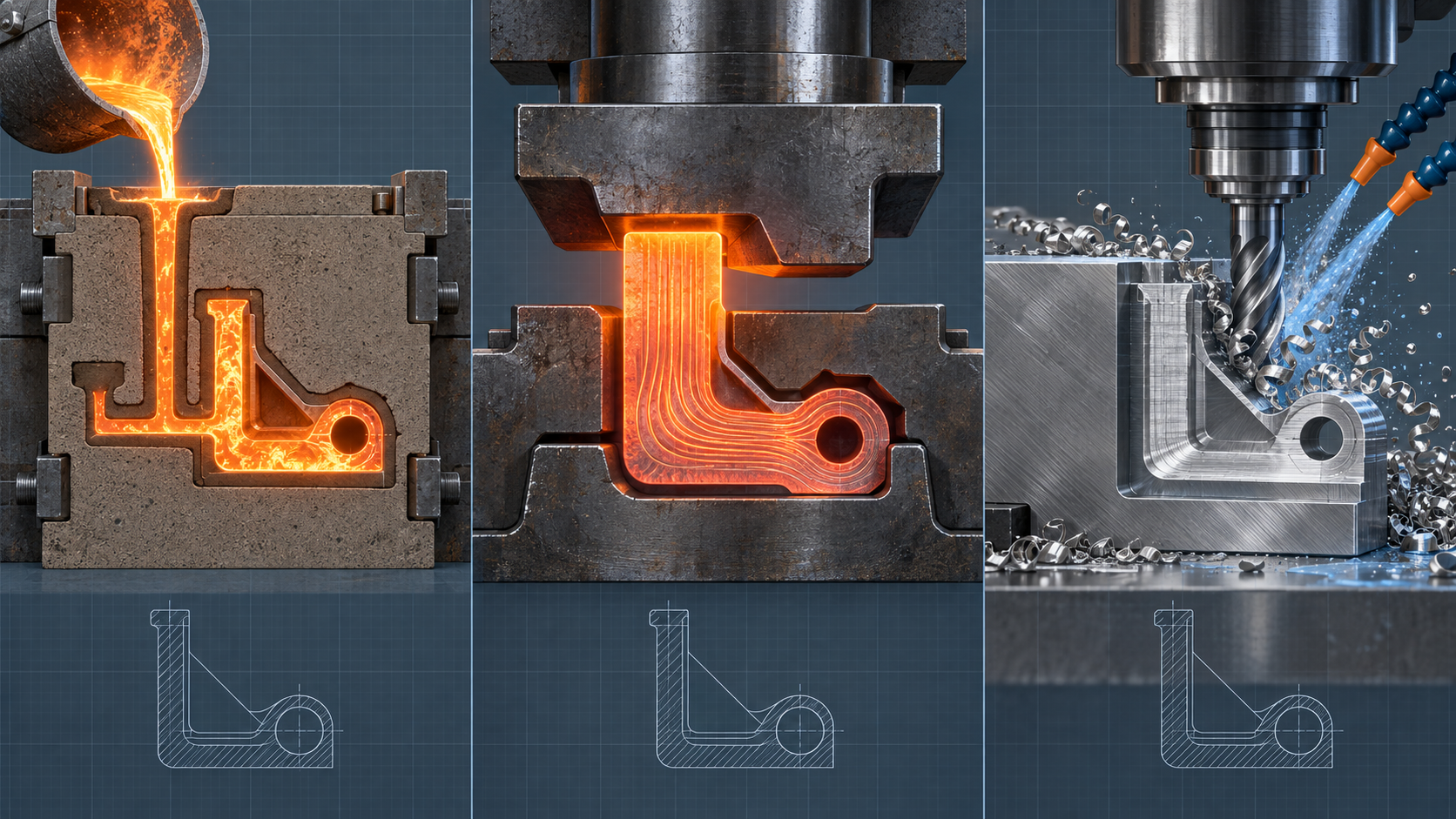
Putting these three lines side by side, one conclusion emerges: a metal fabrication factory doesn't need to be proficient in everything, but you must know which category your part falls into. If you're making a load-bearing structural part but go to a factory that only takes casting work, or bring a complex housing requiring internal flow channels to a pure CNC shop, communication costs will burn through most of your budget before quoting even starts. Locate the process first, then discuss suppliers—this is the first box on the evaluation checklist.
Six Dimensions for Evaluating a Metal Fabrication Factory: From Capability List to Digital Services
The two things you fear most when looking for a metal fabrication factory: a quote that gives only a single number, and "we can do it" as the answer to everything. What truly determines whether a metal fabrication factory matches isn't how many machines it lists, but whether it can clearly explain six things. Each item below comes with a "what to ask," ready to copy straight into an inquiry email.
1. Breadth of Process and Material Coverage: Has It Worked with Your Material
Casting, forging, and CNC machining are three different technical routes. A metal fabrication factory doesn't need to be proficient in all of them, but you need to know which category your part falls into. More critical is material experience: 6061 aluminum and 7075 aluminum have different cutting parameters, 304 stainless steel work-hardens, and thin-wall H62 brass parts deform easily. Whether they've done it before doesn't show in the quote, but it shows in the scrap rate.
What to ask: "Which grades of aluminum, stainless steel, and copper have you worked with in the past six months? Can you provide a process sheet or first-article report sample for a similar part?"
2. Tolerance and Inspection Capability: Don't Just Ask "Can You Achieve It," Ask "How Do You Prove It"
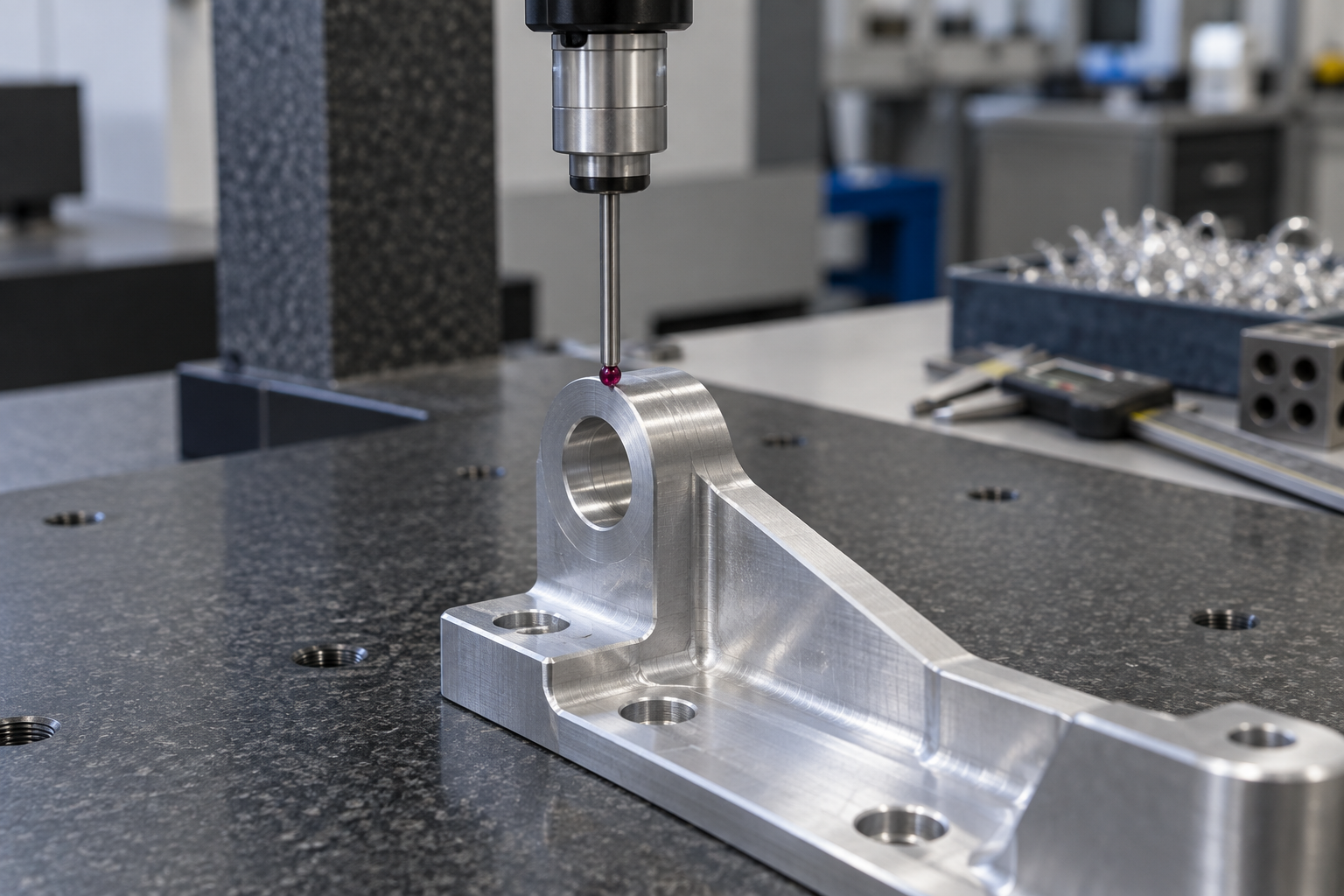
Conventional CNC machining tolerance bands in the industry often fall in the ±0.05mm range; higher precision requirements depend on specific features and need to be confirmed item by item—you can't apply one number to the whole drawing. What says more than the tolerance value is the inspection method: CMM or calipers? Full inspection or sampling for critical dimensions? What sampling ratio? Are gauges delivered with the parts?
What to ask: "What gauges are used for critical dimensions? How are first articles and production batches inspected respectively? Can inspection reports be included with shipment?"
3. Quality System and Traceability: Beyond Certificates, Look at Processes
The value of a quality system isn't in the certificate itself, but in whether it's applied daily: are there batch records for incoming materials, version management for tools and programs, and how are nonconforming products isolated and re-inspected. If the supplier can only verbally assure you "we're very strict" but can't explain how reworked parts are identified, the system is just for show.
What to ask: "How are nonconforming products isolated? How are reworked parts and good parts distinguished on the traveler?"
4. Digital Services: Online Quoting and DFM Feedback Speed
The degree of digitalization directly affects your time cost in early trial and error. A metal fabrication factory that can automatically generate preliminary quotes from uploaded 3D models usually has a structured internal process library, and its quoting standards are more consistent. More valuable than online quoting is DFM feedback speed: how long after you send drawings do you receive manufacturability opinions, and are those opinions specific to a certain fillet or tolerance band?
What to ask: "How long does DFM feedback usually take after sending drawings? Is the feedback boilerplate or specific to this version of my drawing?"
5. Pricing Transparency: Does the Quote Include Labor Hours and Materials
A quote that gives only a total price may require a whole new round of negotiation after changing one dimension. A quote broken down into labor hours, materials, surface treatment, and tooling costs gives you a basis for changes and helps you judge which item is driving up cost. The price level itself is often directly tied to batch size, tolerances, and material utilization—discussing unit price without these is meaningless.
What to ask: "Can the quote be broken down into material, machining labor hours, tooling, and surface treatment? Which item would changing one dimension roughly affect?"
6. Delivery Reliability: Look at Scheduling Logic, Not Just Promised Dates
Lead times are affected by part complexity, material procurement, and the factory's current scheduling. Rush cases as short as dozens of hours do exist in the industry, but those are usually small parts, simple processes, and inserted orders—they can't be treated as the default expectation. A more reliable way to judge is to ask clearly about scheduling logic: how are rush orders inserted, how are material shortages communicated, and who proactively syncs when anomalies occur.
What to ask: "Is scheduling by order sequence or by process bottleneck? How many days in advance will you notify me of material arrival delays?"
Among these six dimensions, the first three determine whether the part can be made correctly, and the last three determine whether the collaboration goes smoothly. When evaluating a metal fabrication factory, listing the questions in a table and scoring item by item is far more reliable than looking at the equipment list in a brochure. If you need to run a preliminary price range first to anchor your budget, you can submit your model through the classic quote entry, then discuss details with concrete numbers in hand.
Practical Material Processing Challenges: Where Stainless Steel, Aluminum, and Brass Each Get Stuck
Same machine, same tool, change the material, and the scrap rate can multiply several times over. When looking for a metal fabrication factory, a capability list reading "we can do aluminum, copper, stainless steel, and titanium" sounds sufficient; but what truly determines quote levels and lead-time accuracy is whether this factory has stepped in the pitfalls of each material's machining characteristics. Below, for the three most common materials, we explain where each gets stuck, what requirements they place on tooling and fixturing, and how these challenges show up in quotes.
304 Stainless Steel: Work Hardening Is the First Hurdle You Can't Avoid
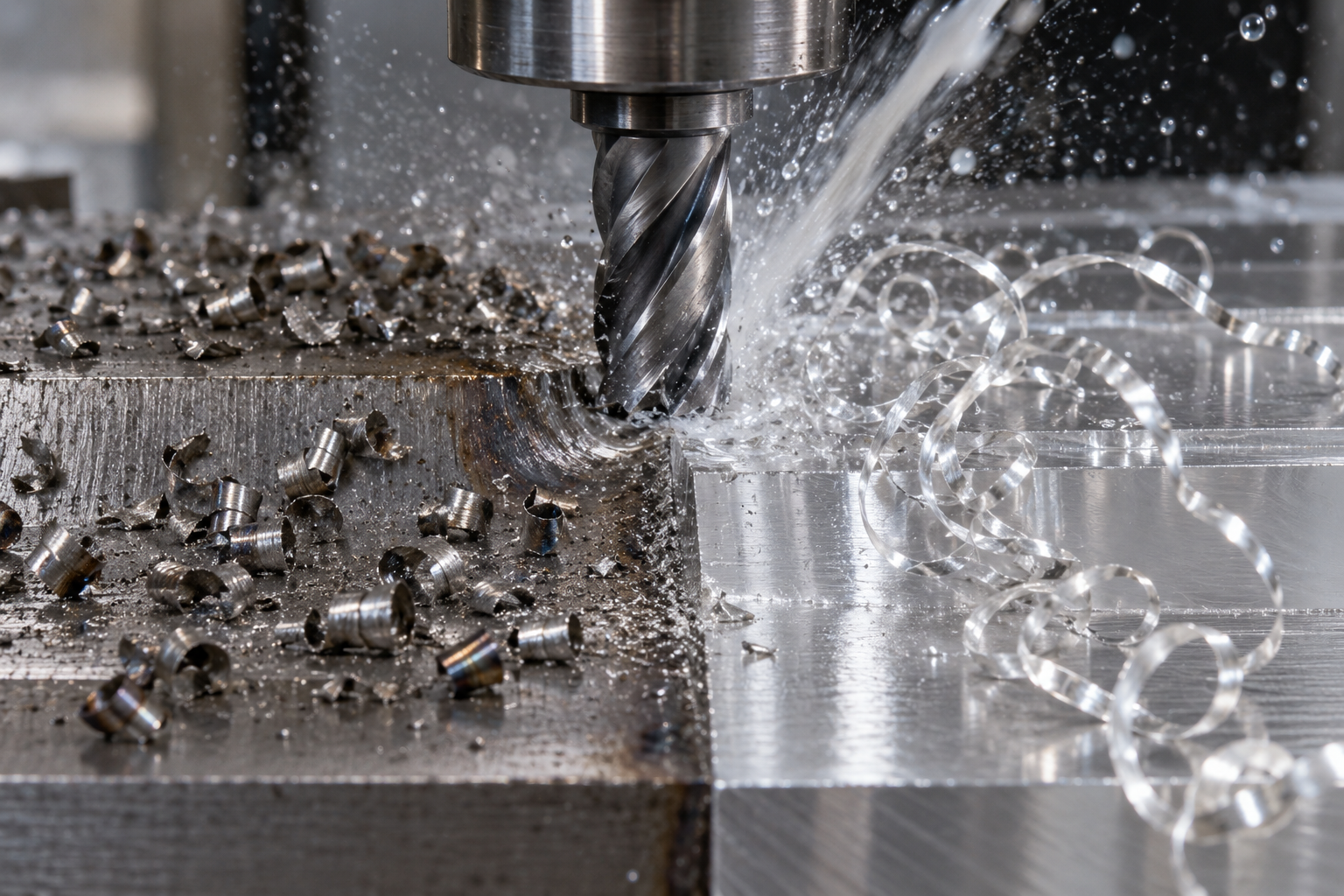
The trouble with 304 stainless steel isn't its high hardness—it's work hardening. Once plastic deformation occurs in the cutting zone, the surface hardness rises rapidly, and the next cut is made on harder material. The result is fast tool wear, increased cutting forces, and noticeable tool deflection—dimensions drift further off with each cut, and surface finish degrades along with it.
The solution isn't to muscle through it. The common industry approach is low spindle speed, high feed rate, and keeping the tool constantly engaged in the material, avoiding the tool tip repeatedly rubbing against the surface; coolant must be sufficient and aimed at the cutting zone so chips don't re-friction the machined surface. For tooling, coated carbide or cermet is commonly used, with the cutting edge kept sharp.
Fixturing is equally sensitive. Thin-walled stainless steel parts have poor rigidity—slightly too much clamping force causes ovality, slightly too little causes chatter. Experienced shops use soft jaws, expanding collets, or dedicated fixtures to distribute clamping force, rather than forcing it with a standard vise. This preparation time all goes into the quote.
6061 Aluminum: Built-Up Edge and Chip Welding Determine Surface Roughness
6061 aluminum is soft and conducts heat well, cutting easily, but chip welding is the main enemy. Under high temperature and pressure, chips weld onto the cutting edge to form a built-up edge. It grows and shrinks, effectively giving the tool tip an irregular edge, producing surfaces that alternate between bright and dull, with dimensions that drift.
The approach is to get chips away quickly and not let them linger on the cutting edge: high spindle speed, large rake angle, a sharp polished cutting edge, combined with high-pressure coolant or mist cooling to blow aluminum chips away. Lower spindle speeds actually make chip welding more likely—this is counterintuitive compared to steel.
For thin-walled aluminum parts, clamping deformation is trickier than the cutting itself. Aluminum alloy has a low elastic modulus, so it springs back after clamping and goes out of tolerance once released. Common countermeasures include leaving process tabs, using vacuum chucks, or wax fixturing, then removing them after machining. These approaches directly increase per-piece labor hours, so the quote is naturally higher than for a thick plate.
H62 Brass: Good Plasticity Actually Makes It Prone to Deformation in Thin Walls and Fixturing
Brass machines well and has a bright surface, so it's often treated as an "easy to machine" material. The problem lies in plasticity and thermal expansion. H62 brass has good ductility, so thin-walled parts and slender shafts tend to bend and deflect under cutting and clamping forces; the heat generated during machining expands the workpiece, so it measures as acceptable but shrinks out of tolerance once cooled.
So the difficulty with brass parts is often not the tooling, but process sequencing and measurement timing. The reasonable approach is to separate roughing and finishing, allow for aging or wait for cooling before finish cutting, and measure critical dimensions under constant temperature conditions. For fixturing, axial clamping is preferred over radial clamping to reduce radial deformation.
This has practical significance for buyers: if a metal fabrication shop proactively asks about your brass part's wall thickness, tolerances, and measurement method, it shows they've actually done this kind of work, rather than just running a cut with generic parameters.
Looking at the three materials together, you'll find that material machining difficulties are rarely caused by a single factor—they usually involve cutting parameters, tooling, fixturing, and measurement timing all constraining each other. This is also why the same drawing can get quotes that differ by a wide margin from different shops—what differs isn't the machine, but the ability to anticipate material behavior and the experience behind it.
DFM Collaboration: Why Good Shops Start Modifying Your Drawings Before Quoting
What DFM Actually Changes: Five High-Frequency Touchpoints
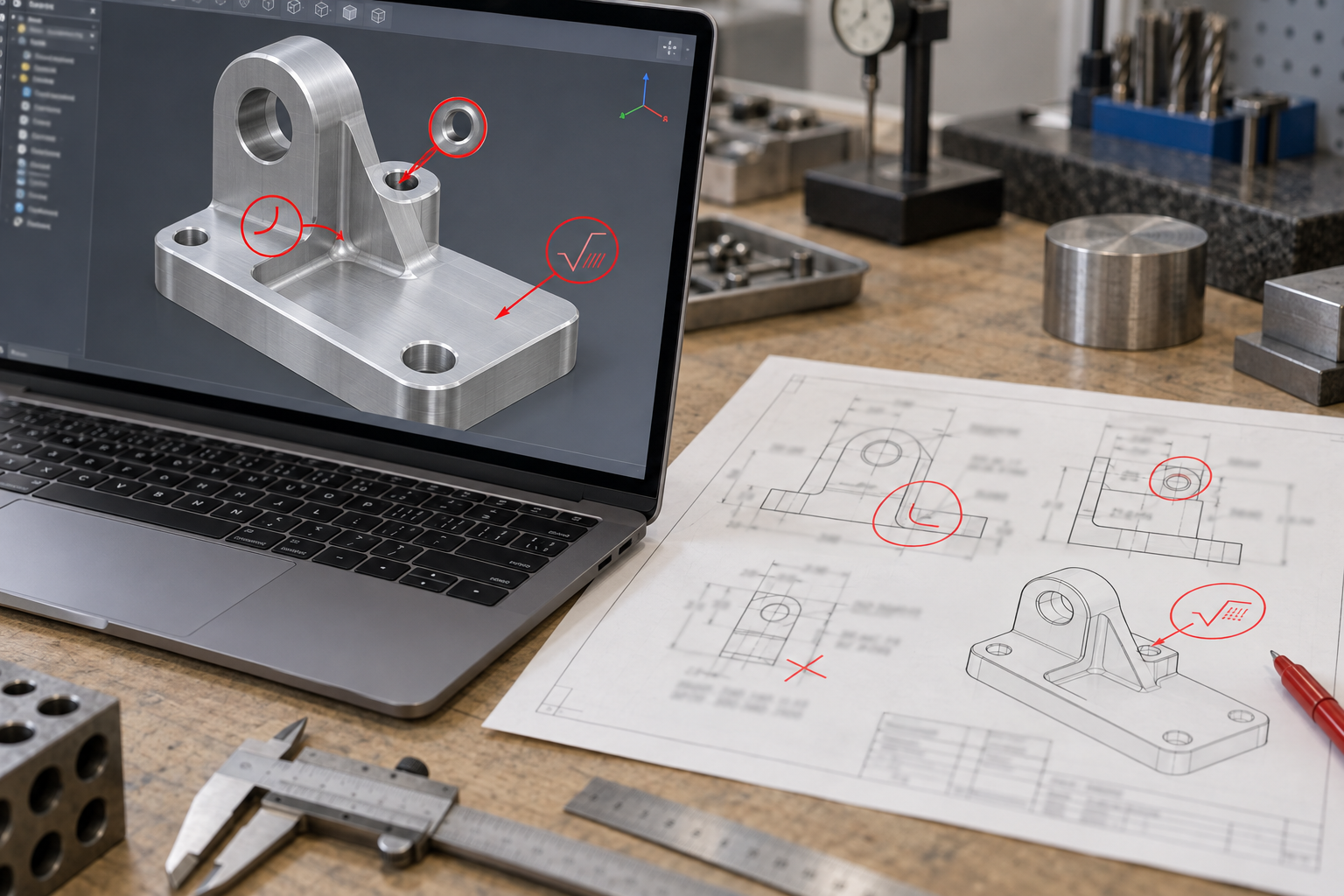
- Matching fillets to tool radius—internal sharp corners can only be cleared with a corner-rounding tool or EDM, driving up both cost and lead time. Making internal fillets larger than the milling cutter radius allows them to be cut in one pass.
- Minimum wall thickness and draft direction—castings and forgings have draft requirements, and thin-wall locations are prone to issues during filling and cooling; defining the parting line at the design stage saves far more than modifying after the mold is made.
- Datums and fixturing—whether the part has a flat surface or process tab available for clamping directly determines how many fixture sets are needed and whether soft jaws are required. Parts without fixturing datums will definitely reflect this in the quote.
- Are tolerance bands too tight?—Specifying ±0.02mm on non-mating dimensions is a common cost multiplier. The common tolerance band for CNC machining in the industry is on the order of ±0.05mm; higher precision requires evaluating the process and inspection gauges, and confirming the necessity of annotating it on the drawing.
- Hole depth to diameter ratio—holes with a large depth-to-diameter ratio require step drilling, gun drilling, or EDM, with high chip evacuation and deflection risks—an invisible source of quote differences.
Why DFM Appears at the Quoting Stage, Not After the Contract Is Signed
DFM Suggestions Aren't Always Right—How to Judge Whether to Adopt Them
From Prototype to Mass Production: How to Verify a Metal Fabrication Shop's Delivery Capability
When evaluating a metal fabrication shop, what's truly headache-inducing isn't prototyping—it's the stretch from sample to batch. Beautiful samples and poor mass production is the most common form of procurement disaster. Delivery capability isn't a slogan of "we have fast lead times"—it's a verifiable process: whether process documents are updated with each batch, how first article confirmation is done, and who manages molds and tooling. Looking at these few links basically tells you whether the other party can transition smoothly.
Prototype, Low-Volume, Mass Production: Process Configuration Logic at Different Stages
The prototype stage pursues speed, with CNC machining and 3D printing as the mainstays: CNC directly produces functional parts with real materials and usable tolerances; 3D printing suits validation parts with complex shapes but low loads, offering faster iteration. At the low-volume stage of tens to hundreds of pieces, common approaches are hand-sample duplication (vacuum casting) or low-volume CNC—the former is low-cost but the material properties are close to injection molding, suitable for appearance and assembly validation; the latter has higher per-piece cost but more stable dimensions.
Entering mass production, the part material determines the route: plastic parts go through mold injection, while metal parts are mostly a combination of forging or casting plus machining, or directly batch-milled by CNC. What you need to confirm is: can this metal fabrication shop cover your current stage, and does it clearly know what process to switch to next? If prototyping is at one shop and mass production is forced to switch to another, the handover of drawings and tolerance datums is often the first crack.
Verifying Transition Capability: First Article Confirmation, Process Documents, and Tooling Management
Asking three specific questions is more useful than reading a brochure.
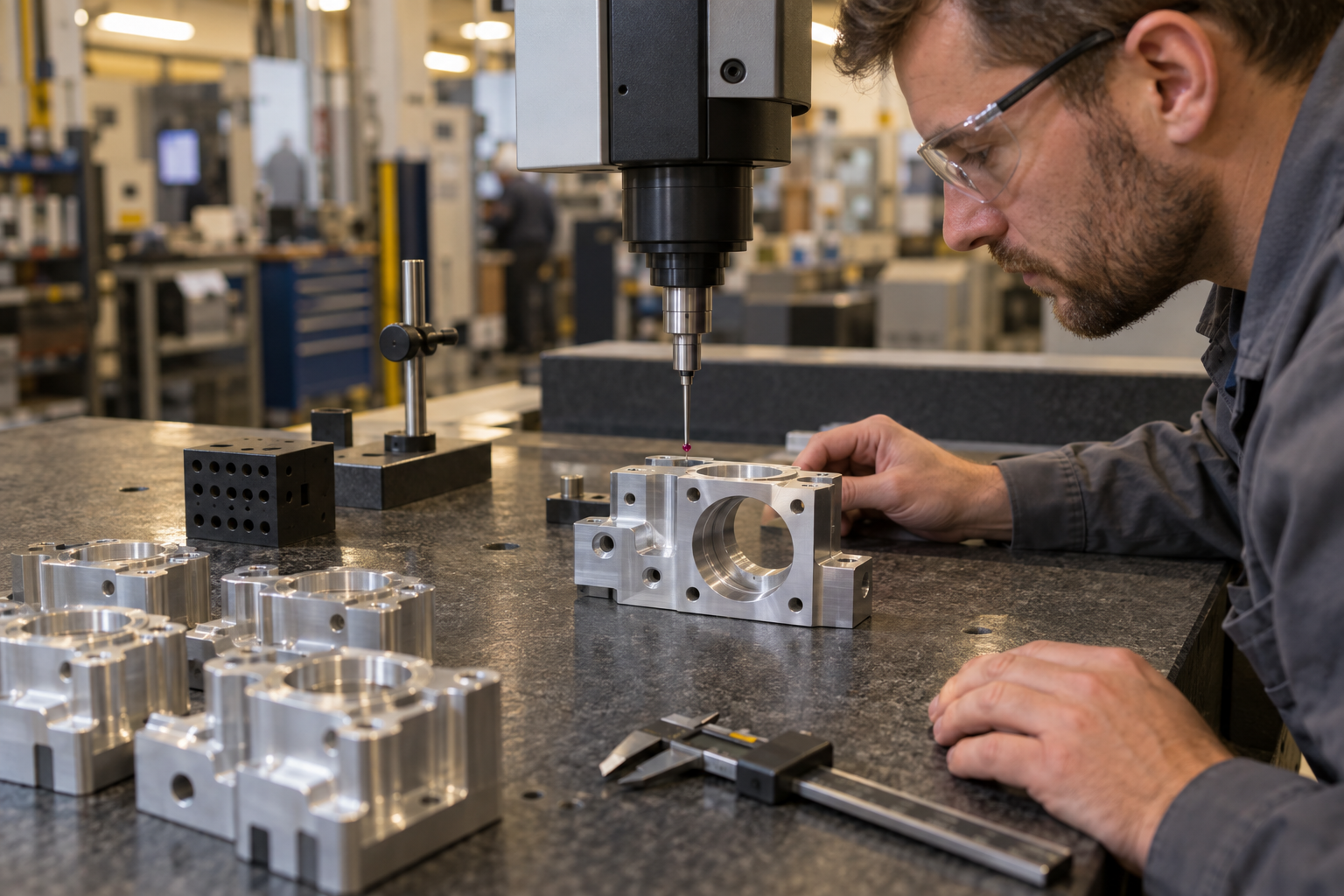
How is First Article Inspection (FAI) done? It's not "we inspected it," but which dimensions were inspected, with what gauges, and whether a report is provided. A full-dimension first article report before batch production is a basic practice for a metal fabrication shop; if the other party can only confirm verbally, you'll have no baseline to compare against when dimensions drift later.
Are process documents updated with each batch? The sample stage may use manual grinding for shaping, but mass production must switch to tooling-based positioning. If the work instructions are still at the sample version, it means the process hasn't been solidified. You can request to see the process card or fixturing plan for batch parts.
Who manages molds and tooling? Metal parts involve casting molds, forging dies, and CNC dedicated fixtures. Confirm ownership, storage method, and maintenance records. In shops with chaotic tooling management, precision fluctuations during batch changes are usually the first thing to surface.
Lead Time Assessment: Rush Cases Exist, But Can't Be the Default Expectation
Lead time is affected by the combined influence of part complexity, material procurement, and factory scheduling. There are indeed rush prototyping cases as short as tens of hours in the industry, usually small parts, standard materials, and a lucky gap in the production schedule; treating this as the default expectation will almost certainly lead to disappointment. A more reliable approach is to ask clearly: how is the standard scheduling cycle calculated? What channel does rush work go through, and will it push out other operations? When anomalies occur (tool breakage, non-conforming material), who notifies you, and how soon? A metal fabrication shop willing to flag risks in advance is more worth working with than one that always answers "no problem."
Pre-inquiry documentation checklist: making metal fabrication quotes more accurate and faster
What 3D models and 2D drawings each handle
Critical dimensions and tolerances: mark with restraint, keep datums consistent
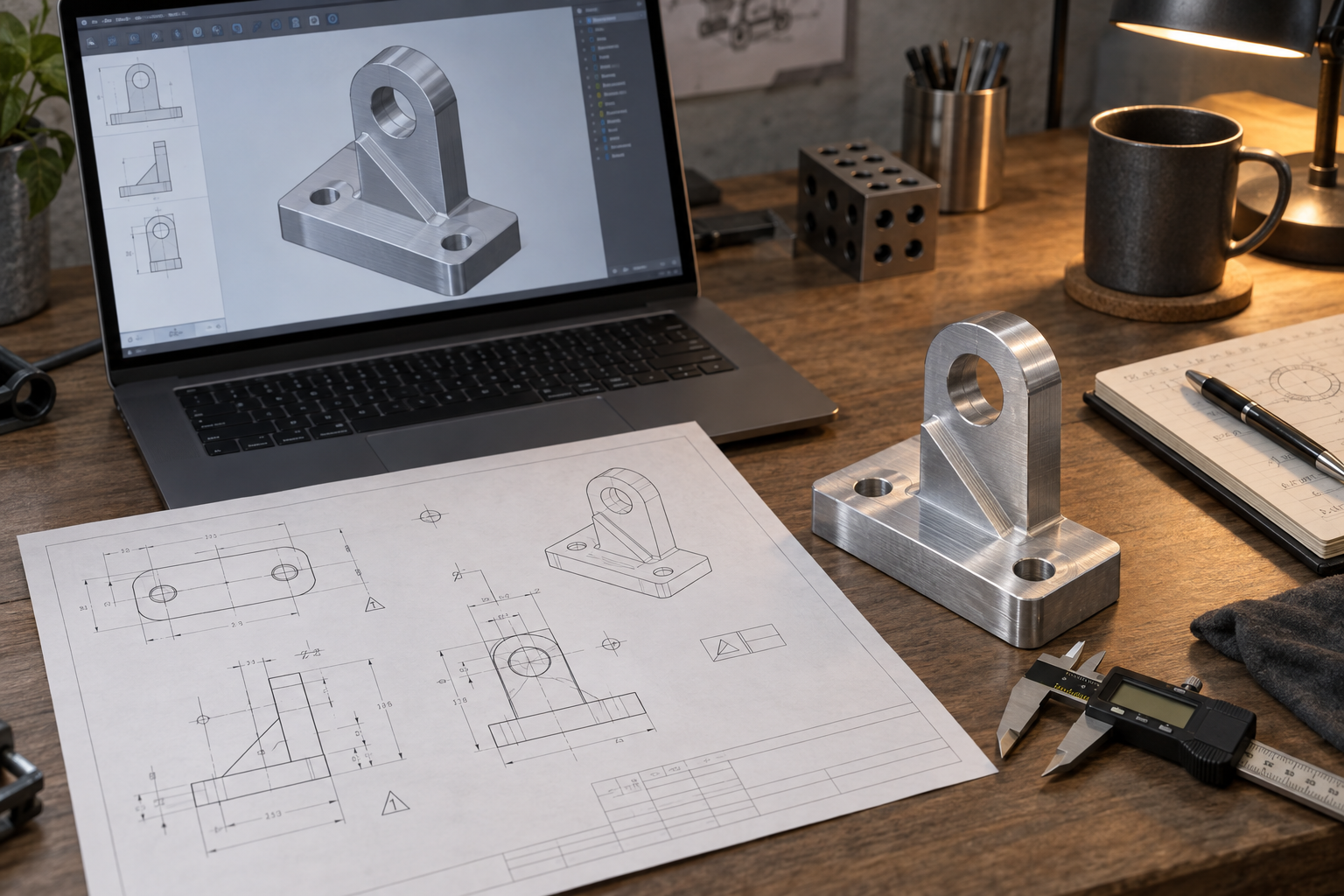
- Mark only functional dimensions: dimensions that affect whether things fit together, such as mating hole spacing, assembly face flatness, and seal groove width; appearance faces and non-mating faces can use general tolerances.
- Consistent datums: design datums, machining datums, and inspection datums should align to the same face or same set of holes as much as possible; otherwise datum conversion eats into the tolerance band.
- Don't make tolerance bands too tight: common CNC machining tolerance bands in the industry are on the order of ±0.05 mm. Tighter requirements should be specified separately and the inspection method confirmed—don't assume the other party can achieve them by default.
- Standardized thread and hole callouts: specify M size, depth, whether through-hole, and whether tapping is required, to avoid time lost to follow-up confirmations.
Material, surface treatment, and batch cadence
Assembly relationships and interface parts should also be provided
Common pitfalls: traps you'll hit if you only look at equipment lists and unit prices
Browse a few metal fabrication shop websites and you'll see a common scene: workshop photos arranged in a nine-grid layout, with a line beside them reading "XX CNC machining centers." This kind of information is almost useless for screening suppliers—the number of machines doesn't equal effective capacity, let alone whether your part can be made or made well. When looking for a metal fabrication shop, the real misjudgments to avoid mostly come at the "what to look at" step.
Mistaking the number of machines for machining capability
A five-axis machine sitting there and its ability to reliably machine the part on your drawing are two different things. Behind the equipment are fixtures, tool management, programming, and operator experience. In CNC machining, some metal fabrication shops make aluminum housings year-round; when they encounter a deep-cavity part in 304 stainless steel, tool deflection and tool wear immediately change the pace. An alternative way to judge: don't ask "how many machines," ask "what materials and tolerances have you worked with in the last three months, and can I see a first article report or inspection records?" Common CNC machining tolerances in the industry are on the order of ±0.05 mm, with tighter precision negotiated separately. Whether the other party is willing to discuss gauges and sampling ratios is more informative than a machine nameplate.
Comparing only unit price while ignoring yield and rework cost
The lowest number on a quote often corresponds to the most conservative process assumptions: switch from slow wire EDM to fast wire EDM to save money, skip heat treatment where possible, and use the simplest fixturing plan. By the time the first batch arrives, dimensions are out of tolerance, surface roughness doesn't meet spec, and assembly holes don't line up—rework and remake costs have long exceeded the savings. When comparing prices, break the quote into material, labor, surface treatment, and inspection; if the other party only gives a total, at least ask clearly "what inspections are included in this price." Unit price is the result; yield and rework rate are the real cost.
Treating communication responsiveness as a soft metric
No reply to an inquiry for three days, having to chase drawing questions twice, no follow-up on change requests—these look like "service attitude," but they're actually a projection of scheduling and engineering communication capability. If a metal fabrication shop can't even be bothered to give DFM feedback, it's unrealistic to expect it to proactively warn you when problems arise in mass production. The way to judge is direct: throw out a slightly vague requirement during the inquiry stage and see whether the other party just fills in a price or comes back to clarify datums, tolerances, and batch size. Those willing to ask one more question usually have stronger engineering capability.
Treating certifications as a universal endorsement
Certifications show that processes are documented, but they don't show how your specific parts will be inspected. System certifications like ISO 9001 are a different matter from "what gauges are used for the critical dimensions of this batch, full inspection or sampling, and will I get the inspection data." Rather than staring at a wall of certificates, ask about the inspection step: CMM or calipers? Which dimensions are included in the first article report? How are out-of-tolerance cases handled? Clear answers to these questions reflect the true level of quality control better than a certificate.
Putting these points together, the logic for evaluating a metal fabrication shop isn't complicated: equipment lists show breadth, quotes show transparency, communication shows responsiveness, and inspection shows real quality. This is also what the dimensions repeatedly mentioned in earlier sections look like in practice—first see how it answers your questions, then decide whether to hand over your drawings.
Frequently Asked Questions (FAQ)
The following questions are the ones readers ask most often after reading the earlier sections. The answers address only the judgment logic already covered in this article and do not involve specific certifications, fixed lead times, or quote commitments.
Casting, forging, and CNC machining—how exactly should you choose?
Start with the shape logic of the part, not with what equipment the factory has. For complex internal cavities and large batch sizes, casting's liquid filling is more suitable; for load-bearing parts requiring dense, streamlined grain structure, forging's plastic forming is more appropriate; for high dimensional accuracy, relatively regular shapes, and small batch sizes, CNC machining's subtractive removal is more direct. The three are often combined, for example casting or forging a blank and then CNC machining the critical mating faces. The order of judgment is: shape freedom → material → batch size → tolerance. If any one of the four is constrained, the process is basically determined.
Why do quotes for the same drawing vary so much between different metal fabrication shops?
Price differences usually come from four places: first, different labor estimates—fixturing count, tool consumption, and whether dedicated tooling is needed are judged differently by each shop; second, different material procurement channels and stock allowance practices; third, different inspection investment—sampling with general calipers versus full inspection with a CMM differ greatly in cost; fourth, different scheduling logic—rush orders and normal scheduling quotes are simply not in the same range. So when you get a quote, first ask "what processes and inspections are included in this price"—that's more useful than simply comparing numbers. The common industry tolerance bands mentioned in this article are only a reference for judgment; specifics are subject to the drawing and confirmation with the factory.
Do DFM suggestions from the factory always have to be followed exactly?
Not necessarily, but it's worth asking about the reasoning behind each one. DFM suggestions generally revolve around a few categories of issues: draft direction, minimum wall thickness, fillet and tool radius matching, datums and fixturing, and whether tolerance bands are too tight. Some suggestions are hard constraints—if you don't change them, the part can't be made or the yield will be very low. Others are just cost-reduction options; you can make the part either way, it's just a different price. A reasonable approach is to have the factory label the impact of each suggestion: does it affect manufacturability, affect cost, or only affect appearance. A factory that only replies with a price number and gives no manufacturability feedback at all carries higher risk for long-term cooperation.
Can small-batch trial production and mass production use the same metalworking factory?
Yes, and it's usually less hassle, but you need to confirm that the other party's capabilities are connected across both stages. The prototype stage often uses CNC and 3D printing for rapid iteration, small batches can go through hand-made replica molding or small-batch CNC, and mass production may shift to injection molding, forging, or casting plus machining. Three things matter most: whether the first-article approval process is standardized, whether process documents are updated as batch sizes change, and who manages the molds and tooling. If trial production and mass production use different factories, be sure to hand over the process parameters, inspection data, and modification records from the trial stage clearly—otherwise the mass production factory is effectively starting from zero. Lead times are affected by complexity and scheduling; there are indeed expedited cases in the industry, but that shouldn't be treated as the default expectation.
Key takeaways
- When evaluating a metal fabrication factory, first look at process boundaries: casting, forging, and CNC machining each suit different batch sizes, shapes, and tolerance ranges. First confirm whether the supplier's main processes cover your part type.
- Hands-on material experience is more differentiating than an equipment list—the work hardening of 304 stainless steel, the chip adhesion of 6061 aluminum, and the deformation of brass all directly affect quotes and yield.
- DFM collaboration happens before quoting: aligning draft angles, wall thickness, tolerance bands, and fixturing datums in advance often saves more cost than adding processes after the fact.
- Lead times and certifications must be backed by concrete evidence: ask the supplier to explain inspection methods, first-article confirmation procedures, and scheduling logic, rather than relying on verbal promises.