What Is Rapid Tooling? How Does It Differ from Rapid Prototyping and Production Steel Molds?
When the first product batch requires only a few hundred or a few thousand parts but the design may still change, this creates a common project conflict in low-volume injection molding. Investing directly in high-life production steel tooling may result in excessive upfront tooling costs and lock-in risk; producing only 3D-printed prototypes, on the other hand, cannot validate production-grade resins, injection molding defects, or real-world assembly. The value of rapid tooling lies in establishing a controllable validation path between these two options.
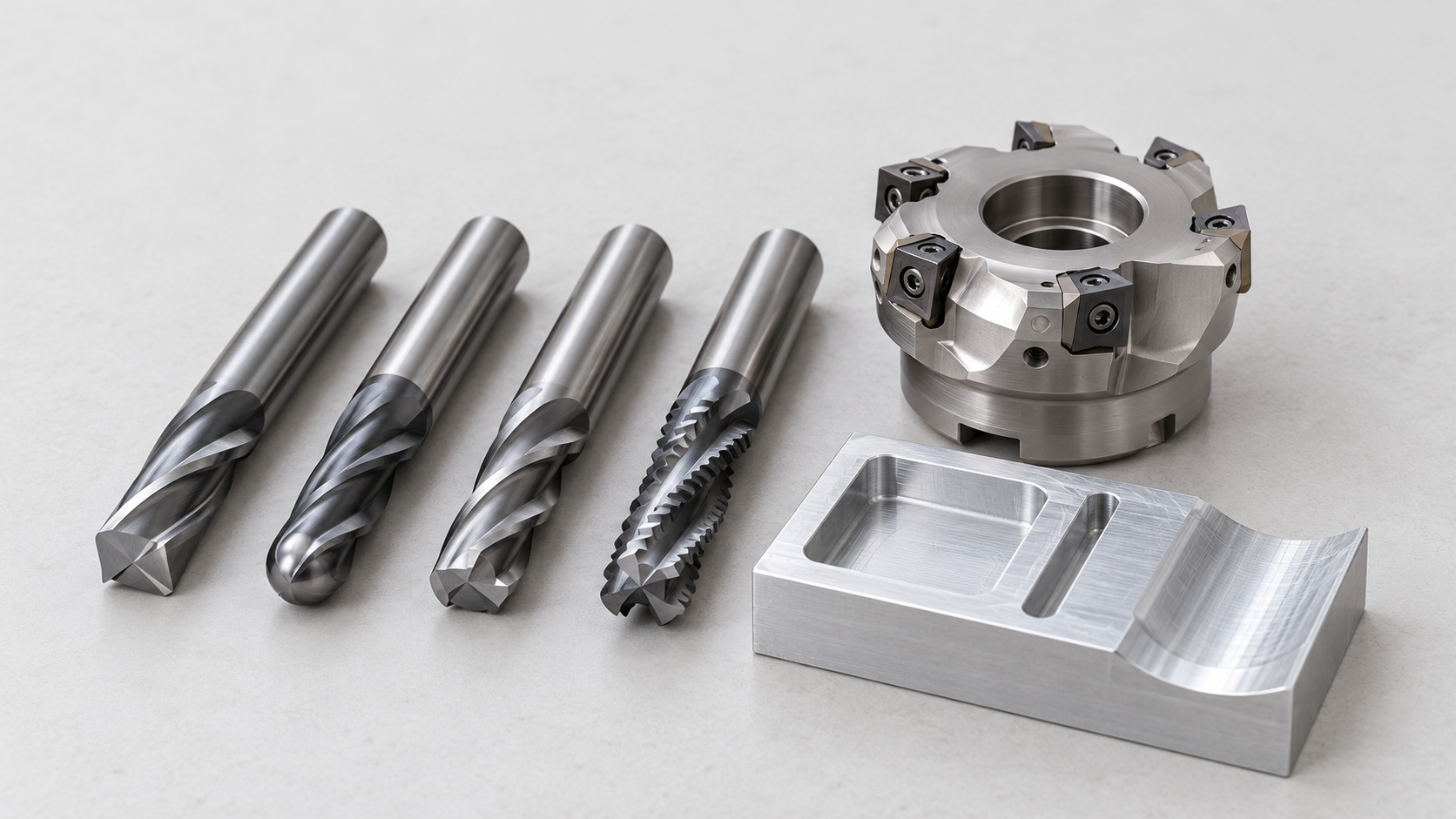
Rapid tooling is neither a fixed material nor a standardized service-life grade.It generally refers to producing molds, mold cores, or models through additive manufacturing or machining, and then manufacturing final parts using injection molding or other production processes. Aluminum injection molds, pre-hardened steel molds, replaceable steel inserts, and certain 3D-printed molds may all be engineering routes for rapid tooling; the specific choice depends on the part structure, resin, cumulative volume, and quality requirements.
Rapid Tooling Is Not the Same as Rapid Prototyping
Rapid prototyping generally produces models or prototypes directly, with the focus on appearance, dimensions, assembly, and early functional checks. Rapid tooling first produces the tool and then manufactures parts using injection molding or another process close to production, thereby exposing molding issues such as gating, venting, sink marks, warpage, ejection, and uneven filling. It can also validate the feel, strength, and surface condition of production-grade thermoplastic materials.
Soft tooling also requires separate evaluation. In the industry, “soft tooling” often refers to silicone molds used with polyurethane vacuum casting, which is suitable for appearance replication, assembly validation, or certain low-volume applications. However, it is not equivalent to a thermoplastic injection mold and cannot directly replace validation of injection molding materials and processing conditions. Before selecting a tooling route, first answer three questions: What process needs to be validated? What is the expected cumulative production volume? Has the design been frozen?
When Selecting Rapid Tooling for Low-Volume Injection Molding, Start with These Five Variables
Do not start by asking whether to use aluminum or steel tooling. First confirm what this rapid tooling must validate, how many parts are expected to be produced, and which resin will ultimately be used. Low-volume injection molding projects are often at the prototype validation, design iteration, or bridge production stage. A first batch of only a few hundred parts does not mean that the product lifecycle will require only a few hundred parts.
Five Engineering Variables for Rapid Tooling Selection
- Validation objective: If you need to validate production-grade thermoplastic materials, sink marks, warpage, weld lines, and assembly, prioritize comparing injection mold routes. If you only need to validate appearance or feel, soft-tool replication may be sufficient.
- Cumulative quantity: Estimate the total quantity over the product life cycle rather than looking only at the initial order. Also include allowances for scrap, spare parts, mold trials, and future capacity expansion.
- Design maturity: When the design may still be modified, assess the likelihood of mold modifications, replaceable inserts, and modular mold bases to avoid concealing repeated machining costs behind a low initial mold price.
- Resin and fillers: Glass fibers, mineral fillers, and flame-retardant systems increase the risk of wear to cavities, slides, and gates. The material grade, injection temperature, and pressure directly affect the mold strategy.
- Quality and delivery: Surface texture, critical tolerances, the number of cavities, gates, ejection, and first-article standards all affect the mold structure, the number of mold trials, and the project schedule.
Therefore, a supplier cannot directly commit to mold life or lead time without 3D data, critical 2D dimensions, the resin grade, and acceptance criteria. Before quoting, at least one reviewable CAD version should be frozen, and the quantity basis, T1 standards, mold modification boundaries, and the start and end points of the lead time should be confirmed in writing. This ensures that what is being compared is project risk, not merely the price of mold materials.
How to Choose Between Soft Tooling, 3D-Printed Molds, and Aluminum Molds: Select Based on the Validation Objective
Rapid molds should not be compared solely by material name. First confirm whether the part needs to validate appearance and assembly, or the flow, shrinkage, ejection, and dimensional stability of production-grade thermoplastics. Silicone soft molds, 3D-printed injection molds, and aluminum injection molds use different molding processes and cannot be judged by the same service-life or quality standards.
| Mold route | Process and suitable applications | Main advantages | Main risks | Next upgrade |
|---|---|---|---|---|
| Silicone soft mold | Vacuum casting, suitable for appearance, assembly, and certain low-volume replication applications | Lower investment and change pressure, with rapid production of replicas closely matching the final appearance | Typically uses casting materials such as PU, which are not equivalent to thermoplastic injection molding; dimensional stability, material performance, and service life require separate validation | When production-grade resin is required, move to a 3D-printed injection mold or a metal mold |
| 3D-printed injection mold | Mold or mold cores produced by additive manufacturing, suitable for rapid testing | Short processing chain, suitable for early validation of gates, molding defects, and basic assembly | The temperature resistance, pressure resistance, heat dissipation, and cavity life of mold materials are constrained by the process and cannot be assumed to be compatible with all resins | Switch to an aluminum mold or steel inserts after validation is complete |
| Aluminum injection mold | Machined metal mold, suitable for production-grade thermoplastic validation, bridge production, and small- to medium-volume production | It offers relatively good thermal conductivity, is usually faster to machine than a steel mold, and more closely resembles production injection molding conditions | Its wear life and suitability for complex structures are lower than those of an appropriate steel mold; glass-fiber-reinforced resins, deep slides, and high-pressure thin-wall molding require particular evaluation | Add steel inserts, or migrate to a pre-hardened steel or hardened steel mold |
| Pre-hardened steel or hardened steel | Suitable for higher cumulative quantities, abrasive resins, and long-term repeated production | Wear resistance, dimensional repeatability, and stability for subsequent capacity expansion are generally more favorable | Initial machining investment, modification difficulty, and project risk may be higher | Manage it according to production mold maintenance, spare inserts, and inspection procedures |
What Are Rapid Molds Suitable For? Start by Looking at the Validation Objective
If the project only needs to confirm appearance, hand feel, or assembly relationships, a silicone soft mold may be sufficient; however, it cannot replace injection molding validation using the target thermoplastic material. If the design is still being modified frequently, a 3D-printed mold can first be used to observe molding issues, provided that the supplier clearly specifies the mold material, injection temperature, pressure, and acceptable cavity count. When production-grade resin, weld lines, shrinkage, warpage, and critical dimensions need to be validated, an aluminum rapid mold is usually closer to actual injection molding conditions.
What Are Rapid Molds Not Suitable For? Do Not Overlook Resin and Cumulative Quantity
Glass-fiber-reinforced nylon, mineral-filled materials, or flame-retardant systems increase the risk of wear to cavities, slides, and gates, so a standard aluminum mold solution cannot be applied mechanically. Before requesting a quotation, confirm the resin grade and filler, expected lifetime quantity, appearance standards, and critical tolerances, then decide whether to use steel inserts or upgrade directly to a steel mold. The comparison should not be based solely on the one-time mold cost, but also on validation results, mold modification risks, and subsequent migration costs.
What Small-Volume Injection Molding Projects Are Aluminum Rapid Molds Suitable For?
Aluminum rapid molds are generally suitable for projects whose design is essentially finalized but still requires validation with production-grade thermoplastics, such as functional prototypes, assembly validation, bridge production, and small- to medium-volume delivery. Aluminum is relatively fast to machine and offers good thermal conductivity, which helps shorten mold-trial adjustment time; when the number of cavities is small, the structure is not excessively complex, and the expected cumulative quantity is limited, the initial mold investment may also be lower than that of a steel mold. Industry references often place some aluminum mold applications within the range of approximately 500—10000 parts, but this is only an example affected by part structure, resin, injection conditions, and maintenance, not a universal life standard.
Wear Limits of Aluminum Rapid Molds
Determining whether an aluminum mold can cover a project cannot be based solely on part quantity. Glass-fiber-reinforced nylon, mineral-filled materials, or other abrasive resins will accelerate wear in cavities, slides, ejector pin holes, and gate areas; high injection pressure for thin-wall parts, deep slides, frequent production cycles, and higher mold temperatures will also increase the risk. Wear rate is additionally related to gate location, venting, demolding method, cleaning and maintenance, and localized surface treatment. If these conditions occur simultaneously, the aluminum mold may require steel inserts, or a pre-hardened steel solution should be compared directly.
When to Upgrade from an Aluminum Mold to Steel Inserts
If the product may still undergo changes, design areas prone to wear or modification as replaceable inserts, concentrating subsequent machining locally instead of remaking the entire mold. If cumulative production continues to increase, critical dimensions require long-term repeatability and stability, or the resin contains a relatively high proportion of glass fiber, pre-hardened or hardened steel should be included in the comparison. When requesting quotes from suppliers, provide the resin grade and filler, estimated cumulative quantity, critical tolerances, number of cavities, and injection conditions, and require the supplier to clearly state the assumed service life, first-article acceptance criteria, and the scope of mold modifications.
When Should You Choose a Pre-Hardened or Hardened Steel Rapid Mold?
When the product enters stable validation, bridge production, or long-term repetitive delivery, pre-hardened or hardened steel rapid molds are generally more worth evaluating than aluminum molds. The basis for judgment is not the steel designation, but the cumulative lifetime quantity, resin abrasiveness, dimensional consistency, mold structure, and the risk of subsequent modifications. P20 and NAK80 may serve as examples of the pre-hardened steel route, while H13 may serve as an example of the hardened steel route; however, the specific material, hardness, and heat treatment must still be determined based on the mold structure and molding conditions.
Four Signals for Choosing a Steel Mold for Rapid Tooling
- [object Object]
- [object Object]
- [object Object]
- [object Object]
The trade-off is that the initial machining investment and planned lead time may be higher than for an aluminum mold. Complex slides, lifters, deep cavities, or high-gloss surfaces will also increase the machining and mold-trial workload. Industry materials often use approximately 100,000–500,000 cycles for rapid molds and higher cycle counts for conventional hardened steel molds as illustrative figures, but these are not universal service-life standards; the resin, injection pressure, temperature, structure, maintenance, and acceptance criteria can all change the result. When requesting a quote, require the supplier to specify the assumed service life, wear criteria, maintenance method, and when inserts need to be replaced, rather than comparing only mold material prices.
How to Break Down the Rapid Mold Delivery Schedule: From DFM to First-Article Approval
The lead time for a rapid mold should not be stated simply as “a few weeks.” Procurement and project managers should divide the schedule into several milestones: document review, mold design and machining, T1 mold trial, mold modifications, first-article inspection, and production injection molding. This makes it possible to distinguish whether the mold has been completed, the parts have been successfully trial-molded, or the product has received approval for mass production.
Rapid Mold Projects Start with Document Freeze and DFM Review
Before quoting or scheduling production, confirm the CAD version, critical 2D dimensions, tolerances, resin grade and filler, color, texture, and estimated cumulative quantity. The DFM review should finalize the parting line, draft, average wall thickness, shrinkage, gate, venting, ejection, slides, and potential mold-flow risks. If the design is still changing, it is preferable to make areas likely to require modification into replaceable inserts rather than freezing the entire cavity too early.
A T1 Mold Trial Does Not Equal Rapid Mold First-Article Approval
The purpose of T1 is to verify whether the mold can close, fill, pack, cool, and eject normally, while exposing issues such as short shots, flash, sink marks, warpage, or insufficient venting. T1 samples usually still require mold modifications or adjustments to the molding parameters. First-article approval should further verify critical dimensions, surface texture, assembly, material condition, and inspection reports, and, where necessary, clearly define the first-article quantity and the allowable defect limits.
It is equally important to confirm the start and end points of the delivery time in writing. The supplier's stated lead time may begin at order placement, drawing freeze, material availability, mold start, or T1, while the endpoint may be mold completion, first-article submission, or first-article approval. Modular mold bases, MUD mold bases, and manual or semi-automatic inserts can reduce repeated investment in mold bases; however, the scope of insert replacement, responsibility for mold modifications, number of modifications after T1, and conditions for starting production injection molding should also be confirmed.
- Documents and DFM: Freeze the revision and confirm molding and inspection requirements.
- Mold Manufacturing: Confirm the core, inserts, texture, and key machining milestones.
- T1 and Mold Modifications: Record molding parameters, defects, dimensional deviations, and responsibility for modifications.
- First Article and Production Batches: Confirm the Approval Criteria, First Article Quantity, Packaging, and Subsequent Production Plan.
Don't Look Only at the Tooling Fee: Total Cost of Rapid Tooling and Procurement Information Checklist
The quotation for rapid tooling should not be evaluated solely by comparing the tooling fee. Mold manufacturing, mold trials and modifications, first-article scrap, unit part price, maintenance, spare inserts, subsequent mold modifications, and the cost of transitioning to a production steel mold should all be included in the same cost table. When the design has not yet been frozen, a solution with a lower initial quotation may increase total project costs due to repeated mold modifications and dimensional instability.
Rapid Tooling Quotations Should Account for the Change and Upgrade Path
Modular mold bases, MUD mold bases, or replaceable inserts are suitable for projects where the parting surface, gate, or local features may still be adjusted. When engineering changes are concentrated in the mold core or inserts, repeated machining of the entire mold base can be reduced. However, whether this saves cost still depends on the number of cavities, mold structure, and the supplier's insert replacement plan. When requesting a quotation, confirm the assumed mold life, mold modification limits, T1 standards, the start and end points of the lead time, and which components can be reused when upgrading to a steel mold in the future.
Submit Complete Rapid Tooling Information Before Placing an Order
- CAD version, critical 2D dimensions, tolerances, estimated cumulative quantity, and number of cavities.
- Resin grade, fillers, color, texture, shrinkage rate, and appearance standards.
- Gate and ejection preferences, packaging requirements, first article quantity, inspection reports, and acceptance criteria.
- Obtain written confirmation of the boundaries between T1 and batch delivery, assumed mold life, number of mold modifications, and the subsequent transition path to a steel mold.
The more complete the information, the easier it is for the supplier to separately calculate the costs and delivery risks associated with rapid tooling, unit part pricing, and delivery. Do not ask only, “How long will it take to make the mold?” Confirm the milestones for mold completion, the T1 mold trial, first-article approval, and batch injection molding separately.
Frequently Asked Questions About Rapid Tooling Selection
There is no fixed answer for rapid tooling independent of project conditions. When evaluating aluminum molds, steel molds, or soft tooling, verify the validation objectives, cumulative production volume, resin abrasiveness, design maturity, first-article standards, and the risk of subsequent mold modifications at the same time.
Is an Aluminum Mold Always Cheaper Than a Steel Mold?
Not necessarily. Aluminum molds are typically faster to machine and may require a lower initial investment, but if the resin contains glass fiber or other abrasive fillers, or if multiple mold modifications and production increases will be required later, steel inserts or a pre-hardened steel solution may offer a lower total cost. The mold cost, mold trials, unit part price, maintenance, and mold modifications should be compared together.
Can Silicone Soft Tooling Replace Rapid Injection Molds?
Usually not directly. Silicone molds are primarily used for polyurethane vacuum casting and are suitable for appearance, assembly, or the reproduction of certain small batches. They are not equivalent to metal injection molds using production-grade thermoplastics. If injection filling, sink marks, weld lines, or production materials need to be validated, consider 3D-printed injection molds, aluminum molds, or steel inserts.
If Only a Few Hundred Parts Are Expected, Should a Steel Mold Still Be Chosen?
A low quantity does not automatically rule out a steel mold. If the part uses glass-fiber-reinforced resin, requires high dimensional consistency, has a frozen design, or will be subject to continuing repeat orders, pre-hardened steel or steel inserts may reduce wear and the risk of repeated mold modifications. If the design is still being iterated, an aluminum mold or replaceable inserts is generally more convenient for controlling change costs.
How Should the Mold Lead Time in a Supplier's Quotation Be Confirmed?
Require the supplier to break out the documentation and DFM review, mold machining, T1 trial, mold modifications, first-article inspection, and mass-production injection molding milestones, and explain in writing when the lead time begins. Also confirm whether T1 is equivalent to approval, the dimensional and appearance standards for the first article, the scope of mold modifications, and whether the resin, color, texture, and drawing revision have been frozen.
Key takeaways
- First confirm the validation objectives, cumulative lifetime volume, and resin grade before deciding on a rapid tooling route; do not compare only the initial mold-opening costs of aluminum and steel molds.
- Soft tooling is better suited to prototype replication processes such as silicone molds and polyurethane casting, and is not equivalent to metal injection molds used with production-grade thermoplastics.
- Aluminum molds are generally suitable for design validation, bridge production, and small- to medium-volume injection molding. However, glass-fiber-reinforced resins, high-wear structures, and long-term stable production require evaluation of steel or replaceable steel inserts.
- The delivery plan should be divided into DFM review, mold manufacturing, T1 trial molding, mold modifications, first-article approval, and production injection molding, with the inputs and acceptance criteria for each milestone clearly defined.
- When comparing rapid tooling options, calculate the total project cost, including trial molding, scrap, mold modifications, maintenance, part unit cost, and the risk of future migration to production steel tooling.